affordable 50mm eps sandwich panel for poultry farm exporter: Specification, Ordering and Quality Notes
Replacement rate, not unit price, dictates the true cost of ownership for poultry infrastructure. When exporting at scale, the 50mm EPS sandwich panel serves as the primary thermal barrier and structural divider. If the density of the Expanded Polystyrene core fluctuates between batches, the R-value of the entire housing assembly becomes inconsistent, leading to uneven heat distribution and increased energy expenditure for the grower. We focus on the dimensional stability of the skin-to-core bond to ensure that panels remain flush during rapid assembly on-site abroad.
Technical Constraint Note:
The structural integrity of a 50mm panel depends on the tensile strength of the steel or polymer skin. Low-gauge skins are prone to delamination under the high thermal cycles common in poultry environments, compromising the airtight seal of the unit.Where Cheaper Alternatives Fall Short
| Parameter | Standard Market Grade | Export-Grade Specification |
|---|---|---|
| Core Density | 10-12 kg/m³ (Variable) | 15-20 kg/m³ (Consistent) |
| Thickness Tolerance | ± 2.0 mm | ± 0.5 mm |
| Bond Strength | Adhesive-prone | High-pressure thermal-fused |
Cheaper stock options typically fail at the worst point in the season, when humidity and temperature gradients peak. Low-cost panels often use inferior adhesive resin that fails to grip the EPS beads, resulting in air pockets. For an exporter, this manifests as warped panels that prevent the interlocking joints from clicking into place, forcing costly field adjustments at the project site.
Matching the Product to the Buyer's Need
Thermal Efficiency
The 50mm thickness is optimized for mid-range poultry insulation. By maintaining a consistent EPS cell structure, we ensure the U-value remains stable across thousands of shipping transit through varying climate zones.
Logistics Weight
Optimized weight-to-strength ratios allow for higher stacking density in containers. This reduces the freight cost per unit, directly offsetting the premium for higher-density core.
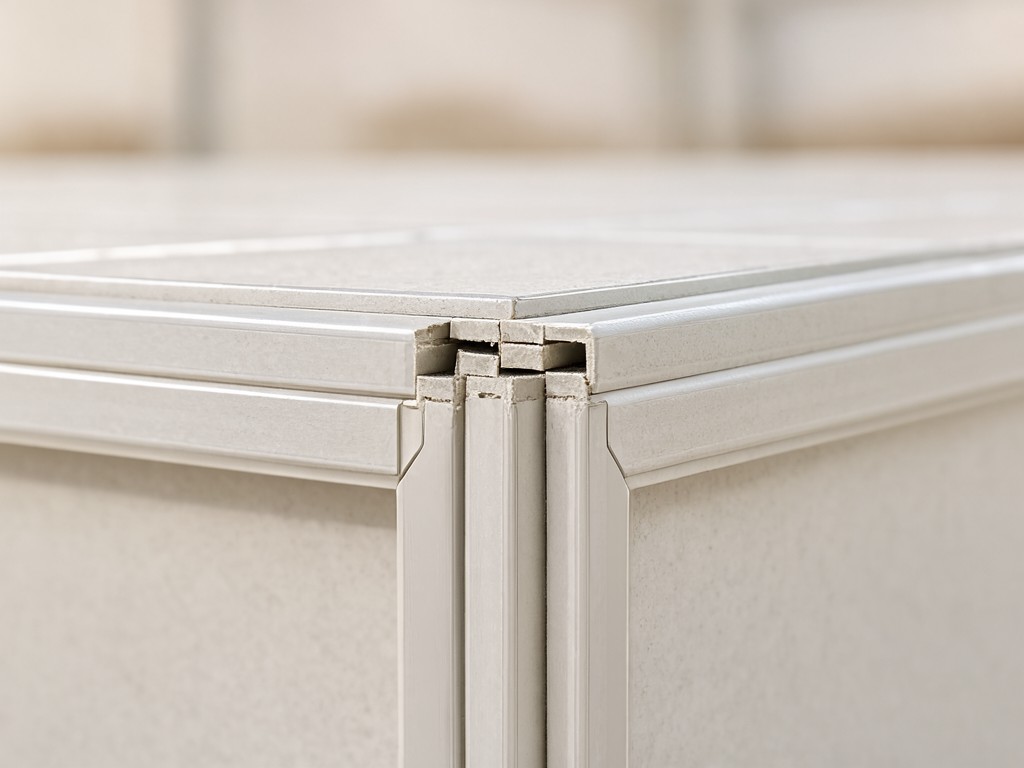
Procurement managers must balance the material cost against the risk of structural buckling. If the panel is too light, it deforms under the weight of the stack during sea-freight transit. We provide a specific density profile that ensures the 50mm core withstands vertical load without permanent internal deformation.
Quality Control and Batch Consistency
Tooling amortisation decides the long-term stability of the production line. When molds wear down, the dimensions of the 50mm panel drift, leading to gaps in the final poultry house. Our process utilizes automated laser measurement on every tenth panel to verify that the width and length remain within the 0.5mm tolerance threshold.
- Batch-specific core density testing to verify thermal resistance R-value consistency.
- Surface tension checks to ensure the skin coating does not delaminate under mechanical stress.
- Moisture absorption rates to prevent weight gain during long-duration maritime transport.
What Gets Checked Before Shipment
| Test Method | Accept Criteria |
|---|---|
| Pull Shear Test | Minimum 80 N/cm² |
| Dimensional Variance | ±0.5% of total length |
| Impact Resistance | No visible cracking at 2J drop |
Keeping Repeat Orders Supplied
Reliability in the supply chain is built on the absence of material drift. We maintain digital records of every batch composition to ensure that a reorder placed six months later matches the exact mechanical profile of the initial shipment. This allows the importer to maintain their assembly workflow without recalculating structural hardware requirements.
Ready to verify technical specifications for your next 50mm panel project?
Request a Technical Sample and Batch Report


