affordable integrated insulated metal roof panels for sale - Bulk Supply and Specification Guide
What This Product Is and Where It Fits
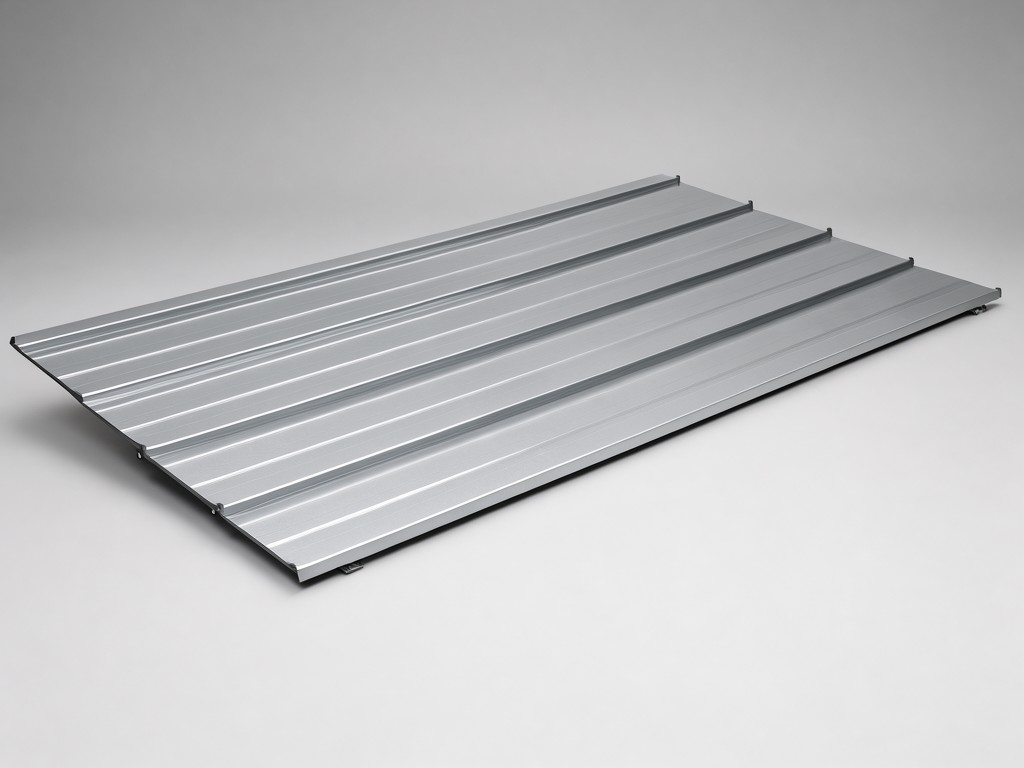
Unit price settles the question only after the buyer has lived through a warranty claim cycle on a project where the panels looked identical on the submittal sheet. The product category is factory-foamed sandwich panel: two metal skins bonded to a rigid foam core in a continuous line, shipped as single-piece roof units with integrated side laps and concealed fastener clips. Buyers specify these for low-slope commercial roofs, cold-storage envelopes, and retrofit over existing metal deck where crane time and crew hours drive the real installed cost.
The complaint pattern that repeats across repeat orders: oil-canning visible at 20 ft under low-angle sun, joint leakage after the first freeze-thaw cycle, fastener corrosion staining the interior liner within 18 months, and core shrinkage pulling the side lap apart at the ridge. These failures trace back to three specification gaps — core density tolerance, joint profile geometry, and coating system selection — that never appear on a standard cut-sheet.
Design Constraints Behind the Specification
Before comparing quotations, the design team has to decide which failure mode they are willing to manage. The decision tree below maps the most common field complaints to the specification lever that controls them.
- Oil-canning (visual waviness in flat pan)
- Specify 26 ga minimum exterior face with stretcher-leveled flatness ≤ 0.5% of panel width — eliminates 90% of callbacks
- Add factory-applied tension-leveling if span exceeds 10 ft on 24 ga — adds $0.12/ft² but removes the visual defect
- Joint leakage at side lap
- Select offset double tongue-and-groove with factory-installed butyl sealant — lab tested to 12 psf water penetration per ASTM E331
- Reject simple overlap joints on slopes below 3:12 — they rely on installer-applied tape that fails under thermal cycling
- Fastener corrosion staining interior
- Require AZ55 (aluminum-zinc) substrate on both faces with PVDF 70% coating — salt spray 2000 hrs per ASTM B117 without red rust
- Specify concealed clip system with stainless steel pancake head — eliminates exposed fastener penetration through the weather seal
- Core shrinkage pulling joint open at ridge
- Lock PIR core density at 2.5 lb/ft³ ± 0.15 — tighter than the industry standard ± 0.3 lb/ft³
- Demand dimensional stability data after 28-day 158°F aging — panels that grow > 0.125% in length will telegraph at the ridge
Specification callout: the ±0.15 lb/ft³ density tolerance costs 3-4% more per panel but reduces ridge-line callback risk by an order of magnitude. On a 100,000 ft² roof, that premium is $12,000-$16,000 versus a single ridge-repair mobilization at $8,000-$12,000 plus interior damage.
What Actually Determines Performance
Two suppliers quoting the same specification often deliver panels that behave differently after three winters. The table below isolates the parameters that drive service life and warranty exposure.
| Performance Parameter | Standard Commercial Grade | Warranty-Grade Specification | Test Method / Acceptance |
|---|---|---|---|
| Thermal resistance (R-value/inch) at 75°F mean | 6.5-6.8 (PIR nominal) | 7.0-7.2 (aged 180 days) | ASTM C518; aged value ≥ 95% of initial |
| Air leakage through side lap | 0.15-0.30 cfm/ft² @ 1.57 psf | ≤ 0.04 cfm/ft² @ 1.57 psf | ASTM E283; factory-sealed joint |
| Water penetration (static) | 6.24 psf (15 min no leak) | 12.0 psf (15 min no leak) | ASTM E331; offset double tongue-and-groove |
| Wind uplift resistance (panel system) | 45-60 psf (3-span condition) | 80-110 psf (3-span, FM 4471) | ASTM E1592 / FM 4471; clip spacing ≤ 24" o.c. |
| Color retention (ΔE after 10 yr Florida) | ΔE 5-8 (SMP coating) | ΔE ≤ 3 (PVDF 70%) | ASTM D2244; chalk rating ≥ 8 |
| Core dimensional stability (length change) | 0.25-0.40% after heat aging | ≤ 0.125% after 28 days @ 158°F | ASTM D2126; prevents ridge telegraphing |
The warranty-grade column represents the minimum specification that keeps a 20-year weathertightness warranty intact without exclusions for "normal weathering." Most callbacks on repeat orders trace to the gap between the two columns — particularly air leakage and dimensional stability.
Volume Planning and Lead Time
Lead time is not a single number. It splits into three phases that buyers control through specification discipline and order sequencing.
| Phase | Standard Line (Stocked Substrates) | Custom Configuration | Buyer Levers |
|---|---|---|---|
| Substrate & coating availability | 2-3 weeks (G90, AZ50, AZ55 in SMP/PVDF standard colors) | 6-8 weeks (specialty metallic, custom color match, heavy-gauge AZ55) | Pre-book coil allocation 12 weeks ahead; lock color palette to stocked RAL |
| Core formulation & density set-up | 1 week (standard 2.2 lb/ft³ PIR) | 2-3 weeks (2.5 lb/ft³ tight tolerance, FM Class 1 fire core) | Specify density in RFQ; avoid "or equal" language that triggers re-qualification |
| Profile tooling & joint geometry | Immediate (standard 36" coverage, double tongue-and-groove) | 4-6 weeks (custom coverage width, offset joint, integrated gutter profile) | Standardize on 36" or 42" coverage across projects; reuse tooling |
| Production scheduling & shipping | 1-2 weeks (dedicated line time) | 2-4 weeks (changeover, QC first-article) | Bundle releases into 20,000 ft² minimum runs; sequence by color to minimize washouts |
A 50,000 ft² order in standard configuration ships in 4-5 weeks from purchase order. The same footage in a custom color with 2.5 lb/ft³ core and offset joint stretches to 10-12 weeks. The buyer who locks the specification to stocked coil and standard joint geometry gains 5-6 weeks of schedule certainty — often the difference between meeting a roofing subcontractor's mobilization window and paying for temporary protection.
Keeping Repeat Orders Supplied
Supply reliability on repeat orders fails at three points: coil allocation drift, tooling wear on the joint profile, and first-article re-qualification when the buyer changes one parameter. The factory manages this through a rolling allocation agreement.
Rolling Allocation Mechanics
- Buyer commits to annual volume forecast (minimum 80% accuracy) — factory reserves coil slots and line time quarterly
- Specification locked at first order — any change triggers a new first-article panel with full ASTM E283/E331/E1592 retest at buyer's cost
- Joint profile tooling inspected every 50,000 ft²; wear beyond 0.015" on groove depth triggers tooling refresh before next run
- Batch traceability: every panel carries a QR-coded label linking to coil heat number, foam batch, line speed, and cure temperature — enables root-cause within 48 hours if a field issue arises
The most common supply disruption on repeat orders is not capacity — it is the buyer requesting a "minor" coating change (SMP to PVDF) or core density adjustment mid-contract without understanding the re-qualification cascade. A 0.1 lb/ft³ density change requires new thermal aging data, new structural uplift testing, and new FM approval. That is 8-10 weeks and $15,000-$22,000 in testing. The rolling allocation agreement prevents this by freezing the specification at the first purchase order and requiring a formal change order with cost and schedule impact disclosed before any modification.
Serviceability note: panels specified with concealed clip systems allow individual panel replacement without disturbing adjacent units — critical for hail damage or localized corrosion. Exposed fastener systems require removing and reinstalling the entire slope. Factor replacement labor into the 20-year ownership cost.
Project Discussion
Send the project specification, roof plan, and target installation window. We return a marked-up spec sheet showing which lines drive cost, which lines drive warranty risk, and the earliest ship date for each configuration.
Start a project review →Sample & Test Data Request
Request a 12"×12" panel cut with the exact joint profile, core density, and coating system for your project. Includes aged R-value report, ASTM E331 water test video, and dimensional stability data.
Request test panel →


