B2B Architectural PIR Insulated Metal Wall Panels Manufacturer - Bulk Supply and Specification Guide
Thermal performance depends on the bond integrity between the polyisocyanurate (PIR) core and the structural steel skins. Unlike standard foam, PIR cores provide a higher cross-linked molecular structure that prevents delamination under rapid thermal expansion or mechanical stress. When the core bond fails, the panel loses its R-value, leading to localized moisture ingress and structural weakening of the envelope. The manufacturing process focuses on high-pressure continuous foaming to ensure the core is mechanically locked to the metal substrate, maintaining dimensional stability across large surface areas.
How It Is Built and What Changes
| Parameter | Technical Specification |
|---|---|
| Steel Skin Thickness | 0.5mm - 1.0mm (Galvalum/Galvalume) |
| PIR Core Density | 35 - 45 kg/m³ |
| Core Thickness | 50mm to 300mm |
| Thermal Conductivity | ≤ 0.022 W/m·K |
| Joint Profile Options | Interlocking, Snap-lock, Tongue & Groove |
The profile geometry of the metal skin dictates the load-bearing capacity of the span. Deeper rib profiles increase the moment of inertia, allowing for longer spans between structural supports, which reduces the total framing cost. We utilize precision roll-forming lines to ensure that the profile height remains consistent across the entire production run, preventing the waviness that often causes uneven sealant application during installation.
Where This Product Beats Alternatives
PIR vs. EPS Cores
While EPS foam requires greater thickness to achieve the same thermal resistance, PIR maintains high performance at a thinner profile. This results in increased usable floor space in high-density commercial developments where square-meterage yield is the primary cost driver.
Fire Resistance Stability
PIR exhibits superior char formation properties compared to standard foams. In the event of thermal exposure, the core creates a protective carbon layer that slows flame spread and maintains the structural integrity of the panel for longer durations.
Usage Scenarios and Segments
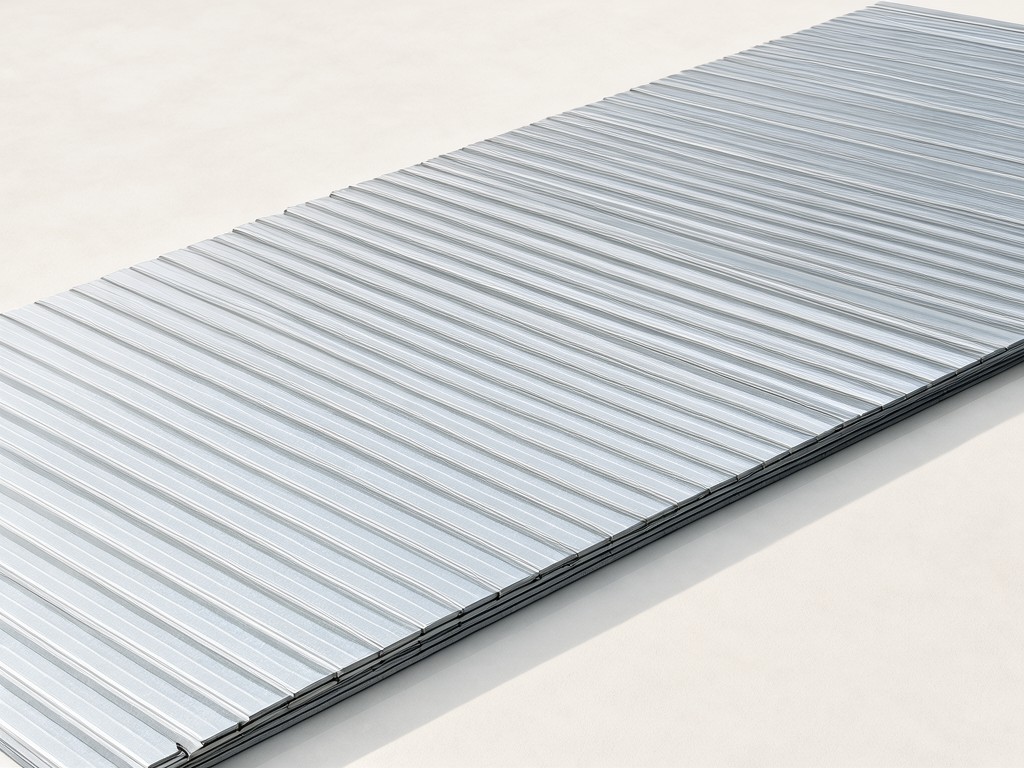
Industrial cold storage facilities require extreme thermal stability to prevent condensation on the interior face. Our PIR panels are engineered with high-tolerance interlocking joints to eliminate thermal bridging at the panel lines. For commercial retail centers, the focus shifts to aesthetic consistency and impact resistance, providing a finished facade without the need for secondary cladding layers.
- Cold chain logistics and temperature-controlled environments where delta-T is critical.
- Multi-story commercial buildings requiring rapid assembly and high R-values.
- Industrial manufacturing plants with high-fire-rated envelope requirements.
- Data centers requiring moisture vapor control and thermal barrier integrity.
Segment-Specific Requirements
Procurement officers must evaluate the coating durability against the local UV index and salinity levels. We offer PVDF coatings for high-exposure environments to prevent pigment chalking and color fading over a 15-year horizon, whereas polyester may suffice for internal applications.
Private-label buyers often require specific core densities or custom profile matching to fit existing systems. We accommodate batch-specific requirements by providing detailed technical data sheets during the project approval phase.
What Gets Checked
Quality control centers on the dimensional accuracy of the panels and the shear strength of the bond. If the panel width varies by more than ±2mm, the interlocking joints will fail to create a watertight seal. We perform pull shear tests on every batch to ensure the PIR core does not detach from the steel skin under standard wind loads.
| Test Method | Acceptance Criteria |
|---|---|
| Bond Shear Strength | Minimum 150 N/cm |
| Dimensional Tolerance | ±1.5% of total length |
| Impact Resistance | No visible cracking at 2kg point deflection |
Stock Availability and Reorder Planning
Lead times for custom profiles are dictated by the steel coil availability and foaming-line scheduling. Standard profiles are typically maintained in stock for rapid dispatch, but large-scale architectural projects require a 6-8 week lead time to ensure color-matching across multiple batches.
Request Technical Specifications and Bulk Pricing
Contact our engineering team for custom PIR panel configurations and thermal performance data.
Inquire About Project


