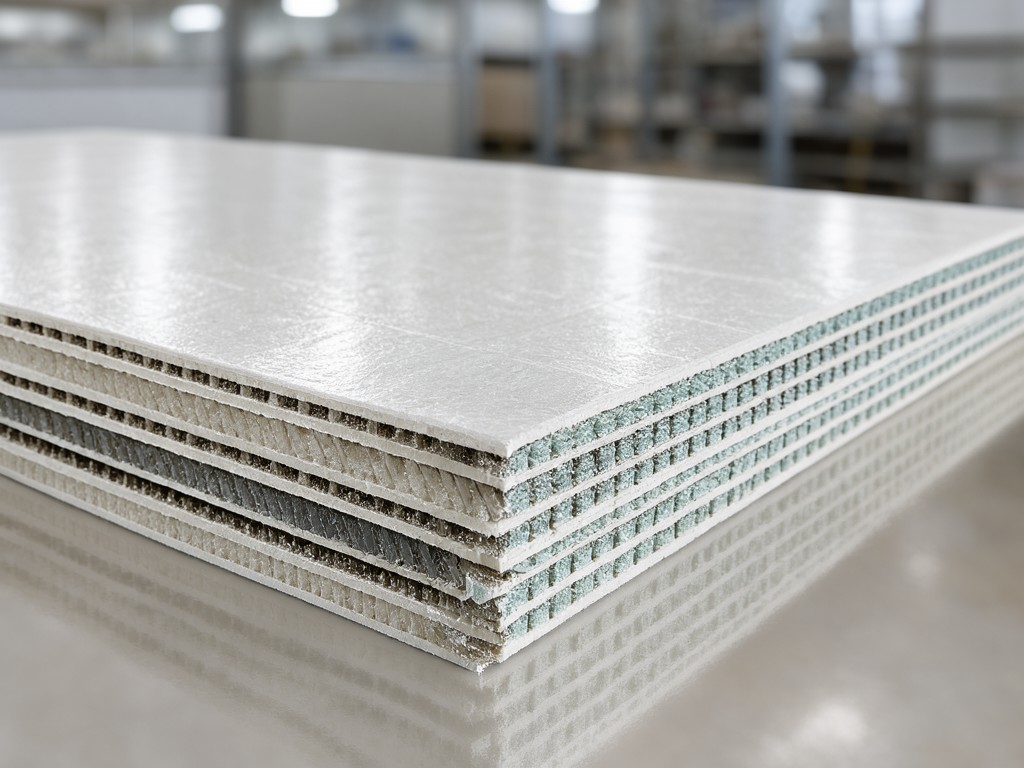
b2b deep freezer room insulation sandwich panel manufacturer: What Buyers Should Check Before Ordering
Thermal stability in sub-zero environments depends on the structural integrity of the core material and the bond strength of the skins. When procurement officers evaluate bulk-scale orders, the primary failure point is rarely the initial R-value but the long-term delamination caused by repeated thermal cycling. If the expansion coefficients of the metal skin and not match the core, internal stress occurs, leading to moisture ingress and a compromise in the energy efficiency of the cooling unit.
Critical Specification Rule:
For operating temperatures consistently below -25°C, the core density must maintain a minimum of 40kg/m³ to prevent cell collapse and shrinkage, which typically causes joint separation during rapid defrost-defrost cycles common in industrial storage.
Where Cheap Alternatives Fall Short
Low-cost alternatives often utilize lower-density polyurethane foam that lacks the tensile strength required for large span installations. In deep freezer applications, this manifests as "oil canning," where the panel faces bow under the weight of internal racking or air pressure changes during door cycles. This deformation creates gaps at the tongue-and-groove joints, leading to frost buildup that increases the compressor load and elevates operational costs.
The coating specification on the skin is another frequent point of failure. Standard-grade coatings often fail in the high-humidity environments of cold storage docks, leading to hidden corrosion at the cut edges. We utilize high-zinc content pre-coated steel to ensure the substrate remains intact against oxidative stress over a 15-year service life.
What Actually Determines
Thermal performance is judged by the thermal conductivity coefficient (lambda value) across the full thickness of the panel. While a 100mm panel provides more insulation than a 50mm panel, the consistency of the foam injection process determines if hot spots will develop. Our process uses high-pressure injection to ensure a uniform cell structure, minimizing the variance in R-value across the entire surface area.
| Panel Thickness (mm) | Core Material | Thermal Resistance (R-value*) | Typical Application |
|---|---|---|---|
| 50mm | PUR/PIR | ~8.5-9.2 | Chiller rooms |
| 100mm | PIR (High Density) | ~17.5-18.5 | Standard blast freezers |
| 150mm | PIR (High Density) | ~26.0-28.0 | Ultra-low temp storage |
*Values estimated based on standard test conditions and material density.
Material Options and Trade-offs
The choice between Polyurethane (PUR) and Polyisocyanurate (PIR) is a trade-off between initial cost and fire performance. PIR cores offer higher thermal stability, which allows for thinner panels to achieve the same thermal rating. This is critical for projects where internal square footage is at a premium price.
Skin Material Selection
- Galvanized Steel: Standard for most environments where chemical resistance is not the primary concern.
- Stainless Steel: Required for high-hygiene food processing zones to prevent pitting and corrosion.
- Aluminum-faced panels: Used in specialized labs where low weight and high reflectivity are necessary.
Capacity and Tooling
Production lead times are dictated by the customization of the joint profiles. Standard cam-lock joints are available for rapid assembly, but custom-extruded joints for thermal-break continuity require specific tooling runs. We manage batch traceability to ensure that panels delivered in a single shipment originate from the same density-specific production cycle.
Questions Ask Before Ordering
How do the panels handle the pressure differential during blast freezing?
We provide reinforced structural ribbing on the skin to increase the moment of inertia, preventing the panel from buckling inward during rapid temperature drops.
What is the tolerance for panel length in bulk orders?
Our dimensional tolerance is typically ±2mm per 3000mm, ensuring tight alignment across large-scale wall installations.
Are the core materials compatible with food-grade lubricants?
Yes, the PIR/PUR foams used are chemically inert and do not out-gass or react with standard food-grade cleaning agents.



