B2B Insulated Sandwich Panels for Logistics Warehouse Supplier - Bulk Supply and Specification
Thermal stability in logistics centers depends on the integrity of the core material and the bond strength of the skins. For large-scale warehouse projects, the primary trade-off is between R-value requirements and the structural weight of the span. High-density polyurethane foam (PUR) or polyisocyanurate (PIR) cores offer higher thermal resistance per millimeter, but the cost of the chemical formulation fluctuates compared to mineral wool alternatives.
How It Performs in Use
| Parameter | Specification Range |
|---|---|
| Skin Material | Galvanized Steel (0.5mm - 0.7mm thickness) |
| Core Insulation | PIR, PUR, or Mineral Wool |
| Panel Thickness | 50mm to 300mm |
| Thermal Conductivity | λ = 0.022 - 0.028 W/mK |
Construction Method and Its Effect
Failure usually occurs when the adhesive application during the continuous bonding process is inconsistent or when the cooling rate creates internal shear stresses. If the steel skin is not properly bonded to the core, the panel will delaminate under thermal expansion cycles. Our manufacturing production lines utilize high-pressure curing to ensure the chemical bond remains uniform across the entire surface area of the panel.
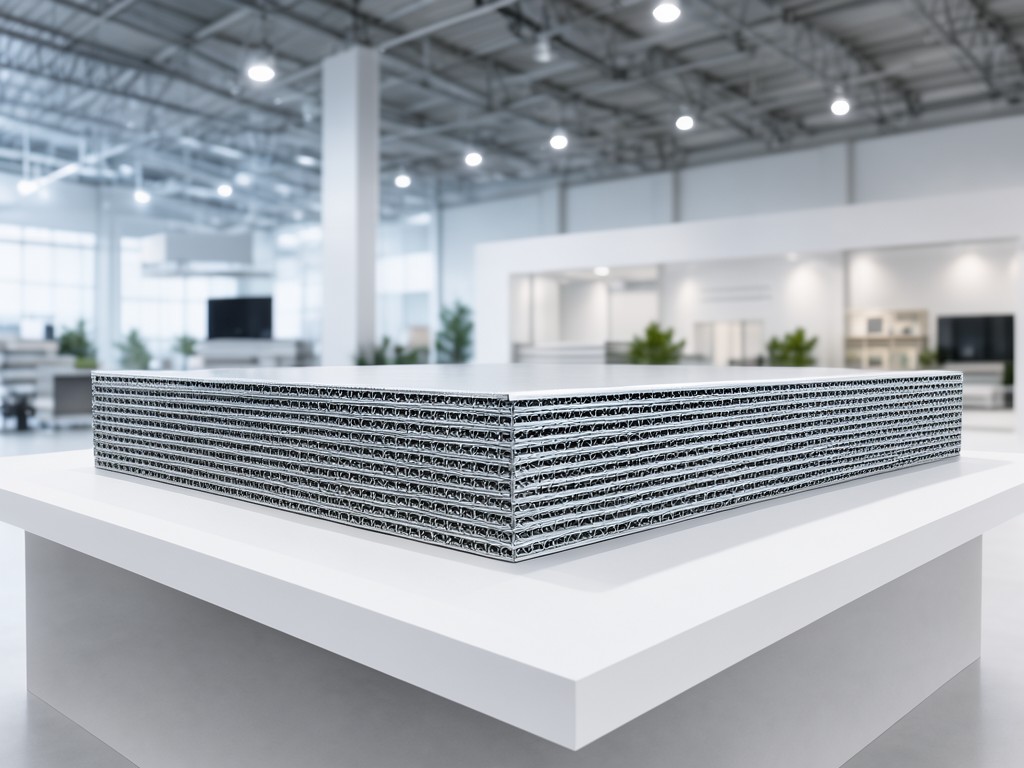
- Profiled skins increase the moment of inertia, allowing for longer spans between purlins.
- Interlocking cam systems minimize thermal bridging at the joints to prevent localized moisture ingress.
- Thermal-break joints prevent the expansion of metal fasteners in high-temperature climates.
Matching the Buyer's Need
Cold Chain Logistics
Requirements for low temperature storage demand high-density cores and vapor barrier resistance. We specify thick-PIR cores with specialized-grade coatings to prevent dew point shifts and reduce refrigeration compressor work-load.
General Warehousing
Standard dry storage prioritize assembly speed and cost-efficiency. Thinner 50mm panels with standard PUR provide the necessary structural protection while minimizing material cost per square meter.
Customisation Options and Their Limits
Surface finishes dictate the longevity of the panel in corrosive environments. While PVDF coatings are standard for exterior exposure, projects near coastal zones require higher mineral-content paints to resist chalking and UV degradation. Custom profile depths are available but require specific tooling setups, which increases the lead time for small-batch-batch orders.
How Consistency Is Held Across Batches
Batch consistency is managed through automated density monitoring of the foam injection during the extrusion process. If the foam density varies by more than 5%, the thermal R-value of the batch will fail compliance checks. We perform conductivity testing on every batch to ensure that the panels delivered to the site match the engineering-approved thermal model.
Ordering, Tooling and Lead-Time
Lead times are determined by the volume of raw steel and the current schedule of the foaming line. For orders exceeding 5,000 square meters, we offer dedicated production runs to reduce the per-unit cost through tooling amortisation. Request a technical quote for current lead-time estimates.
Ordering, Tooling and Lead-Time Questions
What is the minimum order quantity for custom skin profiles?
Custom profiles typically require a minimum of 500 linear meters to offset the cost of the specific roll-forming die-set adjustments.
Can these panels handle fire-rated specifications?
Yes, mineral wool-core panels are designed for non-combustible requirements, whereas PIR is fire retardant but meets specific spread standards.
Discuss specific engineering requirements for your logistics project.
Inquire About Bulk Samples


