b2b mineral wool sandwich panels for power plant supplier: What Buyers Should Check Before Ordering
Procuring thermal insulation for power generation infrastructure requires a focus on dimensional stability and fire-resistance de-rating that goes beyond simple R-value values. In high-temperature environments, the structural integrity of the panel assembly depends on the mechanical bond between the galvanized steel skins and the mineral wool core, specifically how the core resists shrinkage under prolonged thermal expansion cycles.
Density consistency in the mineral wool core dictates the acoustic damping properties and the load-bearing capacity of the cladding. For a power plant supplier, the primary risk is the delamination of the skin interface due to rapid temperature fluctuations, which can lead to thermal bridging and compromise the entire building's energy envelope.
Critical Specification Parameters
Standard-grade panels often fail in industrial-scale applications because the coating lacks the necessary salt spray corrosion resistance or the core thickness is not optimized to accommodate structural movement without mechanical failure.
Design Constraints Behind the Specification
The selection of core density is driven by the specific thermal gradient of the power plant zone being serviced. While higher-density mineral wool provides superior fire-, it increases the dead load on the facade, necessitating more robust substructure systems and impacting the overall project structural engineering costs.
| Parameter | Technical Range | Industrial Impact |
|---|---|---|
| Core Density | 80kg/m³ - 120kg/m³ | Thermal stability & acoustic rating |
| Skin Thickness | 0.5mm - 1.0mm | Impact resistance & wind load |
| Panel Total Thickness | 50mm - 300mm | Insulation efficiency U-value |
How It Is Built and What Changes
The manufacturing process utilizes continuous-line adhesive application to ensure the mineral wool is fully bonded to the metal substrate. If the pressure distribution during the curing phase is inconsistent, the panels will exhibit voids that later manifest when subjected to atmospheric pressure changes or high-wind loads.
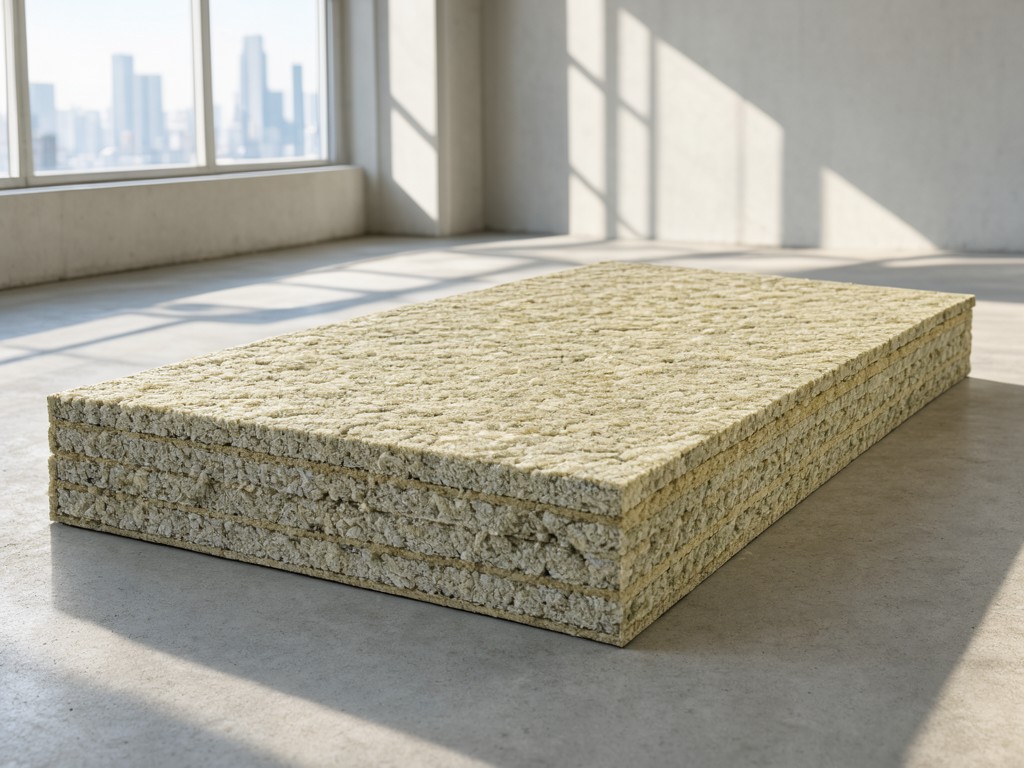
- High-temperature resins are selected based on the specific operating temperature of the power plant to prevent softening.
- Interlocking profile systems are engineered to minimize water ingress while maintaining a thermal break at the joints.
- Pre-coated steel layers provide the necessary chemical resistance against industrial byproducts found in exhaust environments.
Standard Cladding
Best for perimeter walling and storage areas where cost-per-meter is the primary procurement driver.
High-Performance Grade
Utilized for boiler rooms and turbine-heat zones where extreme thermal resistance and fire rating are mandatory.
Buying Mistakes That Lead to Returns
Procurement teams often overlook the thermal expansion coefficient of the steel skins relative to the mineral wool. In large-span installations, if the fastening system does not allow for this movement, buckling of the panel face is inevitable during the first season of peak thermal stress.
Another common failure point is the failure to specify the correct coating grade for the environment. In coastal or highly industrial zones, standard galvanization will fail within years, leading to edge corrosion and structural weakening of the panel core.
Inspection Items and Test Methods
To ensure batch consistency, panels undergo rigorous mechanical testing. This includes tensile bond strength tests to ensure the mineral wool core does not delaminate under stress, typically measured in Newtons per millimeter of the interface.
Dimensional checks are performed via laser measurement to ensure that the interlocking profiles remain within tolerances required for rapid installation, preventing gaps that would compromise the thermal-barrier performance.
Questions Ask Before Ordering
What is the fire rating of the specific mineral wool grade?
The wool itself is non-combustible, but the overall panel rating depends on the skin thickness and the adhesive system used.
Can the panels be custom-cut to specific lengths?
Lead times for custom lengths vary based on the tooling availability in the continuous-line production schedule.
What is the salt spray resistance of the coating?
This is determined by the microns of the zinc coating and the polymer layer applied to the steel skin.



