b2b pir composite panel for industrial roofing factory: Specification, Ordering and Quality Notes
What Actually Determines Performance
Deflection under load governs the usable span of a PIR sandwich panel; the core’s compressive modulus and the facing’s bending stiffness combine to set the mid‑span deflection limit of 1/200 of the span under service loads.
The interface between parts determines thermal bridging; a continuous metal skin with a 0.5 mm zinc‑aluminium coating reduces heat flow to 0.022 W/m·K, while any discontinuity in the adhesive line adds a measurable U‑value penalty that buyers track in energy‑model calculations.
Specification callout: for a 6 m span the 100 mm core must deliver ≥4.5 m²K/W; increasing core thickness by 10 mm improves R‑value by ~0.45 m²K/W but adds 1.2 kg/m² weight and 3 % unit cost.
Material Options and Their Trade-offs
Core insulation choices centre on polyisocyanurate density; 30 kg/m³ offers the lowest material cost but exhibits 12 % higher creep under sustained load than 45 kg/m³, which raises the panel price by roughly 8 % per square metre.
Core Insulation Choices
Higher density cores improve fire performance (Euroclass B‑s1,d0) and reduce long‑term thickness loss, yet they increase handling weight and require stronger lifting equipment on site.
Facing Materials
Galvanised 0.5 mm steel with a 25 µm polyester coat is the baseline; upgrading to 0.7 mm pre‑painted aluminium raises corrosion resistance in coastal zones by a factor of three while adding 0.8 kg/m² and 4 % cost.
Comparing Two Standard Configurations
Balance and load analysis shows the two most‑ordered builds diverge mainly in span capability and thermal resistance.
Config A – 100 mm PIR, 0.5 mm Steel
- Thermal resistance 4.5 m²K/W
- Weight 12 kg/m²
- Span capability 6 m
Config B – 150 mm PIR, 0.7 mm Steel
- Thermal resistance 6.8 m²K/W
- Weight 16 kg/m²
- Span capability 9 m
What Can Be Customised and What Cannot
Customisation is limited to parameters that do not require new tooling; core thickness, facing gauge, core density and panel length are adjustable within the ranges below.
| Parameter | Range / Options | Impact on Cost |
|---|---|---|
| Panel thickness | 80–200 mm (step 10 mm) | +3 % per 10 mm |
| Facing gauge | 0.4–0.8 mm galvanized / pre‑painted | +2 % per 0.1 mm |
| Core density | 30–45 kg/m³ | +1.5 % per 5 kg/m³ |
| Length | 2–12 m (cut to order) | No surcharge |
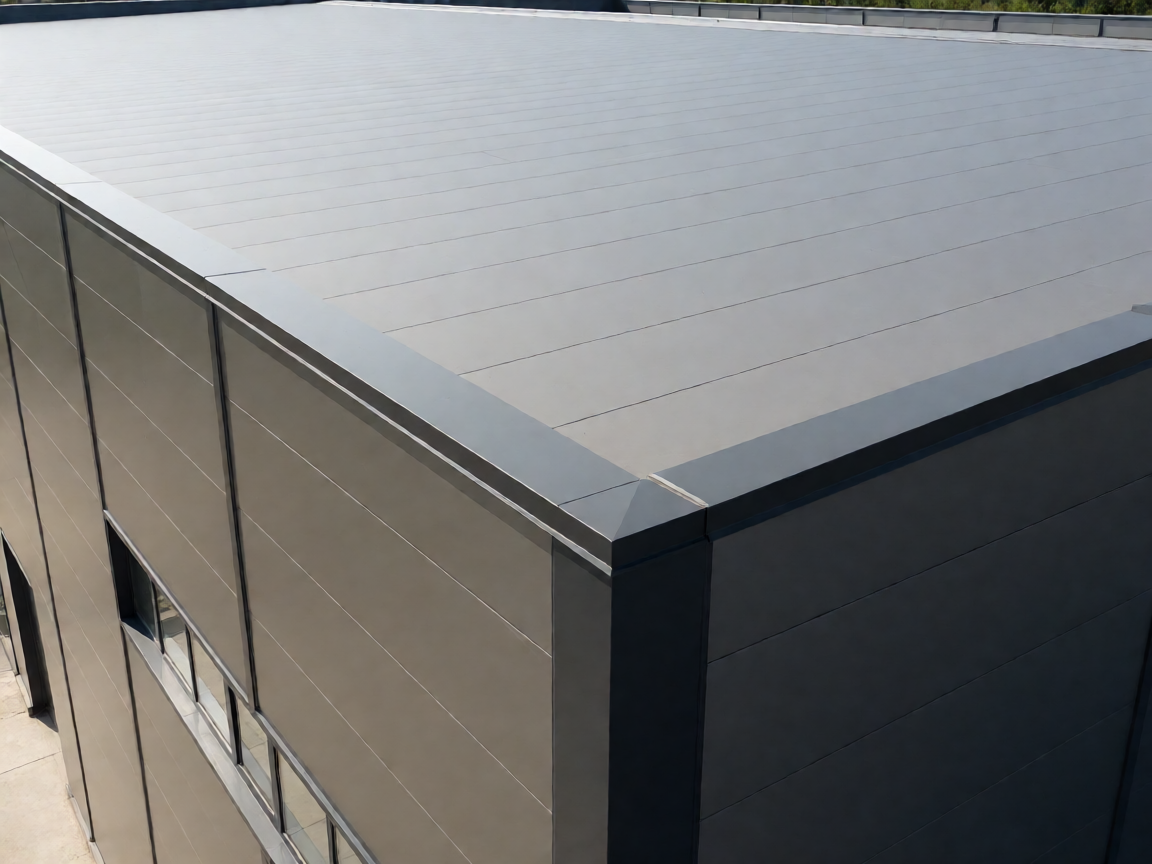
Non‑customisable items include the adhesive chemistry (pur‑based, fixed cure schedule), the standard fire‑rating classification, and the panel edge profile which is set by the roll‑forming line.
| Finish / Colour | Code | Typical Lead‑time Adder |
|---|---|---|
| Standard RAL 9010 | R9010 | 0 days |
| RAL 7016 Anthracite | R7016 | 5 days |
| Custom RAL (single colour) | CUST | 10 days |
| Two‑tone (top/bottom) | TT | 12 days |
Working as a Production Partner, Not a Catalogue Supplier
OEM/ODM engagement starts with a shared tooling budget; the cost of a new roll‑form die is amortised over the first 15 000 m², after which the per‑square‑metre price drops by 6 % for repeat orders.
Tooling Amortisation
When a buyer commits to a 20 000 m² forecast, the die cost is absorbed into the unit price, eliminating a separate tooling invoice and shortening the break‑even point to the first production run.
Sample Approval Loop
A first‑article panel is shipped within 10 days of die trial; dimensional inspection (±2 mm on length, ±0.2 mm on thickness) and thermal conductivity verification (λ ≤ 0.022 W/m·K) must be signed off before full‑scale launch.
Volume Planning and Lead Time
Lead time scales with order volume because line allocation changes from shared to dedicated.
- Up to 5 000 m² – 3 weeks ex‑factory
- 5 001–20 000 m² – 4 weeks, tooling shared
- >20 000 m² – 5 weeks, dedicated line
Panels are stacked on timber bearers, wrapped in UV‑stabilised PE film, and loaded into 40‑ft high‑cube containers; each container holds up to 1 200 m², reducing freight cost per square metre by 12 % versus loose loading.
Questions Buyers Ask Before Ordering
What is the minimum order quantity for a custom colour?
A single custom RAL requires 2 000 m² to justify the paint‑line changeover; smaller volumes can be accommodated with a 15 % surcharge.
How do you guarantee dimensional tolerance across a 12 m run?
In‑line laser gauging checks thickness every 0.5 m; any deviation beyond ±0.3 mm triggers an automatic line stop and panel rejection.
Can the panel be supplied with pre‑drilled fixing holes?
Yes, CNC drilling to a supplied pattern adds 2 days and 0.5 % cost; hole diameter tolerance is ±0.1 mm.
What fire‑rating documentation is provided?
Each batch ships with a test report to EN 13501‑1 (Euroclass B‑s1,d0) and a Declaration of Performance; certificates are traceable to the production lot number.
Request a Sample or Quote
To evaluate thermal performance, weight, and finish quality on your project, submit an enquiry with the required thickness, facing, and colour code.
Submit an enquiry


