CE Certification Aluminum Honeycomb Insulated Facade Panels Exporter: What Buyers Should Check Before Ordering
Most quality disputes start with a consistency gap between the core core and the outer skins. When the adhesive bond fails to withstand thermal expansion, the resulting internal stress often leads to visible buckling or delamination under solar exposure. Procurement officers must prioritize the shear strength of the honeycomb-skin interface to ensure the facade system remains flat over a 25-year life cycle, regardless of local temperature fluctuations.
Size, Weight and Specification Range
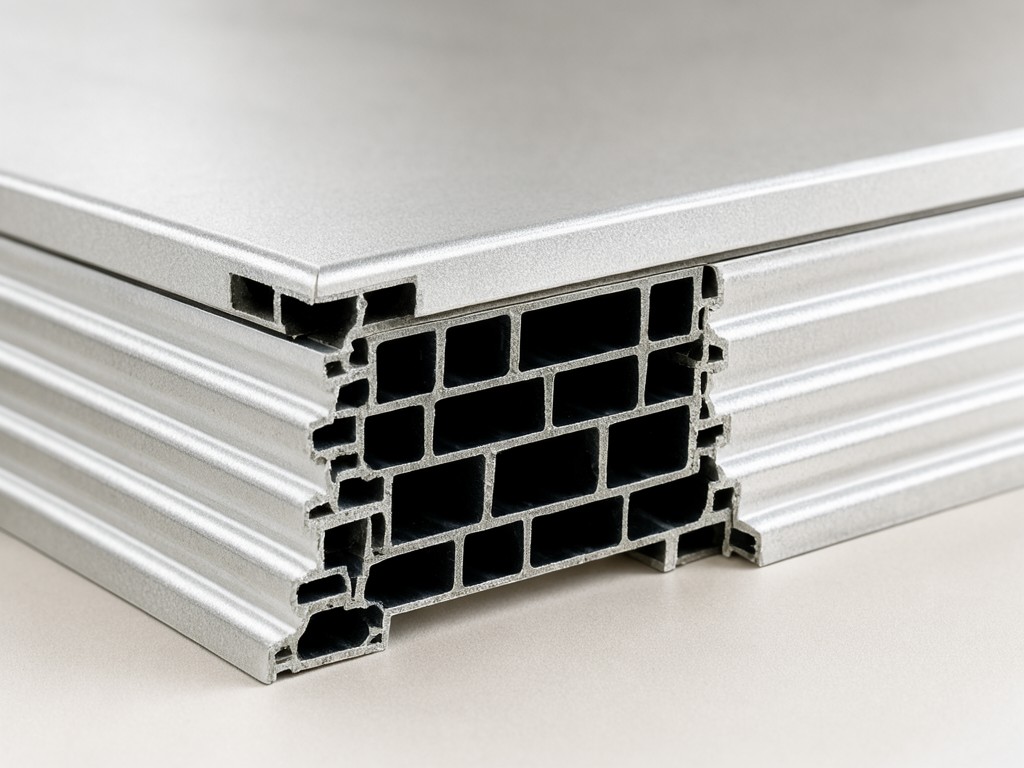
Dimensional stability is governed by the alloy grade and the density of the aluminum honeycomb core. For high-rise commercial applications, a 0.5mm to 1.0mm skin thickness is standard to prevent oil-canning on large spans without adding excessive weight.
| Parameter | Standard Range | Performance Impact |
|---|---|---|
| Skin Material | 3003, 3004, 5052 Alloy | Corrosion resistance and tensile strength |
| Core Depth | 6mm to 200mm | Thermal insulation (R-value) rating |
| Cell Pitch | 3mm to 25mm | Compressive load bearing capacity |
| Core Material | PET, FR, or Nomex | Fire reaction and smoke density compliance |
Requirements by Segment
Architectural firms focus on the aesthetic consistency of the PVDF coating and the flatness of the panel. If the curing pressure is uneven, the facade will show uneven light reflection after only six months of installation. Conversely, industrial buyers prioritize the weight-to-strength ratio and the mechanical impact resistance during onsite handling.
- Fire rating requirements (B-s1, d0) for high-density residential projects.
- Salt spray resistance testing (ASTM B117) for coastal environment developments.
- Tolerance levels within +/- 0.5mm for rapid-assembly curtain wall systems.
OEM and ODM Programme Structure
Customization involves the precision routing of panel edges and the integration of thermal break extrusions. We provide CNC-routed edges to ensure that the internal core is protected from moisture ingress, which prevents internal corrosion of the aluminum honeycomb edges.
Surface Finishes
Options include PVDF coating, FEFE, or fluoropolymer laminates for specific UV resistance and architectural aesthetics.
Core Selection
Selection of flame-retardant PET for cost-efficiency or Nomex for extreme fire safety requirements.
Inspection Items and Test Methods
To minimize warranty claims, every batch undergoes rigorous testing of the structural integrity. We measure the interlayer shear strength to verify that the adhesive bond is stronger than the aluminum skin material itself, ensuring cohesive failure occurs rather than adhesive failure.
- Pull-off testing to verify bond strength between the skin and honeycomb core.
- Flatness checks using laser straight tables to detect deviations exceeding 0.3mm/2m.
- Ultrasonic testing to ensure no air voids exist within the core layers.
Packing and Freight Configuration
The transport of insulated panels is the primary cause of edge-damage returns. We utilize reinforced wooden crates with internal foam dunnage to prevent panels from shifting, which would otherwise score the precision-cut edges or compromise the coating.
For technical data sheets or to request a sample for your current project,
contact our engineering team today


