CE Certification Cleanroom Insulated Sandwich Panels Supplier: Bulk Specification Guide
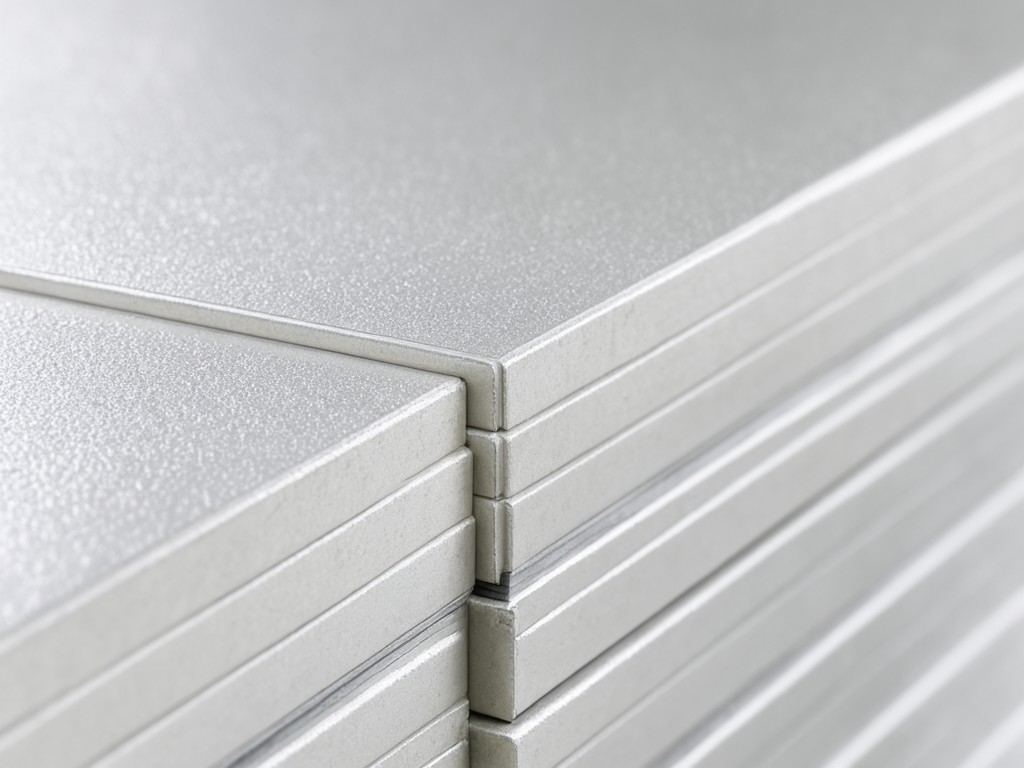
Maintaining a controlled particulate environment depends on the structural bond between the steel skin and the insulation core. When procurement officers evaluate cleanroom panels, the primary failure mode is not the insulation material itself, but the delamination of the face sheets under thermal stress. Our manufacturing process utilizes continuous-pressure laminate bonding to ensure the pre-coated steel adheres to the mineral wool or PIR core, preventing the air pockets that lead to structural sagging in high-pressure HVAC zones.
Technical Compliance Note
All panels produced for CE-marked assemblies are tested for a dimensional tolerance of ±0.5mm across the length, ensuring that tongue-and-groove systems lock without binding or leaving gaps that would compromise ISO Class 5 cleanroom standards.
Design Constraints Behind the Specification
Choosing between Polyisocyanurate (PIR) and Mineral Wool involves a trade-off between thermal resistance and fire safety. PIR cores offer a lower K-value per millimeter, allowing for thinner walls that increase the usable floor area in pharmaceutical laboratory builds. However, for facilities requiring non-combustible material ratings, high-density mineral wool is the standard, despite its higher weight which increases the load on the supporting framing.
- Skin thickness varies from 0.5mm to 1.0mm depending on the calculated load-bearing of the wall section.
- Surface finishes typically include PVDF or polyester coatings with a Class 1 scratch resistance to withstand frequent VHP (vaporized hydrogen peroxide) cleaning agents.
- Joint profiles are engineered with a radius-curved internal geometry to prevent microbial accumulation in sharp-angled corners.
Measured Performance in Real Use
The stability of a cleanroom partition is judged by its resistance to hygroscopic expansion cycles. If the steel-to-core bond is inconsistent, the panels will bow over time, causing the mechanical mechanical joints to fail. We monitor the pull-off strength during quality control to ensure the adhesive remains intact even when the panel is subjected to rapid internal temperature drops.
| Parameter | PIR Core Option | Mineral Wool Option |
|---|---|---|
| Thermal Conductivity (λ) | ~0.022-0.023 W/m·K | ~0.035-0.040 W/m·K |
| Fire Rating | B-s1, d0 | A1 (Non-combustible) |
| Density | 35-45 kg/m³ | 80-120 kg/m³ |
| Standard Thickness | 50mm to 200mm | 50mm to 200mm |
Specification Range and Customisation
Bulk-scale orders often require specific joint profiles to match existing architectural frameworks. While standard cam-lock systems are the most common for rapid assembly, we provide flush-edge profiles for high-grade pharmaceutical environments where a seamless surface is required for sterilization protocols. The panel length is typically constrained by transport logistics, usually maxing at 6 meters to prevent deflection during transit.
Surface Treatments
Anti-microbial coatings are available for the steel skins to inhibit fungal growth, integrated into the paint layer to ensure it does not wash off during mechanical scrubbing.
Structural Reinforcement
Internal steel ribs can be integrated into wide-span panels to support heavy equipment or wall-mounted HVAC units without compromising the insulation integrity.
Assumptions Buyers Stop Making
A common error is assuming that CE certification covers the entire assembled cleanroom system. In reality, the certification applies to the panel components' material performance and safety standards; the final airtightness rating depends entirely on the installation precision and the quality of the gaskets used. If the gaskets are not specified for the correct hardness, the thermal efficiency of the panels will drop significantly regardless of the core material.
Capacity and Scheduling
Production lead times for custom-core panels are dictated by the availability of specialized mineral wool batches. Standard PIR panels are typically produced within 3-4 weeks, whereas mineral wool configurations with specific skin finishes may require 6-8 weeks. We require finalized shop drawings two weeks prior to production begins to ensure batch consistency across the entire project.
Keeping Orders Supplied
Reliability in wholesale supply is measured by batch-to-batch dimensional consistency. Our factory utilizes automated optical cutting lines to ensure that every panel in a shipment has the exact same profile dimensions, preventing the "cumulative error" effect that often delays the final phase of large-scale cleanroom installations.
Request technical data sheets or bulk project pricing
Contact our engineering team for specification matching


