CE Certified Fire Resistant Rock Wool Ceiling Panels Factory
Structural integrity under thermal stress depends on the density and binder consistency of the rigid rock wool core. Maintaining dimensional stability in high-humidity environments prevents the sagging common in mineral fibers during prolonged heat exposure. For procurement officers, the trade-off lies between fiber density (kg/m³) and the acoustic absorption coefficient; higher density improves sound attenuation but increases the dead load per square meter, requiring more robust suspension systems.
Scope of Supply and Physical Form
The core material consists of spun basalt rock and slag, processed into a thermal-resistant mat. We control the tensile linear strength to prevent edge breakage during transport or on-site handling. Panels are available in various configurations, including T-bar, teg-edge, or clip-in systems depending on the architectural requirements of the ceiling grid.
| Parameter | Specification Range | |
|---|---|---|
| Core Density | 80 - 120 kg/m³ | |
| Panel Thickness | 12mm - 50mm | |
| Thermal Conductivity | λ = 0.034 - 0.040 W/m·K | |
| Fire Rating | Class A1 / A2 (Non-combustible) | Standard Compliance |
Design Constraints Behind the Specification
Surface treatment dictates the longevity of the panel against moisture. A fiberglass-faced panel offers high rigidity but can be susceptible to delamination if the laminate is breached. For industrial environments with high vapor pressure, a moisture-resistant foil coating is necessary to prevent the internal fibers from absorbing water and losing acoustic performance over time.
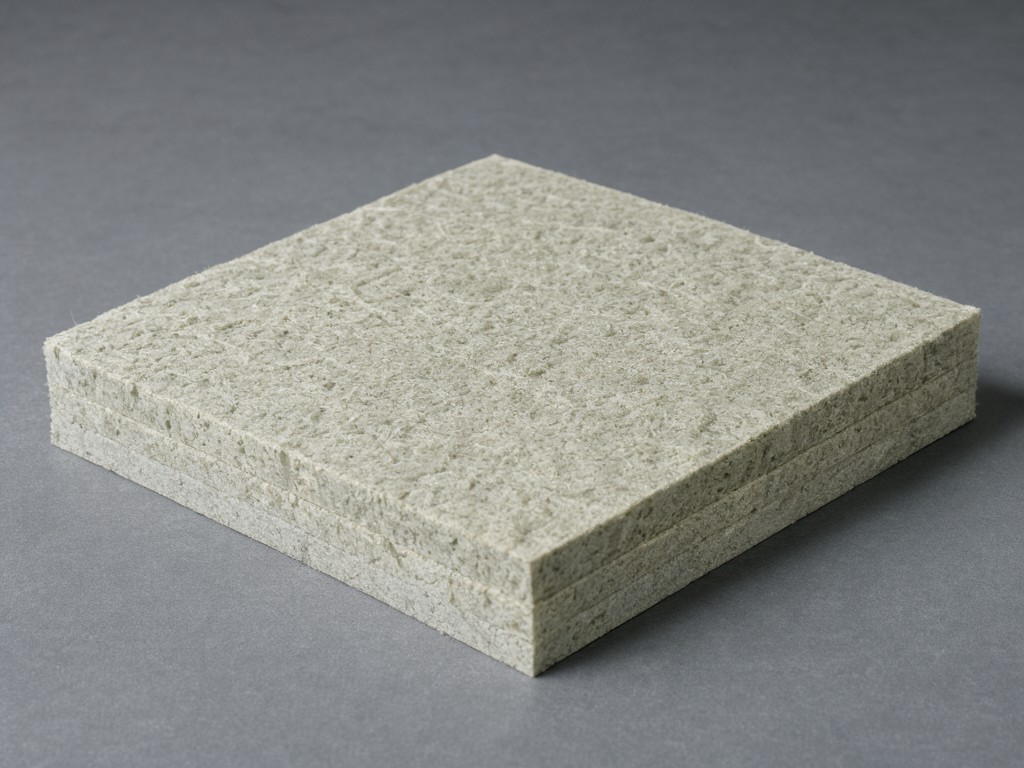
Standard Acoustic Facing
Best for open office spaces where NRC (Noise Reduction Coefficient) is the primary metric. The porous surface allows sound waves to penetrate the core.
Metal/Foil Facing
Utilized in laboratories and cleanrooms. The vapor barrier prevents microbial growth and allows for easy decontamination without damaging the fibers.
Material Options and Their Trade-offs
Private-label buyers often require specific dimensions to match existing grid systems. Standardizing on 600x600mm modules reduces waste during installation, whereas custom widths increase the tooling setup time and lead to higher scrap rates at the production line.
- High-density cores increase fire resistance duration but raise shipping costs due to weight limits.
- Hydrophobic coatings prevent water staining but may slightly reduce the absorption absorption compared to raw wool.
- Perforated surfaces improve sound transmission but require precision mechanical punching which can weaken the panel face.
What Can Beised and What Cannot
We can customize the perforation patterns, surface colors, and edge-profile types to match brand guidelines. However, the core fire-rating properties of the rock wool itself are fixed by the chemical composition of the basalt; these cannot be altered without re-validating the certification.
Usage Scenarios and Buyer Segments
Transport hubs and hospitals require panels that maintain low smoke emission to ensure safe evacuation paths. In data centers, the focus shifts to thermal insulation and fire suppression compatibility. Distributors serving large-scale construction projects prioritize batch consistency to ensure color matching across massive multi-floor installations.
Capacity, Tooling and Scheduling
Lead times are influenced by the availability of raw basalt and the volume of custom facing orders. Large-scale wholesale orders require a 4-6 week lead time to optimize production runs and minimize per-unit cost through reduced machine changeovers between different coating types.
Setup, Use and Replacement
Installation requires a leveled suspension system. Because rock wool panels are lightweight compared to gypsum, the tension on the grid is minimal, but the panels must be seated securely to prevent shifting in high-pressure HVAC environments.
Frequently Asked Questions
How do these panels react to direct fire?
The rock wool core does not melt or drip, acting as a thermal barrier that slows the spread of fire across the ceiling plane.
Is the CE certification valid for export?
Yes, the certification covers the fire performance and material safety standards required for the European market, ensuring compliance for various international jurisdictions.
Request technical datasheets or bulk pricing for your project.
Contact our engineering team for a quote


