CE Certified Flame Retardant PIR Sandwich Panel Factory - Bulk Supply and Specification Guide
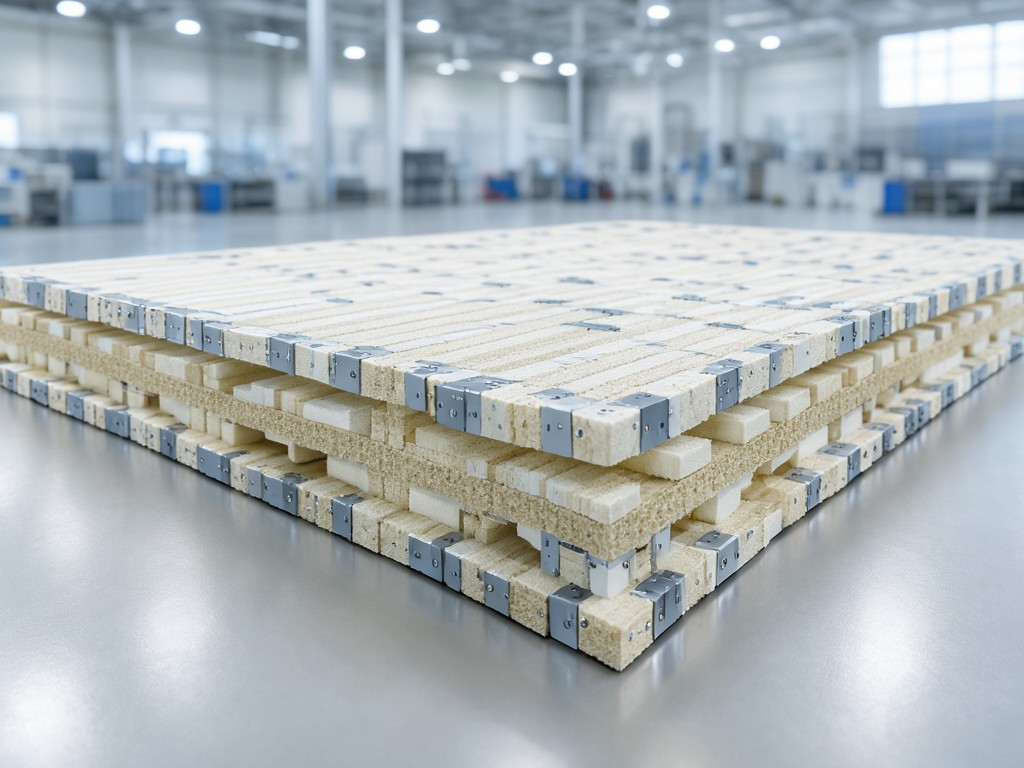
Most quality disputes start with a consistency gap between the core density and the structural skin adhesion. When polyisocyanurate (PIR) foam is cured under inconsistent pressure, the resulting panel exhibits variable shear strength, leading to delamination under thermal stress. Our production process utilizes a continuous-pressure forming line to ensure the PIR core maintains a uniform 40-45 kg/m³ density, preventing the internal voids often found in lower-grade thermal insulation.
Materials and Construction Trade-offs
The choice of face material directly dictates the panel's resistance to mechanical impact and environmental corrosion. While galvanized steel offers the highest tensile strength-to-weight ratio, it remains susceptible to localized deformation if the coating is compromised during transport. For environments where high humidity is a constant, a 0.5mm prepainted steel skin is often required to prevent oxidative failure, though this increases the total weight per square meter.
- PIR core provides a thermal conductivity (λ value) of typically 0.022 W/mK, allowing for thinner profiles while meet equivalent R-values.
- High-density adhesive ensures the skin-to-core bond survives temperature fluctuations from -40°C to +80°C.
- Thermal expansion coefficients are matched between layers to prevent buckling in large-span facade installations.
Measured Performance in Real Use
Returns usually trace back to the same weak point: moisture ingress at the joint edges. If the interlocking profile geometry is not precise, capillary action degrades the PIR core within the first two seasons of service life. We test every batch for dimensional stability to ensure the panel thickness remains within a ±0.5mm tolerance across a 3000mm length run.
| Parameter | Specification Range | Test Method |
|---|---|---|
| Thermal Conductivity (λ) | 0.022 - 0.024 W/m·K | ISO 83012 |
| Flexural Strength | ≥ 8.0 kN/m | EN 14509-1 |
| Flame Spread | Class B-s2 | EN 13501-1 |
| Adhesive Bond Strength | ≥ 1.5 N/cm | Pull-off test |
Specification Range and Customisation
- If the project requires high thermal resistance, select a 50mm to 200mm PIR core to minimize U-value loss.
- For cold storage applications, specify a vapor-bonded coating on the inner skin to prevent condensation-induced core de-thaw cycles.
- Custom skin finishes including PVDF for UV resistance are available for exposed architectural use to prevent pigment fading over 10 years.
Segment-Specific Requirements
Industrial cold storage facilities prioritize load-bearing capacity at the joints to support heavy racking systems. In contrast, commercial cladding focuses on the aesthetic consistency of the profile and the ease of rapid installation. We adjust the internal rib geometry of the steel skins to meet the specific span requirements of each sector without increasing the panel thickness.
Working as a Partner, Not a Supplier
Batch traceability is the primary concern for large-scale OEM procurement. Our factory provides a certificate of compliance for every shipment, linking back to the specific chemical batch of the PIR resin and the steel coil heat number. This ensures that if a performance deviation occurs on-site, the root cause can be identified without discarding the entire inventory.
Packing and Marking Configuration
Protection during sea freight is critical to avoid edge corrosion and moisture absorption during transit. We utilize reinforced timber crating and shrink-wrapped pallets to prevent mechanical damage to the panel edges. Each pallet is laser-marked with dimensions, weight, and fire-rating data to facilitate customs clearance and on-site inventory management.
Request technical data or a volume quote for your project.
Contact Our Engineering Sales Team


