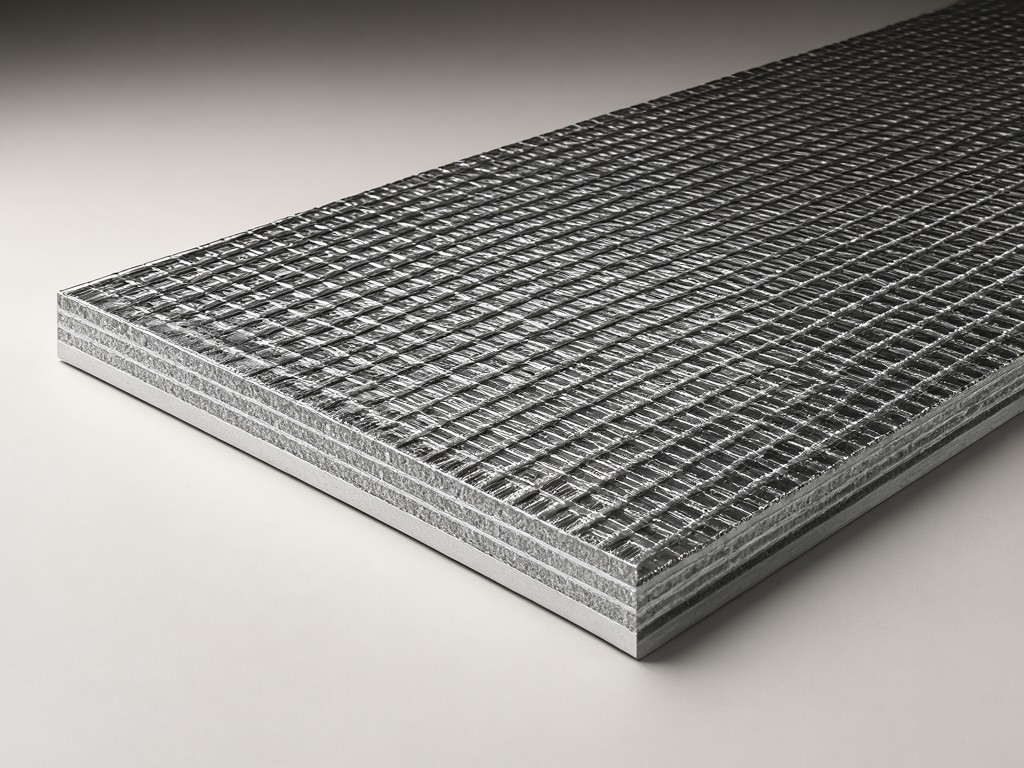
Specifying CE Certified Polyurethane Refrigeration Panel Board Manufacturer for Wholesale and OEM Orders
Thermal efficiency in cold-chain logistics depends on the integrity of the core density and the bond strength between the skins. When sourcing a certified polyurethane refrigeration panel board manufacturer, the primary metric is the resistance to delamination under thermal expansion stress during rapid temperature cycling. Our manufacturing process focuses on high-pressure foam injection to ensure the R-value remains consistent across the entire surface area of the paneling unit.
Procurement officers often face a trade-off between initial material cost and long-term structural rigidity. Lower-density cores may lead to warping or internal seam failure when exposed to high-humidity industrial environments. We mitigate this by utilizing moisture-stabilized formulations that maintain dimensional stability even when the board is subjected to heavy mechanical loads or transport vibration.
Technical Compliance and Material Integrity
Compliance with CE standards requires rigorous testing of fire-retardant properties and thermal conductivity. Every batch undergoes dimensional checks and density testing to ensure that the polyurethane core does not degrade over years of exposure to industrial-grade storage conditions.
What This Is and Where It Fits
The panel board serves as the primary thermal barrier in temperature-controlled environments where heat gain represents a financial risk. Unlike standard insulation foam, these boards are engineered for load-bearing applications where rapid-assembly hardware is required. The skin-to-core bond determines the board's resistance to impact damage and cracking during the installation phase.
Primary Application Environments
- Industrial cold storage units and walk-in free.
- Pharmaceutical-grade temperature-controlled chambers.
- Food processing lines and refrigerated transport containers.
- Commercial kitchen cabinetry and thermal display surfaces.
Critical Failure Modes Prevented
- Thermal bridging at the panel joint lines.
- Structural sagging due to inconsistent foam density.
- Moisture ingress leading to internal mold growth.
- Surface delamination in high-impact zones.
Materials and Construction Trade-offs
The choice of skin material significantly impacts the board's durability and weight profile. Galvanized steel skins offer superior resistance to impact and corrosion, whereas polymer-coated composites provide better flexibility for curved-surface applications. The adhesive system used is formulated to match the thermal expansion coefficient of the polyurethane core to prevent internal shearing during extreme temperature fluctuations.
| Parameter | Standard Grade | Industrial Grade |
|---|---|---|
| Core Density | 38-42 kg/m³ | 45-50 kg/m³ |
| Thermal Conductivity | 0.022 W/m·K | 0.020 W/m·K |
| Thickness Range | 30mm to 150mm | Custom up to 200mm |
Measured Performance
Reliability is verified through destructive and non-destructive testing on every production lot. We measure the shear strength of the skin-to-foam to ensure it exceeds the mechanical stresses encountered during assembly. This ensures that the panels will not fail when subjected to the torque-based forces common in large-scale construction projects.
Thermal stability is also monitored via accelerated aging tests. By exposing samples to rapid temperature swings, we can predict the long-term performance of the insulation barrier, ensuring that the energy efficiency of the refrigeration system does not drop due to material degradation.
Customisation Options and Limits
Customization allows for seamless integration into specific hardware systems. We offer various tongue-and-groove profile designs to ensure air-tight joints once installed. However, extreme thickness requests are limited by the structural capacity of the skin material; thicker panels may require internal reinforcement to prevent deflection under load.
Surface Finishes
Available in PVC-coated steel, stainless steel, or antimicrobial-treated surfaces depending on the hygiene requirements.
Joint Profiles
Standard cam-lock systems or male-female interlocking extrusions for high-performance thermal sealing.
Usage Scenarios
Engineers select these boards for projects where precise temperature control is non-negotiable. In these scenarios, the board must withstand constant internal pressure and external humidity without losing shape. For retail-grade cold units, the focus shifts to aesthetic-to-performance ratios and ease of installation on-site without heavy machinery.
Stock Availability
Lead times are dictated by the volume of the order and the specific skin material selected. Standard thicknesses are maintained for rapid dispatch, while custom-labeling boards or bespoke dimensions require a dedicated production run to ensure batch consistency and foam-cure optimization.
Frequently Asked Questions
Does the CE certification cover fire safety for all boards?
Yes, our polyurethane cores are formulated to meet specific fire-retardant standards, ensuring safety in commercial building applications.
What is the maximum load capacity for a 50mm panel?
Load capacity depends on the skin gauge and the support spacing. We provide technical data sheets for each specific configuration to assist your structural calculations.
Request a technical datasheet or bulk quote for your project.
Contact Technical Sales


