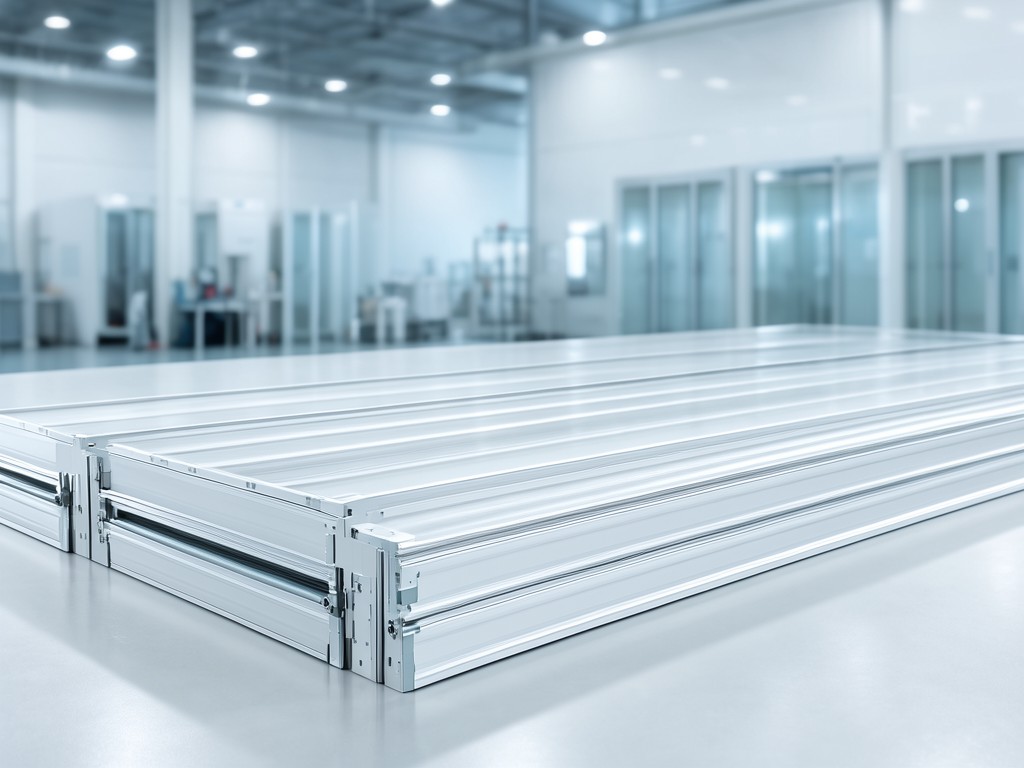
CE Certified Refrigeration Cold Store Wall Panels Manufacturer for Wholesale and OEM Orders
Thermal integrity in cold storage depends entirely on the bond strength between the metal skin and the insulating core. When the manufacturing process is inconsistent, thermal expansion during rapid temperature cycles causes delamination, leading to air pockets and rapid R-value degradation. We utilize a continuous-lamination process to ensure the polyurethaneisocyanurate (PUR) or polyisurate (PIR) core is fused to the pre-painted steel sheets, preventing the structural shearing often seen in lower-grade assembly methods.
What This Product Is and Where It Fits
Procurement officers often face the trade-off between panel thickness and thermal efficiency. A thinner 60mm panel increases internal floor space compared to a 100mm unit but increases compressor load times in sub-zero environments. Our production range is designed for high-turnover logistics hubs and food-grade processing facilities where moisture-tight joints are mandatory to prevent ice growth and de-frosting cycles.
- Industrial blast freezers requiring high-density PIR cores to resist thermal shock.
- Medium-temperature chill rooms utilizing antimicrobial-coated surfaces for food-safety compliance.
- Mobile cold storage units where rapid-assembly tongue-and-groove systems reduce onsite labor hours.
The Problem Buyers Keep Paying For
The most common failure mode in cold store construction is the failure of the tongue-and-groove joint. If the profile is not machined to tight tolerances (±0.2mm), the gaps allow vapor infiltration, which results in frost buildup at the panel seams. We use high-precision extrusion profiles to ensure the mechanical lock remains airtight even when the steel skin undergoes contraction at -30°C operational operating temperatures.
Design Constraints Behind the Specification
Surface finish selection dictates the lifecycle of the panel. In high-traffic loading bays, a standard 0.5mm galvanized steel skin may be prone to denting from pallet impacts, which compromises the coating and leads to corrosion. Upgrading to 0.6mm or 0.7mm thickness provides the necessary impact resistance for heavy industrial environments without significantly increasing the freight weight.
| Parameter | Standard Range |
|---|---|
| Insulation Material | PUR / PIR Rigid Foam |
| Core Thickness | 50mm to 200mm |
| Steel Skin Thickness | 0.4mm - 0.7mm (Galvanized) |
| Thermal Conductivity | ≤0.024 W/m·K |
Measured Performance in Real Use
Performance is validated through load-bearing tests that determine the allowable span. For ceiling applications, the panels must support the dead load of HVAC components and potential maintenance access without deflection. We test for compressive strength to ensure the internal foam structure does not collapse under point-pressure, which would otherwise thin the thermal barrier over time.
Fire Resistance
PIR cores offer inherent fire-retardant properties compared to PUR, forming a char layer that limits flame spread in industrial cold zones.
Chemical Resistance
The PVDF or polyester coatings provide resistance to the aggressive cleaning agents and organic acids used in food processing plants.
Comparing Two Configurations
Choosing the right panel configuration depends on the specific temperature gradient. A standard chill room (+4°C) requires significantly less insulation than a deep-freeze unit (-25°C), where 150mm+ panels are standard to prevent the exterior skin from reaching dew point and causing condensation.
Matching the Product to the Buyer's Need
OEM buyers require custom lengths to minimize the number of vertical joints. Our manufacturing line supports panel lengths up to 12 meters to reduce installation time and labor costs, which directly impacts the total cost-per-meter of the cold store envelope.
Buying Mistakes That Lead to Returns
Neglecting the thermal bridge coefficient of the fasteners is a common error. If the mounting system is not properly insulated with thermal washers, the metal screws act as heat sinks, leading to localized freezing and structural failure. Ensure your specification includes thermal-break hardware to maintain the calculated R-value.
Care, Storage and Service Life
Proper storage involves keeping panels on flat surfaces to prevent warping of the thin steel sheets. Once installed, the service life of PIR panels typically exceeds 15-20 years, provided the coating remains intact and the joints are not subjected to mechanical impact.
Request technical data sheets or bulk pricing for your next project.
Contact our engineering team for a Quote


