CE Certified Rockwool Cleanroom Ceiling Board Factory: What Buyers Should Check Before Ordering
Scope of Supply and Physical Form
The manufacturing of rockwool ceiling boards focuses on the bond between the mineral fibers and the metal skin. In a cleanroom environment, the primary failure mode is not the core material itself, but the delamination of the facing material under thermal cycling. If the adhesive process at the factory is inconsistent, the pressure differentials from the HVAC system cause the skin to pull, leading to air leaks and particulate shedding into the sterile zone.
Standard production lines offer 50mm to 100mm thickness profiles. The choice of thickness directly dictates the R-value and the mechanical resistance of the ceiling plane. For high-occupancy or pharmaceutical applications, a 75mm board is standard to balance weight with thermal resistance. However, the buyer must specify the edge profile—typically T-bar compatible or interlocking-style—to ensure the grid system maintains the airtight seal required for ISO-class environments.
The Problem Buyers Keep Paying
Importers often overlook the hidden cost of dimensional variance across batches. When boards vary by more than ±0.5mm in edge width, the T-bar grid fails to sit flush, creating visible gaps and structural weaknesses that compromise the cleanroom's pressure rating. A factory utilizing automated CNC-cutting technology maintains tighter tolerances than manual-cutting operations, reducing the need for labor-intensive onsite trimming during the installation phase.
Another recurring issue is the coating quality of the galvanized steel. In environments with high humidity or chemical cleaning agents, standard zinc coatings undergo corrosion at the cut edges where the metal is exposed. We utilize a pre-coated polyester or PV finish that provides a chemical barrier, preventing the "bleeding" of rust that can contaminate sensitive manufacturing processes.
What the Design Has to Balance
| Parameter | Standard Specification | Performance Impact |
|---|---|---|
| Core Density | 48-80 kg/m³ | Higher density increases acoustic absorption but also weight. |
| Steel Thickness | 0.50mm - 0.70mm | Thicker steel prevents deflection under point loads. |
| Fire Rating | Class A / Non-comb | Essential for safety compliance in industrial zones. |
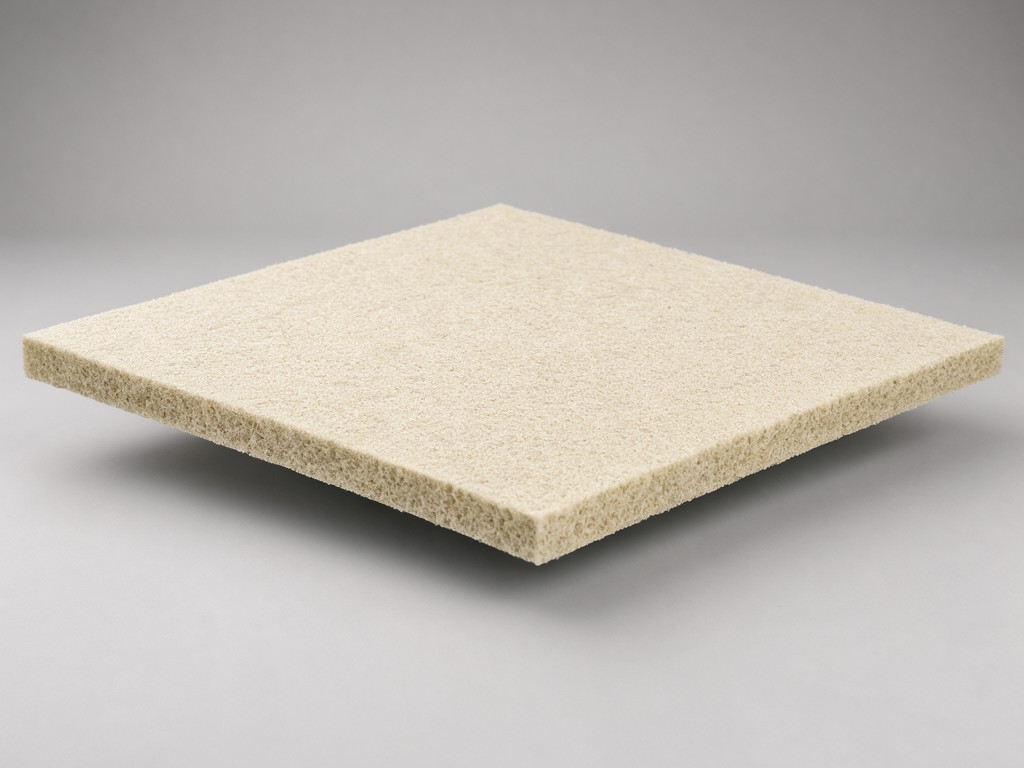
Specification Range and Customisation
The structural integrity of the ceiling is determined by the mineral fiber lamination process. While rockwool provides the necessary fire resistance and thermal insulation, the metal skin acts as the load-bearing membrane. For spans exceeding 1200mm, we recommend a reinforced-core configuration to prevent the "bowing" effect that occurs when humidity levels in the cleanroom fluctuate.
Comparing Two Configurations
Standard Mineral Core
Designed for general industrial cleanrooms where acoustic performance is secondary to cost. Uses a standard resin-bonding process that is cost-effective for large-scale warehouse projects.
High-Density Acoustic Core
Engineered for pharmaceutical and semiconductor labs. The 80kg/m³ core density provides superior vibration dampening and better resistance to mechanical equipment noise.
Customisation Options and Their Limits
Proc officers often require specific surface finishes to meet local health codes. We offer anti-microbial coatings that inhibit fungal growth on the board surface. However, it is important to note that any custom coating can alter the thermal conductivity of the board, which may affect the overall R-rating calculation if not tested post-fabrication.
- Custom dimensions up to 1200x2400mm for specialized grids.
- Pre-perforated for HEPA filter integration or diffusers (laser-cut precision).
- Specialized moisture-resistant edges for cold-storage food-grade environments.
Requirements by Segment
Pharmaceutical facilities prioritize de-gassing properties of the materials used. In contrast, electronics manufacturing focuses on electrostatic discharge and the load capacity of the ceiling to support heavy overhead busbars. Our factory process ensures that the rockwool core is tightly encapsulated to prevent fiber release during maintenance access through the ceiling plenum.
Setup, Use and Replacement
Installation of these boards requires a precision-leveled perimeter channel. If the perimeter grid is not perfectly square, the rockwool-filled boards will experience uneven stress, leading to premature failure at the edges. We provide technical drawings for the suspension layout to ensure the load-bearing distribution remains uniform across the entire square footage of the cleanroom.
Request technical data sheets and CE certification documentation for your project.
Contact our engineering department for a bulk quote


