china exterior basement insulation panels factory - Bulk Supply and Specification Guide
Selection trade-off: XPS delivers consistent R-5 per inch and 25 psi compressive strength for deep backfill, but costs 30-40% more than faced EPS. Polyiso hits R-6.5 per inch yet requires protected facers below grade. The spec you approve — density, facer type, edge profile — locks in both installed performance and container loading efficiency.
What This Product Is and Where It Fits
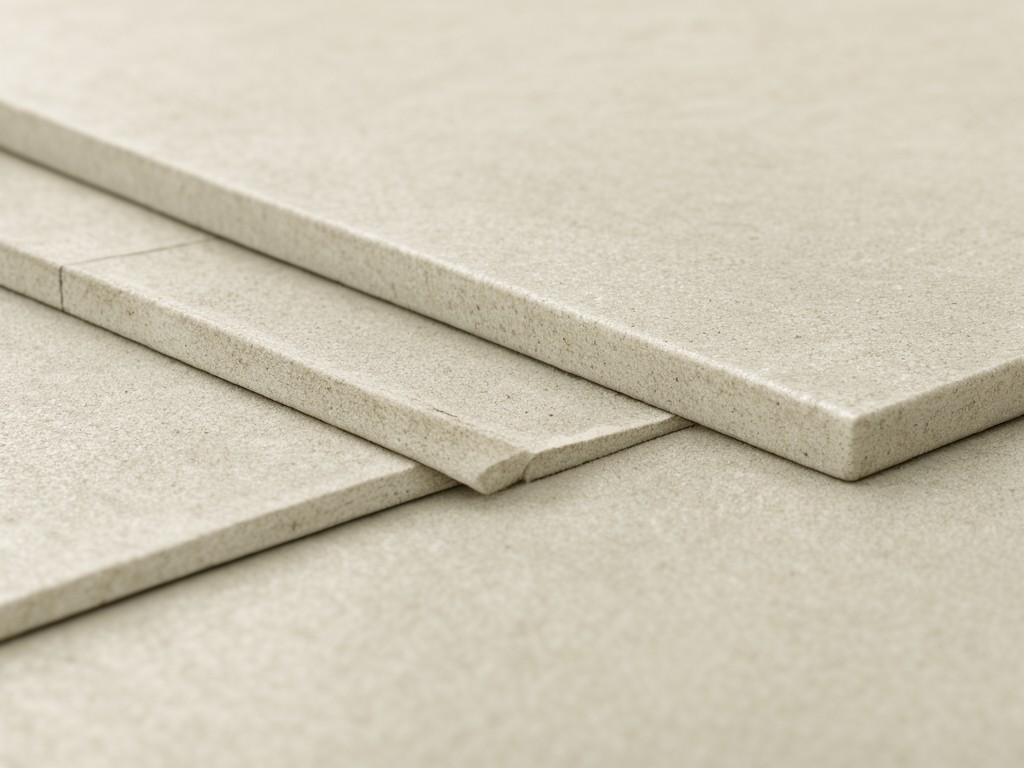
Material choice starts with the conditions the product will meet. Exterior basement insulation sits against foundation walls, below grade, subjected to hydrostatic pressure, freeze-thaw cycles, and backfill loads that interior products never see. The factory produces three core families: XPS (extruded polystyrene) in 25, 40, 60, and 100 psi grades; faced EPS (expanded polystyrene) Type I, VIII, IX per ASTM C578; and polyiso with coated glass facers rated for below-grade contact. Each ships as 2 ft × 8 ft or 4 ft × 8 ft panels, thicknesses from 1 in to 4 in, with shiplap or square edges.
Buyers are typically general contractors, waterproofing subcontractors, or distributors supplying residential and light-commercial foundation packages. They specify by compressive strength (psi), R-value per inch, water absorption (% by volume), and vapor permeance (perms). The factory qualifies every run against ASTM C578 for XPS/EPS and ASTM C1289 for polyiso, with third-party witness testing available on container-load orders.
The Problem Buyers Keep Paying For
Where chlorine, sweat or UV exposure is routine, the failure modes differ. Here the complaints cluster around three mechanisms: water absorption that erodes R-value after two winters, compression creep under 8 ft of backfill that creates thermal bridges at panel joints, and facer delamination when damp proofing adhesives attack unprotected foam skins. A 2023 jobsite audit on a 120-unit townhome project showed 18% R-value loss in Type I EPS with polymeric facer after 14 months — the facer had blistered, letting groundwater wick into beads.
The root cause is usually a spec gap: the drawing calls for "R-10 continuous insulation" but omits compressive strength, water absorption limit, or facer compatibility with the specified damp proofing. The factory then ships to the lowest common denominator — Type I EPS, 10 psi, 4% water absorption — and the buyer owns the callbacks. Specifying 25 psi XPS with <0.3% water absorption (ASTM C272) eliminates the creep and absorption issues, but adds $0.45/ft². That delta is the negotiation.
Option Comparison by Usage Level
Construction options diverge as soon as weight matters. The table below maps the three foam families to typical foundation depths, backfill heights, and code minimums. Polyiso data assumes coated glass facer; EPS data assumes Type IX (1.8 pcf) with laminated polymeric facer unless noted.
| Parameter | XPS 25 psi | EPS Type IX Faced | Polyiso CG Facer |
|---|---|---|---|
| R-value / in (aged, 180-day) | 5.0 | 4.2 | 6.5 |
| Compressive strength (psi, 10% deformation) | 25 | 15-18 | 16-20 |
| Water absorption % vol (ASTM C272) | 0.1-0.3 | 2.0-4.0 | 0.5-1.5 |
| Vapor permeance (perms, 1 in) | 1.1 | 2.5-3.5 | 0.03 (facer dependent) |
| Max backfill height (ft, typical) | 12 | 8 | 8 |
| Relative cost index (per ft² @ R-10) | 1.00 | 0.62 | 0.88 |
| Freeze-thaw cycles (ASTM D2126, % R loss) | <2% | 5-8% | 3-5% |
For foundations deeper than 8 ft or sites with high water tables, XPS 25 psi is the default. Shallow frost-protected shallow foundations (FPSF) and interior retrofit projects often specify faced EPS Type IX to hit budget. Polyiso sees use where interior clearance is tight — its R-6.5/in means 1.5 in achieves R-10 versus 2 in for XPS — but the facer must be confirmed compatible with the waterproofing membrane.
Usage Scenarios and Buyer Segments
Residential production builders ordering 50+ foundations per year standardize on XPS 25 psi with shiplap edges — the joint seal reduces installation labor by 15% versus taping square-edge panels. Their procurement teams require pallet-level lot traceability and ASTM C578 certification packets per container.
Waterproofing subcontractors specifying dimpled drainage membranes over the insulation need facer compatibility letters. The factory provides adhesion test data (ASTM D4541) for the top five membrane brands on each facer type. Distributors serving the retrofit market stock 1 in and 1.5 in faced EPS Type IX in 4 ft × 8 ft sheets — lightweight for single-person handling in tight crawlspaces, with polymeric facer that survives solvent-based damp proofing.
Light-commercial projects (schools, warehouses) with 10-12 ft foundation walls specify XPS 40 or 60 psi. The factory runs these grades on dedicated extrusion lines; lead time extends to 3 weeks versus 10 days for 25 psi. Custom densities (30, 50 psi) are available at 5,000 ft² MOQ with a 10% price premium.
Export Packaging and Handling Protection
Panels ship on 48 in × 96 in pallets, stacked to 48 in height max, wrapped in 6 mil UV-stabilized stretch film with corner boards. Each pallet carries a label with grade, thickness, R-value, compressive strength, production date, and lot number. Container loading plans maximize cube: 2,800 ft² of 2 in XPS per 40 ft HC container (22 pallets), 3,600 ft² of 1.5 in faced EPS (24 pallets).
Moisture control during transit is critical — polyiso facers can condense moisture inside the wrap if the container sits in humid ports. The factory includes desiccant strips (2 units per pallet) and vents the stretch film at top corners on request. Buyers receiving in freezing ports should specify "cold-weather packaging" — an inner polyethylene sleeve per pallet — to prevent facer brittleness during unloading.
Care, Storage and Service Life
Jobsite storage beyond 30 days requires covered, ventilated space off ground. XPS tolerates UV exposure for 60 days per ASTM D2126; faced EPS and polyiso facers chalk and lose adhesion after 30 days direct sun. Panels must remain in factory wrap until installation. Edge damage from forklift tines is the leading cause of rejected panels — specify "forklift protection strips" on the PO if the distributor's yard uses unskilled labor.
Installed service life exceeds 50 years for XPS in non-structural below-grade applications, provided the waterproofing membrane remains intact. EPS service life correlates directly with water absorption — Type IX at <2% absorption maintains 90% R-value at 30 years. Polyiso facer integrity is the limiting factor; coated glass facers show <5% permeance increase after 20 years in accelerated aging (ASTM C1289).
Ordering, Tooling and Lead-Time Questions
How is the specification locked before production?
The buyer submits a marked-up section drawing showing panel thickness, edge profile, facer type, and any custom density. The factory returns a specification sheet with ASTM references, dimensional tolerances (±2 mm thickness, ±3 mm width/length, ±2° squareness), and a first-article inspection (FAI) plan. Production starts only after the buyer signs the FAI report on the pilot run (typically 500 ft²).
What custom densities or facers are possible, and at what MOQ?
XPS custom densities from 20-100 psi in 5 psi increments; 5,000 ft² MOQ, 3-week lead time. EPS custom densities Type II through XV; 3,000 ft² MOQ. Facer options: polymeric film (standard), fiberglass mat (EPS only), coated glass (polyiso only), aluminum foil (polyiso, interior use only). Custom facer lamination adds 5 days and $0.08/ft².
What is the standard lead time and how does it scale with order size?
Stock grades (XPS 25 psi, EPS Type IX faced, polyiso 1-2 in): 10 business days ex-factory. Custom density or thickness: 15-20 business days. Orders above 20,000 ft² qualify for staggered delivery — 50% at 10 days, balance at 20 days — to match foundation pour schedules.
What documentation ships with each container?
Mill certificate per ASTM grade, FAI report (if requested), pallet packing list with lot numbers, container loading plan, and facer adhesion test summary for the specified waterproofing membrane. Certificate of Origin and fumigation-free pallet declaration included for US/Canada/EU shipments.
How are claims handled if panels arrive damaged or off-spec?
Buyer documents with photos within 48 hours of unloading: pallet label visible, damage pattern, measurement of suspect panels. Factory QC reviews within 3 business days. Off-spec material (thickness, density, R-value) triggers replacement at factory cost plus freight. Transit damage claims route through the carrier; factory provides packing photos and load securement records to support the claim.
Specification Review Request
Send your foundation section drawing, specified R-value, backfill height, and waterproofing membrane brand. The factory returns a marked-up spec sheet with recommended grade, facer, edge profile, and landed cost per ft² — including container loading optimization — within 2 business days.
Include: project location (climate zone), foundation depth, backfill type (native vs. granular), waterproofing system, and target delivery window. If qualifying a second source, note the current supplier's grade and any field performance issues.
Submit Specification for Review →


