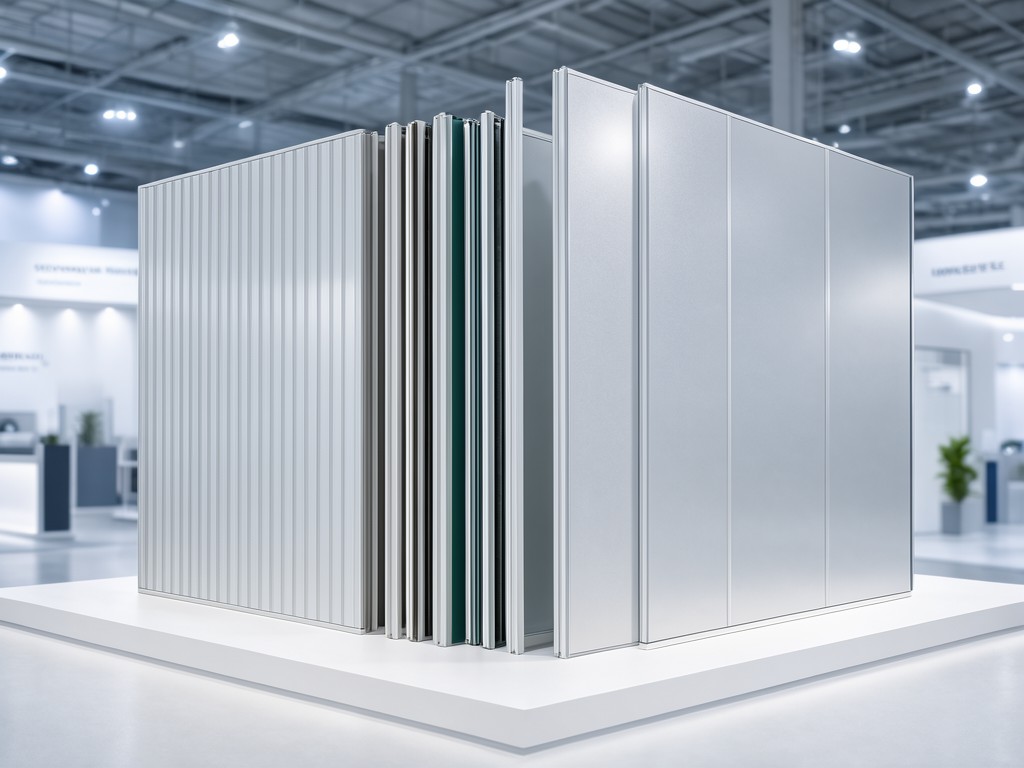
Custom Antistatic Cleanroom Sandwich Wall Panels Suppliers: Specification and Supply Guide
Maintaining controlled environments requires structural components that prevent electrostatic discharge without compromising mechanical integrity. When a procurement officer selects panels for a cleanroom, the primary metric is often the surface resistance of the skin versus the thermal stability of the core. Our sandwich panels utilize a high-density core bonded between conductive-coated metal skins to ensure that electrical resistance remains within the 10⁶ to 10⁹ ohm range, even after repeated chemical cleaning.
What This Is and Where It Fits
These panels function as multi-layered assemblies designed for rapid assembly in sensitive manufacturing environments. Unlike standard mineral-core partitions, the antistatic variant incorporates carbon-loaded tracks or conductive coatings to dissipate static safely. This construction is essential for semiconductor assembly, pharmaceutical packaging, and electronics testing where a single spark can result in batch failure.
- Internal walling for ISO Class 5 through Class 8 environments.
- Modular laboratory partitions requiring ESD-safe surfaces.
- Clean-grade enclosures for high-precision medical device equipment.
- Temporary testing bays where rapid disassembly is required for project cycles.
What Actually Determines Performance
The longevity of a sandwich panel depends on the bond strength between the skin and the core. If the adhesive application process is inconsistent, thermal fluctuations cause delamination, which creates air pockets and breaks the antistatic surface surface path. We utilize high-pressure continuous bonding to ensure the panel remains flat across temperature ranges from -10°C to +50°C.
Core Material Selection
Mineral wool cores provide superior fire ratings but increase the weight per square meter. PET or PIR cores offer lower density, allowing for wider-span installations where structural load-bearing capacity is otherwise constrained.
Skin Conductivity
Pre-painted steel is the standard for mechanical rigidity. For environments requiring high chemical resistance, PVDF-coated skins prevent the corrosion caused by aggressive cleaning agents used in pharmaceutical sterilization protocols.
Where This Beats Standard Alternatives
Standard off-the-shelf panels often lack the grounding points required for ESD-sensitive zones. Our custom manufacturing integrates the grounding strips directly into the extrusion profiles, ensuring that every panel is electrically bonded to the building's earth. This eliminates the need for manual grounding wires which are common points of failure during post-installation inspections.
| Parameter | Specification Range |
|---|---|
| Panel Thickness | 50mm to 200mm (±2mm tolerance) |
| Surface Resistance | 10⁶ - 10⁹ Ω/sq |
| Core Load Bearing | 1.5 kN/m² to 5.0 kN/m² |
| Flame Rating | B-s0, d0 / Class A |
Assumptions Buyers Should Stop Making
Many buyers assume that the antistatic coating is a simple surface paint. In reality, if the conductive layer is not integrated with the metal substrate, the resistance will fluctuate after the first few wipe cycles. We recommend specifying mechanical interlocking for the joints to maintain the continuity of the antistatic path across the entire surface area of the facility.
Customisation Options and Their Limits
Customization extends to the profile of the tongue-and-groove joint. While we can provide custom lengths to fit specific ceiling heights, widths are typically limited by standard extrusion die capacities. Requesting widths beyond 1200mm may require internal structural ribs to prevent warping of the skin during the curing process.
- Custom perimeter profiles for flush-mount hardware integration.
- Integrated air return channels for HEPA-filtered environments.
- Variable core densities for acoustic insulation in testing zones.
- Specific RAL-matching for medical-grade visual standards.
Setup, Use and Replacement
The supply process begins with a technical review of your floor plan and load requirements. Once the panel specifications are confirmed, we provide sample boards for testing of the antistatic performance. This phase ensures that the final production run aligns with the specific electrical requirements of your cleanroom certification.
Ready to discuss technical tolerances for your next cleanroom project?
Request a Technical Review and Quote


