Custom Corrugated Polyisocyanurate Sandwich Panels China Supplier: Specification, Ordering and Quality Notes
Thermal resistance in structural assemblies depends on the bond strength between the polyisocyanurate (PUR) core and the profiled metal skins. When the foam density is inconsistent during the extrusion process, the panel fails under thermal stress, leading to delamination and lost structural integrity. Our manufacturing process utilizes continuous foam injection molding to ensure a uniform core density of 38-42 kg/m³, preventing the air pockets that typically cause warping in lower-grade alternatives.
| Parameter | Technical Range / Value | |
|---|---|---|
| Core Material | Polyisocyanurate (PUR) / PIR Blend | Thermal conductivity: 0.022-0.024 W/m·K |
| Skin Material | Galvalume Steel / Aluzinc | Thickness: 0.4mm to 1.0mm variable |
| Corrugation Profile | Trapezoidal / Waveform | Increased stiffness-to-weight ratio |
| Panel Thickness | 50mm to 300mm custom | Tolerance: ±1.5mm |
Option Comparison by Usage Level
Selecting the right profile profile dictates the load-bearing capacity of the assembly. A deep-profile corrugation increases the moment of inertia, allowing for longer spans without intermediate support, but it increases the material consumption per square meter.
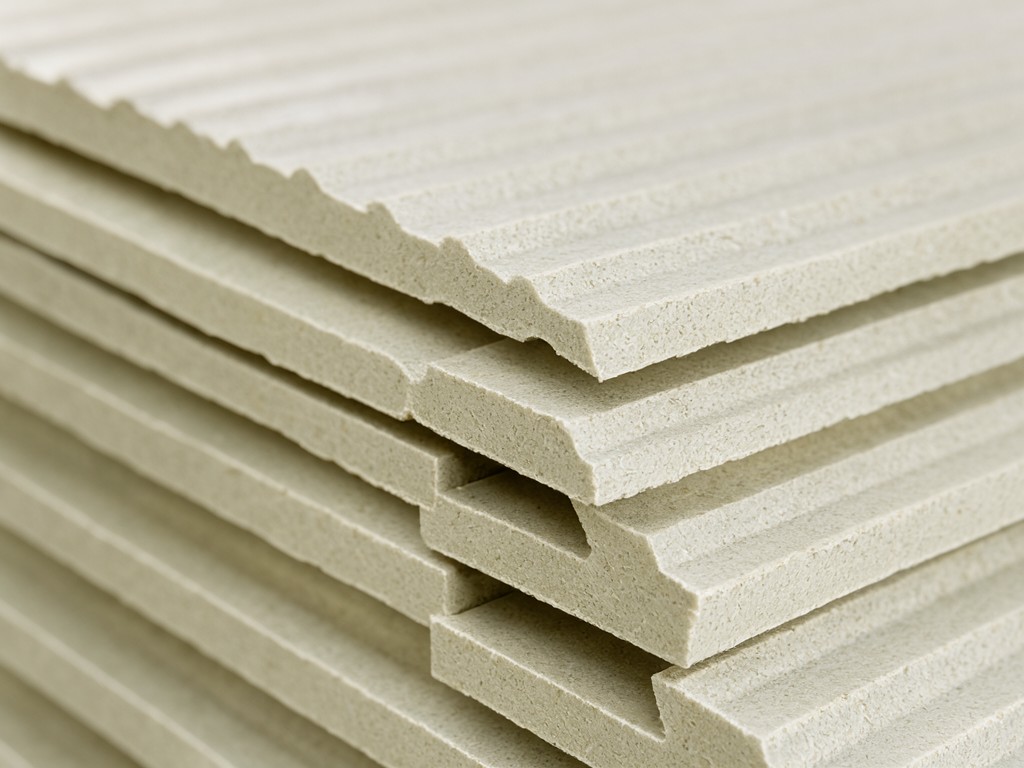
Industrial Cold Storage
Optimized for cold-chain environments where temperature differentials are extreme. The PIR core is formulated for high-dimensional stability to prevent shrinkage during rapid cooling cycles.
- High-density foam for thermal bridge resistance.
- Vapor barrier coating integrated into skin.
Commercial En Enclosures
Focuses on rapid assembly and aesthetic finish. The corrugated profile provides the mechanical rigidity needed for wind load resistance without requiring heavy structural framing.
- Lightweight profile for reduced labor costs.
- UV-resistant PVDF coatings for exterior exposure.
Capacity and Tooling
Lead times for custom profiles are primarily driven by the rolling tooling requirements. If the profile geometry is not calibrated for the specific skin thickness, the joint overlap will fail, leading to water ingress issues on-site. We utilize CNC-controlled rolling mills to ensure that every panel maintains a ±0.05mm dimensional tolerance across the entire production run.
Stock Availability and Planning
Inventory levels for standard profiles are maintained to facilitate immediate dispatch, but custom polyisocyanurate configurations require a 3-to-6 week lead time depending on raw material chemical procurement and tooling setup. Procurement officers should align orders with project milestones to avoid on-site storage damage to the high-value panel skins.
Packing and Logistics
Transport of large corrugated panels requires specific vertical-tensioning methods to prevent deformation of the ribs. We utilize reinforced steel crates and protective edge protectors to maintain the interlocking joints during maritime transit. Each bundle is tagged with a manifest detailing the batch foam density, skin gauge, and thermal resistance values for full traceability.
Care and Service Life
The longevity of the PIR core is contingent upon the integrity of the outer skins. Exposure of the raw foam to direct UV without a protective coating results in rapid degradation and powdering. Once installed, these panels maintain their R-value for 30+ years, provided the mechanical joints remain sealed to prevent moisture ingress.
Request technical datasheets and volume pricing
Contact our engineering team for custom specifications


