Custom Decorative Metal Carved Insulated Siding Panels Factory - Bulk Supply and Specification Guide
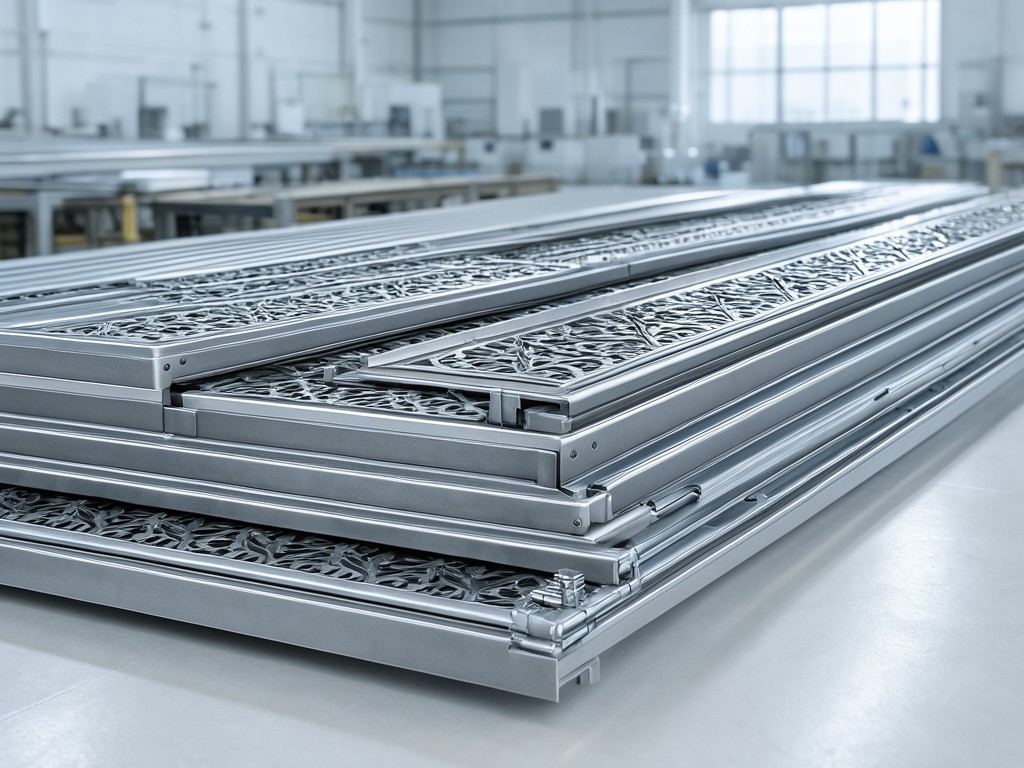
Total cost of ownership shifts once returns and field failures are counted. While low-gauge alternatives offer a lower initial procurement cost, they often suffer from delamination between the decorative metal skin and the rigid foam core under repeated thermal cycling. Our factory utilizes a high-pressure continuous bonding process to ensure the structural core remains fused to the carved-profile metal face, preventing the buckling typically seen in inferior-grade composite panels.
Technical Integrity Note
The carving process maintains a tolerance of +/- 0.5mm across the panel depth. This ensures that interlocking decorative profiles align without forcing the joints during installation, which is the primary cause of water ingress and seam failure in high-exposure environments.
What Actually Determines Performance
The longevity of decorative insulated siding depends on the interaction between the surface coating and the substrate density of the insulation core. Low-density foam cores lack the compressive strength to support deep carved reliefs, leading to "ghosting" or surface deformation under minor mechanical impact. We utilize high-density PIR or XPS cores to provide a rigid substrate that maintains the carved geometry of the metal face despite temperature fluctuations.
- Metal skin thickness varies from 0.40mm to 0.70mm based on the required wind-load resistance.
- Insulation core thickness (20mm to 50mm) dictates the final R-value and thermal break per meter.
- Bond strength is verified via shear testing to prevent delamination in high-humidity coastal zones.
Material Options and Their Trade-offs
Selecting the right alloy and foam density requires balancing thermal performance against aesthetic detail requirements. Zinc-coated alloys offer superior corrosion resistance in industrial environments compared to standard galvanized steel, though they increase the weight per square meter, which affects the structural load calculations for the primary framing.
| Feature | Standard Grade | Premium Architectural |
|---|---|---|
| Substrate Material | Galvanized Steel (0.45mm) | Al-Zinc or Marine Grade |
| Insulation Core | EPS Foam (20kg/m³) | High-Density PIR (35kg/m³) |
| Carving Depth | Standard Embossing | CNC-Precision Deep Relief |
Measured Performance in Real Use
Cheaper stock options fail at the worst point in the season when the coating becomes brittle under UV exposure. Our PVDF-coated finishes maintain flexibility even when the metal skin expands and contracts against the insulated core. This prevents the hairline cracking at the valleys of the carved patterns, where stress concentration is highest and moisture ingress typically begins.
Commercial Efficiency
For large-scale retail rollouts, the metric of success is labor-hours per square meter. The integrated nature of the insulated panels eliminates the need for separate vapor barriers and insulation layers, reducing the site timeline by up to 40% compared to traditional cladding methods.
Visual Consistency
Private-label buyers require color-matching across multiple batches. We utilize spectrophotometric-controlled coating lines to ensure that carved surfaces do not shift hue between production runs, preventing visible seams on large-scale building facades.
Assumptions Should Stop Making
Buyers often assume that the decorative carving is purely aesthetic. In reality, the geometry of the carve affects the moment of inertia of the panel. If the carving is too deep relative to the metal gauge, the panel may exhibit "oil-canning" or visible waving under wind pressure. We optimize the rib-to-thickness ratio to maintain a flat plane without adding unnecessary weight.Segment-Specific Requirements
Hospitality projects demand specific fire-retardant ratings for the insulation core, whereas cold storage units prioritize impact resistance for high-traffic areas. We adapt the core chemistry and skin hardness to the regional building codes of the target market without compromising the aesthetic.
How Consistency Is Held
Every batch undergoes a dimensional check to ensure the interlocking profiles remain within the specified tolerance. We also perform periodic adhesion testing on random samples to verify that the metal-to-foam bond will withstand the shear stresses of rapid thermal expansion.
What Gets Checked Before Shipment
- Salt spray testing for coastal-grade alloy specifications.
- Thermal conductivity verification of the core R-value.
- UV resistance accelerated testing for the decorative finish.
Request technical data sheets or material samples for your next project.
Contact our Engineering Team for a Custom Quote


