custom double sided steel rock wool panels exporter: Specification, Ordering and Quality Notes
Total cost of ownership shifts once returns and warranty claims are counted. For industrial-scale acoustic and thermal barriers, the balance between steel-gauge thickness and rock wool density determines the long-term structural integrity under thermal. Procurement must prioritize the mechanical stability of the panel skin to prevent buckling or sagging in high-humidity environments.
Technical Specification Rule
Steel skins below 0.5mm thickness often exhibit edge deformation when subjected to mechanical fastening during site-installation; a minimum of 0.65mm ensures the panel remains flat under the torque applied by mounting fasteners.
Scope of Supply and Physical Form
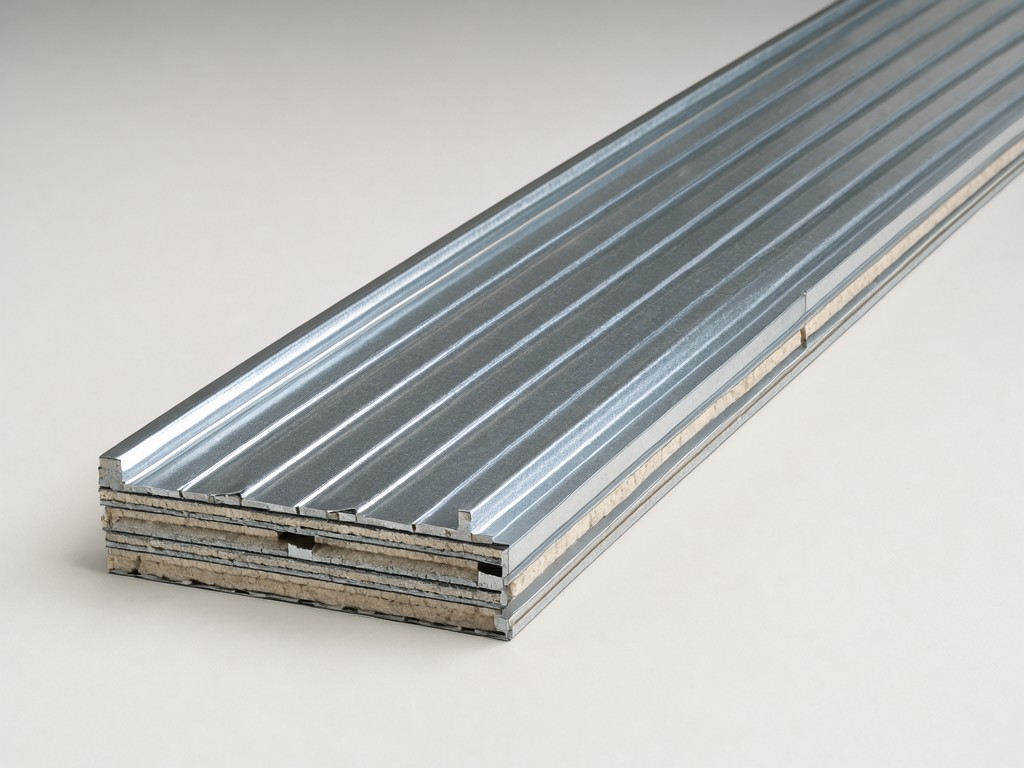
The supplied units consist of pre-assembled assemblies where the high-density mineral wool core is sandwiched between two galvanized steel sheets. This configuration is designed for rapid installation in commercial infrastructure where sound attenuation and fire resistance are simultaneously required.
| Parameter | Standard Range / Options |
|---|---|
| Panel Thickness | 50mm to 150mm |
| Rock Wool Density | 40kg/m³ - 100kg/m³ |
| Steel Gauge | G24 to G20 (equivalent) |
| Standard Width | 600mm, 1000mm, 1200mm |
Construction Method and Its Effect on Consistency
Tooling amortisation decides the precision of the bond between the steel and the mineral fiber. If the adhesive application or mechanical pinning is inconsistent, the rock wool may delaminate during thermal fluctuations, leading to air gaps that degrade the acoustic rating (NRC).
We utilize automated perforation lines to ensure that the acoustic- pattern is uniform across the entire surface area. This prevents "hot spots" where sound leakage might occur, a common failure in manually--loaded panel production.
Buying Mistakes That Lead to Returns
- Neglecting the coating-grade for high-humidity zones, leading to premature oxidation and rust spots within 24 months.
- Underestimating the load-bearing capacity of the span, which results in visible sagging of the ceiling grid line.
- Failing to specify the fiber-binding agent, which causes dust shedding or structural breakdown during long-transit shipping.
Volume Planning and Lead Time
Cheaper stock options fail at the worst point in the season when supply chain disruptions occur. Large-scale projects require a 4-6 week lead time to account for custom steel-coil processing and specialized mineral wool curing cycles.
Standard Orders
Available for 14-day dispatch for standard dimensions and common finishes.
Custom Specs
Requires 45+ days for bespoke perforation patterns and specific high-density cores.
Stock Availability and Reorder Planning
Consistency in batch-matching is vital for large architectural projects. We recommend reordering when 20% of the inventory remains to ensure the coating-lot remains identical across all installation phases.
| Finish Type | Recommended Application |
|---|---|
| Polyester Coated | Laboratories, high-moisture zones |
| PVDF Powder | Industrial warehouses, UV-exposed facades |
| Perforated Steel | Office ceilings, acoustic halls |
Export Packaging and Handling Protection
Damage during maritime transit is the primary cause of panel-edge rejection. We utilize reinforced timber-palletization and moisture-barrier shrink wrap to prevent salt-air corrosion on the steel-surfaces.
Need technical data for a specific project volume?
Request a formal quotation and technical review


