Custom EPS Corrugated Roof Sandwich Panels Suppliers: Supply and Specification
Thermal stability and structural integrity depend on the core density and the tensile strength of the outer skins. In large-scale industrial applications, the primary failure mode is delamination caused by mismatched thermal expansion coefficients between the metal and the foam core. We utilize specific EPS densities ranging from 15 to 30 kg/m³ to ensure the panel maintains its profile geometry under heavy snow loads or wind suction without permanent deformation.
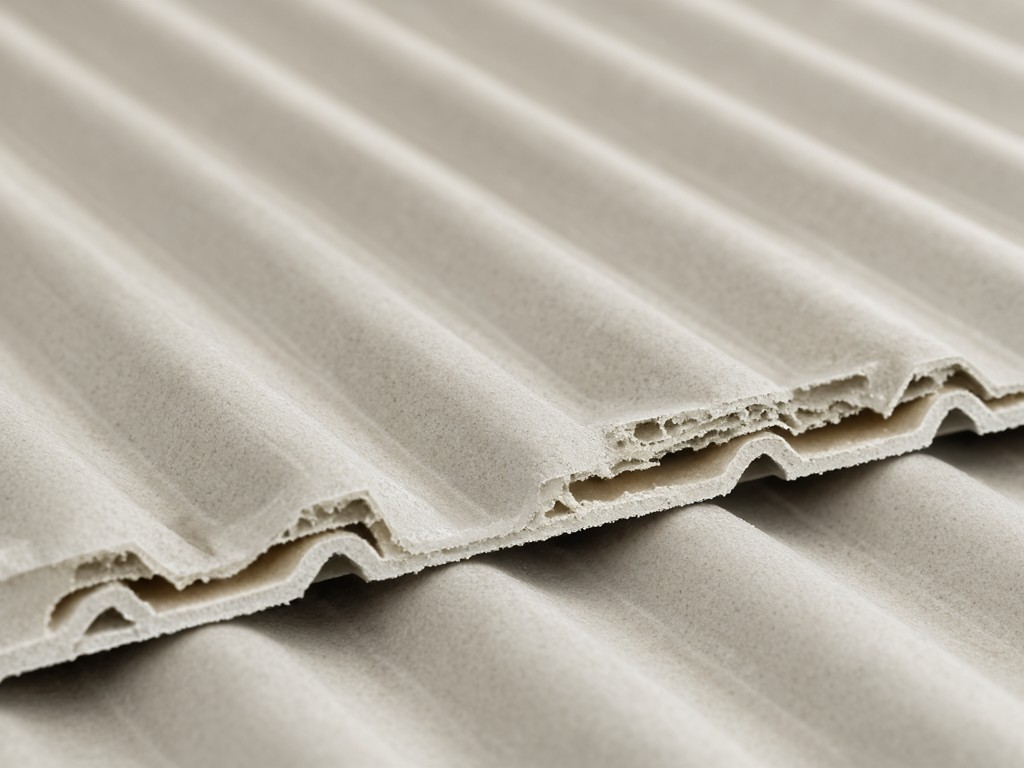
Technical Note: Corrugated profile depth (typically 30mm to 60mm) directly dictates the moment of inertia of the panel, allowing for longer span distances between secondary purlins.
Materials and Construction Trade-offs
Selecting the right configuration involves a trade-off between R-value performance and impact resistance. A 0.5mm galvanized steel skin provides higher resistance to mechanical damage during installation but increases the weight per square meter, affecting transport costs. For environments with high UV exposure, a PVDF or polyester-based coating is required to prevent pigment chalking and degradation over a 20-year cycle.
| Parameter | Standard Range | Commercial Impact |
|---|---|---|
| EPS Core Thickness | 50mm - 200mm | Higher thickness increases thermal R-value. |
| Skin Metal Thickness | 0.4mm - 0.7mm | Affects load capacity and puncture resistance. |
| Core Density | 15 - 35 kg/m³ | Higher density prevents core sagging. |
Measured Performance in Real Use
Moisture ingress at the joints is the most common cause of warranty claims. If the profile overlap is not consistent, water can penetrate the EPS core, leading to staining and internal corrosion of the metal skin. We utilize continuous foam adhesive systems to ensure the bond line between the steel and the EPS remains intact even under extreme thermal cycling.
- Thermal conductivity measured via heat flow meter analysis to verify insulation consistency.
- Load-bearing capacity tested via point load simulation to determine maximum purlin spacing.
- Fire resistance rated based on core flame speed for local safety compliance.
Matching the Product to the Buyer's Need
Cold Storage
Focuses on maximum R-values and moisture barrier integrity. Dense cores are specified to prevent condensation within the panel structure during sub-zero operations.
Industrial Manufacturing
Prioritizes span-to-weight ratio. Thinner skins with high-profile ribs reduce material cost while maintaining structural rigidity.
Customisation Options and Their Limits
Customization allows for specific profile geometries to match existing architectural requirements. However, altering the rib height requires new tooling for the rolling mill, which introduces a minimum order quantity (MOQ) and extends lead times. Pricing depends on the complexity of the profile geometry.
| Option | Specification |
|---|---|
| Custom Profile Depth | 30mm to 150mm (Tooling dependent) |
| Coating Type | RAL colors, Polyester, PV, PVDF |
| Joint Detail | Standard snap-lock or custom perimeter jointing |
Inspection Items and Test Methods
Every batch undergoes dimensional checks to ensure fitment on-site. We measure the width tolerance to within ±2.0mm to prevent gaps in long runs. Bond strength testing is also performed on random samples to ensure the EPS core does not shear from the steel skin under mechanical stress.
What is the typical lead time for custom corrugated panels?
Standard profiles typically ship within 2-3 weeks, while custom profile rolling requires 4-6 weeks depending on tooling availability and material sourcing.
Can the EPS density be adjusted for specific thermal requirements?
Yes, we can vary density between 15 and 40 kg/m³ to meet the specific thermal calculations of the project.
Request a technical data sheet for your project specifications.
Contact our engineering team for a quote


