Specifying custom exterior foam wall insulation panels suppliers for Wholesale and OEM Orders
Scope of Supply and Physical Form
Deflection under load governs the panel thickness a project can tolerate before thermal performance drops below specification.
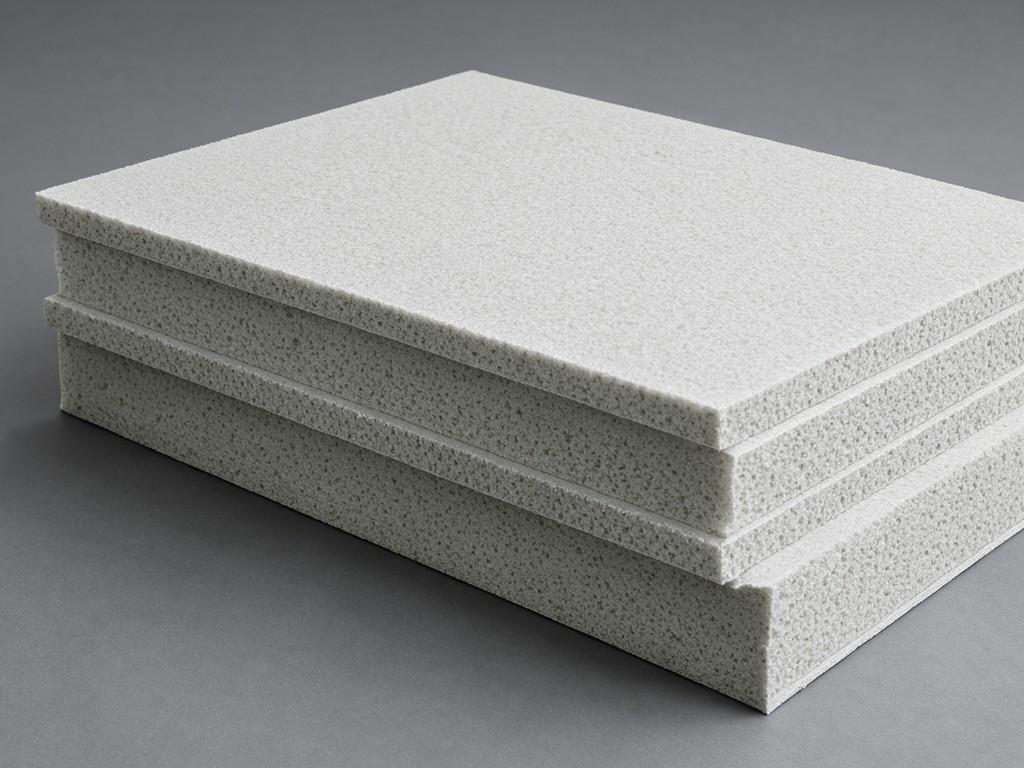
Panels ship as flat sheets with tongue‑and‑groove edges, faced on one or both sides with reflective foil, coated glass mat, or cementitious board. Core densities range from 30 kg/m³ for EPS to 45 kg/m³ for PIR, and standard widths are 1200 mm with lengths cut to 2400 mm, 3000 mm or custom.
EPS, XPS, PIR, PUR
Foil, glass mat, cement board
25 mm – 150 mm
Tongue‑and‑groove, shiplap
Bulk buyers receive panels on heat‑treated pallets, stretch‑wrapped with corner protectors to prevent edge crush during container loading.
Materials and Construction Trade-offs
The interface between parts determines whether a panel holds its R‑value after five years of freeze‑thaw cycles.
PIR cores deliver the highest R‑value per millimetre but cost 15‑20 % more than XPS. XPS resists moisture ingress better, making it the default for below‑grade applications. EPS remains the lowest‑cost option but requires a robust facing to limit vapour drive.
| Core material | Typical λ (W/m·K) | Compressive strength (kPa) | Moisture absorption (% vol) | Relative cost index |
|---|---|---|---|---|
| PIR | 0.022‑0.025 | 150‑200 | <2 | 1.20 |
| XPS | 0.029‑0.033 | 250‑300 | <0.5 | 1.00 |
| EPS | 0.035‑0.040 | 70‑100 | 2‑4 | 0.70 |
Choosing a facing that matches the substrate — foil for reflective cavities, glass mat for stucco, cement board for direct‑fix — eliminates delamination risk and reduces call‑back costs.
OEM and ODM Programme Structure
Balance and load analysis shows that tooling amortisation drops sharply once annual volume exceeds 50,000 m².
We allocate a dedicated press line for each OEM partner. The line is qualified with a first‑article inspection that records core density, facing adhesion, and dimensional tolerance. Subsequent runs follow the same recipe, so unit cost scales with order size rather than per‑batch setup.
Tooling cost share: Mould and die expenses are split 50/50 for the first 20,000 m²; thereafter the supplier absorbs 80 % of amortisation.
Lead‑time rule: Standard panel configs ship in 15 working days; custom thickness or facing adds 5 days per deviation.
ODM projects follow a gate process: concept review, material selection workshop, prototype build, thermal‑performance verification, then production release. Each gate has a documented sign‑off to protect both parties.
Quality Control and Batch Consistency
Every production lot receives a statistical process control chart tracking core density, facing peel strength, and thickness at three points across the sheet.
If a lot drifts beyond ±3 % of the target density, the line is stopped, the root cause logged, and the affected panels quarantined. This prevents thermal‑drift complaints that typically surface after the first heating season.
- In‑line density gauges calibrated daily against reference blocks
- Automated peel test on 1 % of panels per shift
- Laser thickness scan at entry, mid, and exit stations
- Batch traceability label linking raw‑material lot to finished pallet
Customers receive a certificate of conformance with each shipment, referencing the SPC data set for that batch.
Inspection Items and Test Methods
Third‑party labs run the same test matrix we use internally, ensuring the buyer’s acceptance criteria match factory release limits.
| Test | Standard | Acceptance limit | Frequency |
|---|---|---|---|
| Thermal conductivity | ASTM C518 | ≤ 0.025 W/m·K (PIR) | Every lot |
| Compressive strength | ASTM D1621 | ≥ 150 kPa (PIR) | Every lot |
| Facing adhesion | ASTM D903 | ≥ 0.5 MPa | 1 % per shift |
| Dimensional stability | ASTM D2126 | ± 2 mm over 2.4 m | Every lot |
| Fire performance | ASTM E84 | Class A (flame spread ≤ 25) | Quarterly |
Results are uploaded to the shared quality portal within 24 hours of test completion, giving buyers real‑time visibility.
Stock Availability and Reorder Planning
Standard 1200 × 2400 mm panels in 50 mm PIR with foil facing sit in a rotating safety stock of 10,000 m².
Distributors place blanket orders quarterly; we allocate 30 % of the safety stock to each partner based on historic draw rate. When a partner’s forecast exceeds the allocated buffer, a supplemental run is scheduled with a 10‑day lead time.
Custom lengths or non‑standard facings are not stocked; they follow the OEM lead‑time rule outlined earlier. This separation keeps the standard‑product pipeline lean and prevents long‑tail SKUs from crowding warehouse space.
Next Steps
Share your annual volume forecast and the panel specification sheet you are evaluating. We will return a tooling‑cost model, a sample‑approval timeline, and a per‑square‑metre price ladder for the first three order tiers.



