Custom Industrial Insulated Wall and Roof Sandwich Panels China Supplier: Specification and Ordering
Thermal resistance performance depends on the density of the core material and the bonding strength of the metal skins. When specifying large-scale industrial enclosures, the choice between polyurethane (PUR) and polyisocyanurate (PIR) dictates the R-value and fire behavior. We utilize a continuous foam process to ensure the core remains uniform across the entire length, preventing the thermal bridging that leads to condensation issues in low-temperature environments.
What This Is and Where It Fits
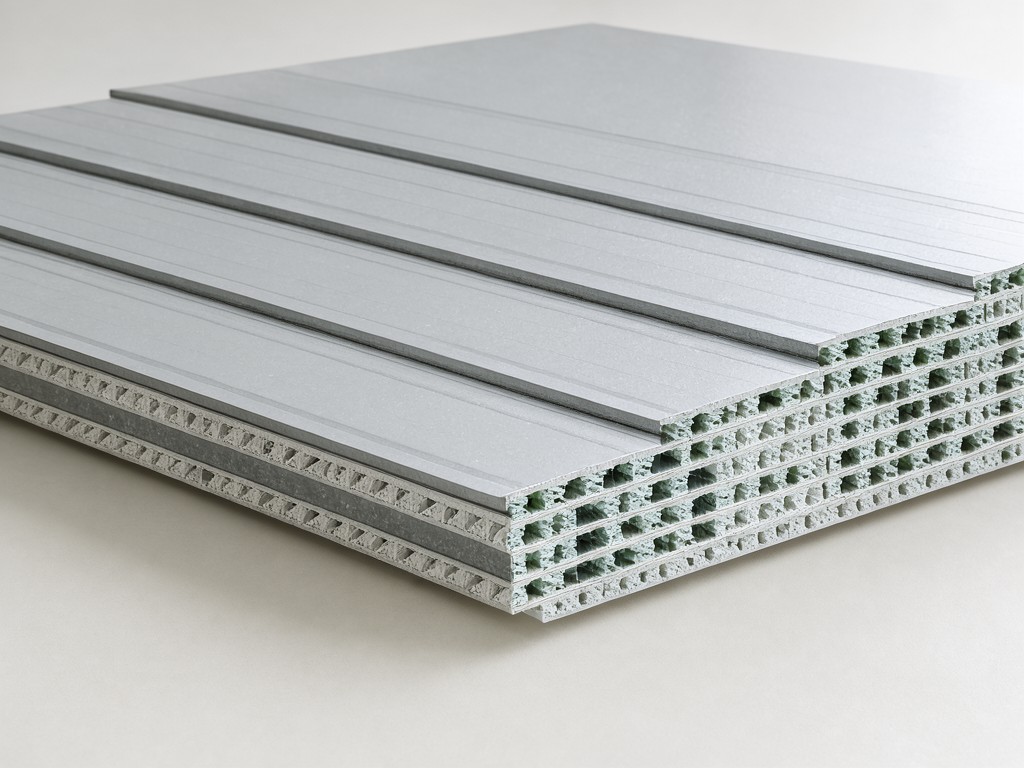
Structural integrity in a sandwich panel is determined by the profile geometry of the ribs on the outer skin. For roof applications, a high-rib profile allows for longer spans without the need for frequent secondary purlins. Wall panels often utilize a flat or micro-profile surface to facilitate easier cleaning in food grade environments where dust accumulation must be minimized.
- Cold storage facilities require high-density PIR cores to maintain internal temperatures below -25°C without degradation.
- Industrial manufacturing plants utilize mineral wool cores when fire-rating and acoustic attenuation are the primary drivers.
- Commercial cleanrooms demand EPS cores with interlocking joints to accelerate installation speed and ensure a vapor-tight seal.
Capacity and Tooling
Production consistency is managed by the precision of the tongue-and-groove joint. If the tolerance deviates by more than 0.5mm, the cumulative error over a long roof run leads to gaps and water ingress. We monitor shear-cutting tolerances to ensure dimensional stability remains constant across a 12-meter production run.
| Parameter | Standard Range | Industrial Grade |
|---|---|---|
| Core Thickness | 50mm - 300mm | Customizable per thermal load |
| Skin Material | Galvanized Steel | PPGI / PVDF Coated |
| Thermal Conductivity | 0.020 - 0.025 W/mK | PIR/PUR specific |
Stock Availability
Lead times are influenced by steel coil availability and the specific formulation of the foam core. Standard 50mm and 100mm panels typically have rapid dispatch, whereas specialized profiles or thick mineral wool cores require a dedicated production window. For large-scale imports, requesting a technical schedule helps align logistics logistics.
Setup and Use
On-site failure often occurs at the joints if the fasteners are not seated correctly. Using specialized washers with wide diameters ensures the vapor seal is not compromised during thermal expansion and contraction. We recommend testing the joint-tightness on a sample section if the local expansion coefficients are significantly high.
Delamination Prevention
Surface delamination is usually caused by poor adhesive application during the manufacturing process. We use high-pressure curing systems to ensure the skin remains bonded to the core even under extreme thermal stress.
Corrosion Resistance
In coastal environments, the coating on the steel skin is as critical as the insulation. Standard polyester coatings may fail where PVDF is required for high salt-spray exposure.
Ordering and Tooling Questions
Bulk procurement requires defining the load-bearing requirements for the roof sections. If the panels must support snow loads or maintenance equipment, the internal rib geometry must be calculated to prevent structural deflection over time.
What is the minimum order quantity for custom skin colors?
Minimum quantities are typically based on the capacity of a single steel coil, usually around 500 to 1,000 square meters depending on the gauge.
Can you provide thermal performance data for the PIR cores?
Yes, we provide data sheets detailing the R-value and thermal conductivity based on the specific core density and thickness ordered.
How are the panels protected during international sea freight?
Panels are packed on reinforced steel frames with protective foam spacers to prevent mechanical damage to the edges and surface profiles during transit.
Ready to discuss your specific project requirements?
Contact Our Technical Team


