custom rigid polyisocyanurate core cladding panels exporter - Bulk Supply and Specification Guide
Large-scale cladding projects often fail at the interface where thermal expansion meets structural rigidity. While rigid polyisocyanurate (PIR) cores provide high R-values, the bond strength between the core and the skin determines whether the panel maintains dimensional stability under seasonal thermal cycling. If the coefficient of thermal expansion between the face material and the core is mismatched, delamination occurs at the perimeter edges.
How It Performs in Use
Performance in PIR-core cladding is measured by resistance to vapor perme and shear modulus. In high-exposure environments, the cellular structure of the PIR prevents water absorption, maintaining the insulation rating. However, the skin material—typically metal or fiber composite—must withstand wind-induced pressure without buckling or buckling across the panel span.
Moisture ingress is the primary driver of thermal performance loss. When the skin remains closed and the adhesive bond stays intact, the core maintains its thermal conductivity rating. Failure usually starts at the fastener points where mechanical stress can cause micro-fissures in the rigid foam matrix.
Materials and Construction Trade-offs
The primary trade-off involves balancing panel thickness against structural span resistance. A thicker PIR core allows for better thermal insulation but increases the profile height, which affects architectural clearance and transport logistics. For procurement officers, selecting a thinner-gauge metal skin reduces cost but increases the risk of surface denting during installation.
| Parameter | Standard PIR Grade | High-Density Grade |
|---|---|---|
| Core Density | 28-32 kg/m³ | 40-45 kg/m³ |
| Thermal Conductivity (λ) | ~0.022 W/mK | ~0.024 W/mK |
| Compressive Strength | 140 kPa | 210 kPa |
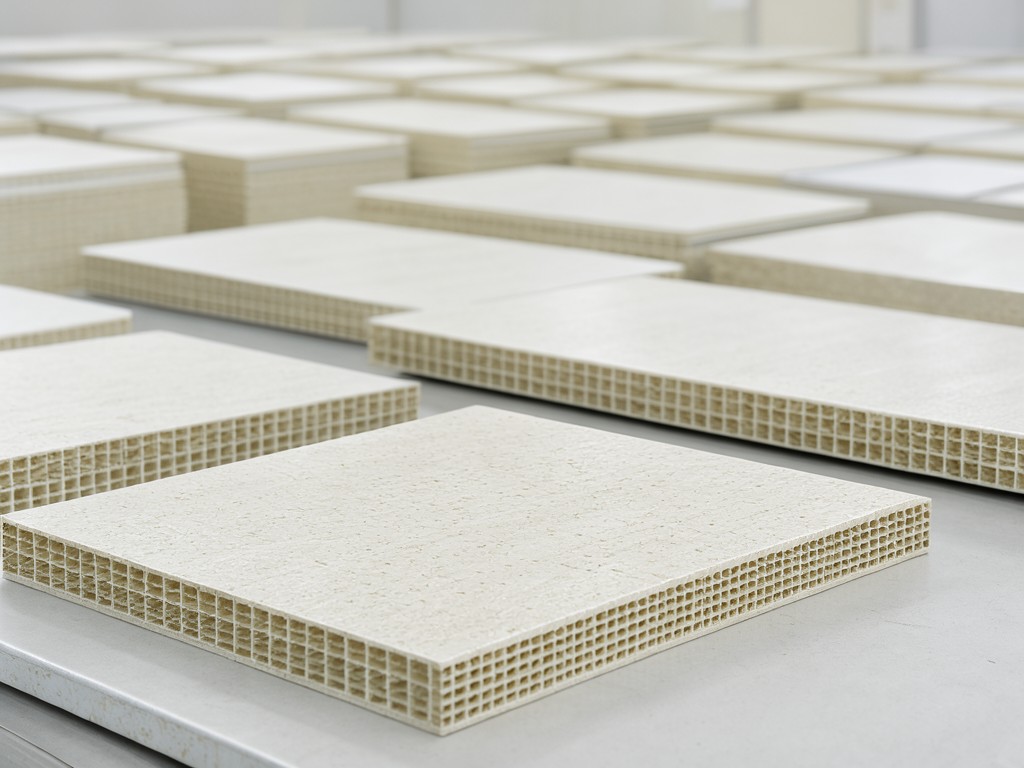
How It Is Built and What That Changes
Manufacturing utilizes a continuous sandwich process where polyisocyanate foam is injected between two pre-formed skins. The reaction rate must be strictly controlled to ensure a uniform cell structure within the PIR. If the curing pressure is inconsistent, the panel may develop internal voids, leading to localized weak points that fail under wind loads.
- Continuous tongue molding ensures the core-to-skin bond is chemically integrated.
- UV-stabilized coatings prevent the degradation of the polymer skin over time.
- CNC-cut edge profiling maintains tight tolerances to prevent thermal moisture bridging at the joints.
Option Comparison by Usage Level
Commercial Grade
Focuses on cost-per-meter insulation. Best for standard warehouse applications and retail-fronts where impact resistance is moderate.
Industrial Grade
Features thicker-gauge metal skins and higher-density cores. Designed for coastal environments or areas with high mechanical stress.
What Can Be Customised and What Cannot
Customization is limited to core thickness, skin material (galvanized steel vs. aluminum), and finish color. However, the inherent thermal properties of the PIR core are fixed by the chemical formulation. Buyers cannot alter the core R-value post-manufacture without compromising the structural integrity of the rigid foam matrix.
How Consistency Is Held Across Batches
Batch consistency is maintained through automated dosing of the foam reactants and real-time monitoring of the extrusion temperature. We perform dimensional checks on every pallet to ensure a ±1mm tolerance across the production run. This ensures that panels manufactured in different cycles will still fit together on-site without requiring excessive field-trim.
Stock Availability and Reorder Planning
Project timelines must account for the lead time required for custom skin-coating. For standard profiles, we maintain buffer stock to facilitate rapid dispatch. For high-volume OEM-specific orders, a 12-week forecast is necessary to align the production line with your site installation schedule.
Need technical data sheets or bulk pricing for your project?
Contact our Technical Specification Team


