Custom Steel Structure EPS Insulated Roof Panels Factory: Specification, Ordering and Quality Notes
Returns usually trace back to the failure of the bond line between the galvanized steel sheets and the expanded polystyrene core during thermal cycling. When the adhesive application fails to account for the different coefficients of thermal expansion between metal and polymer, delamination causes visible buckling in the panel surface. Our manufacturing process focuses on mechanical interlocking and chemical bonding agents to ensure the core remains centered, maintaining the structural integrity under extreme wind-lift conditions common in large-span roofing.
Where Cheaper Alternatives Fall Short
Standard market panels often utilize thin-gauge steel to save on material costs, but this leads to dimensional instability during the installation phase. A 0.4mm steel skin lacks the shear resistance required for secure fasteners, leading to "oil-canning" where the metal deforms under slight pressure. We specify minimum 0.5mm to 0.7mm structural high-strength steel to ensure the profile maintains its geometry under the weight of maintenance crews and the pressure of snow-load requirements.
Construction Method and Its Effect on Consistency
The thermal performance of the panel depends entirely on the uniformity of the EPS cell structure during the extrusion process. If the foam temperature is inconsistent during production, the resulting core-density fluctuates, creating thermal bridges that compromise the internal climate control of the building. We utilize a continuous-line production system that monitors foam density and air-pressure in real-time, ensuring that the U-value remains within a tight tolerance across a 500-meter production run.
Matching the Product to the Buyer's Need
Surface finish dictates the longevity of the exterior envelope in corrosive environments. For industrial facilities exposed to high UV or chemical moisture, a PVDF coating is necessary to prevent chalking and pigment degradation. For internal-facing applications where UV exposure is non-existent, a standard polyester coating offers a cost-effective alternative without sacrificing the fire-rating performance of the EPS core.
| Parameter | Technical Range |
|---|---|
| Panel Thickness | 50mm to 300mm |
| Steel Skin Thickness | 0.4mm - 1.2mm |
| EPS Core Density | 12kg/m³ - 25kg/m³ |
| Thermal Conductivity | λ ≈ 0.035-0.040 W/m·K |
What Can Be Customised and What
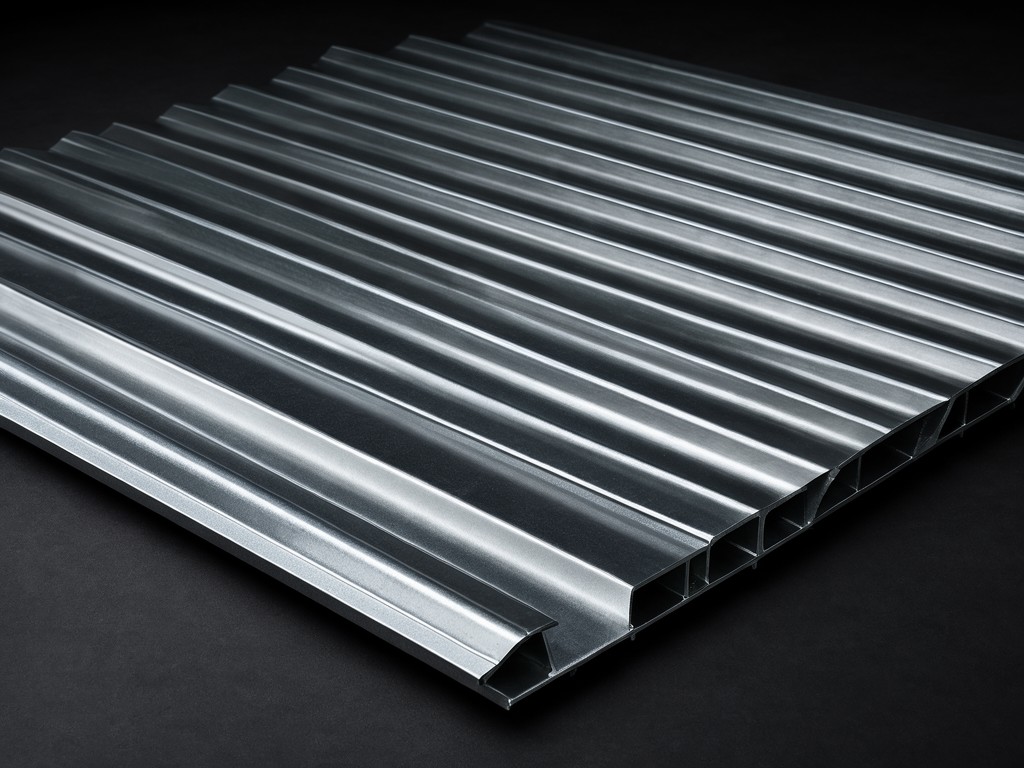
Profile geometry is the primary variable, allowing for specific rib heights that increase span-bearing capacity without adding material weight. However, the core thickness of the EPS foam is limited by the physical extrusion line of the machinery. While we can adjust the color palette and the profile shape to match architectural requirements, the fire-retardant properties of the material remain fixed to ensure safety compliance across the entire batch.
Who Uses It Where It Matters
Large-scale logistics hubs and cold storage operators prioritize these panels because the assembly speed-to-weight ratio is the primary KPI. In these environments, the precision of the tongue-and-joint joint is critical; if the joint tolerance exceeds 0.5mm, moisture infiltration occurs, leading to internal corrosion of the steel structure. We provide precision-cut edges to ensure a water-tight seal across the entire roof plane.
OEM and ODM Structure
Our OEM service begins with a technical drawing review to verify the load-bearing calculations against your specific steel frame. Once the profile is approved, we produce a sample section for on-site fit-up testing. This ensures that the final mass production run matches the structural requirements of the project site, eliminating the risk of field-mismatches during the installation phase.
Packing and Freight Configuration
Panels are bundled on reinforced steel frames to prevent edge damage to the protective coating during transit. We utilize moisture-barrier wrapping for each bundle to prevent condensation damage during long-haul sea freight. Each pallet is marked with batch numbers, production dates, and weight specifications to allow for full traceability from the factory to the construction site.
Questions Ask Before Ordering
- What is the maximum load-bearing span for a 100mm panel? This depends on the rib profile height and steel thickness, typically ranging from 2.5m to 4.0m.
- Can the core be customized for specific fire-rating? We offer standard fire-retardant EPS grades that meet international industrial safety standards.
- What is the lead time for custom profile production? Custom tooling typically requires 14-21 days before the first production run can be initiated.
Request a technical datasheet or a quote for your project specifications.
Contact our Engineering Team Today


