Custom Thermal Break Metal Sandwich Roof Panels Manufacturer: Specification and Ordering
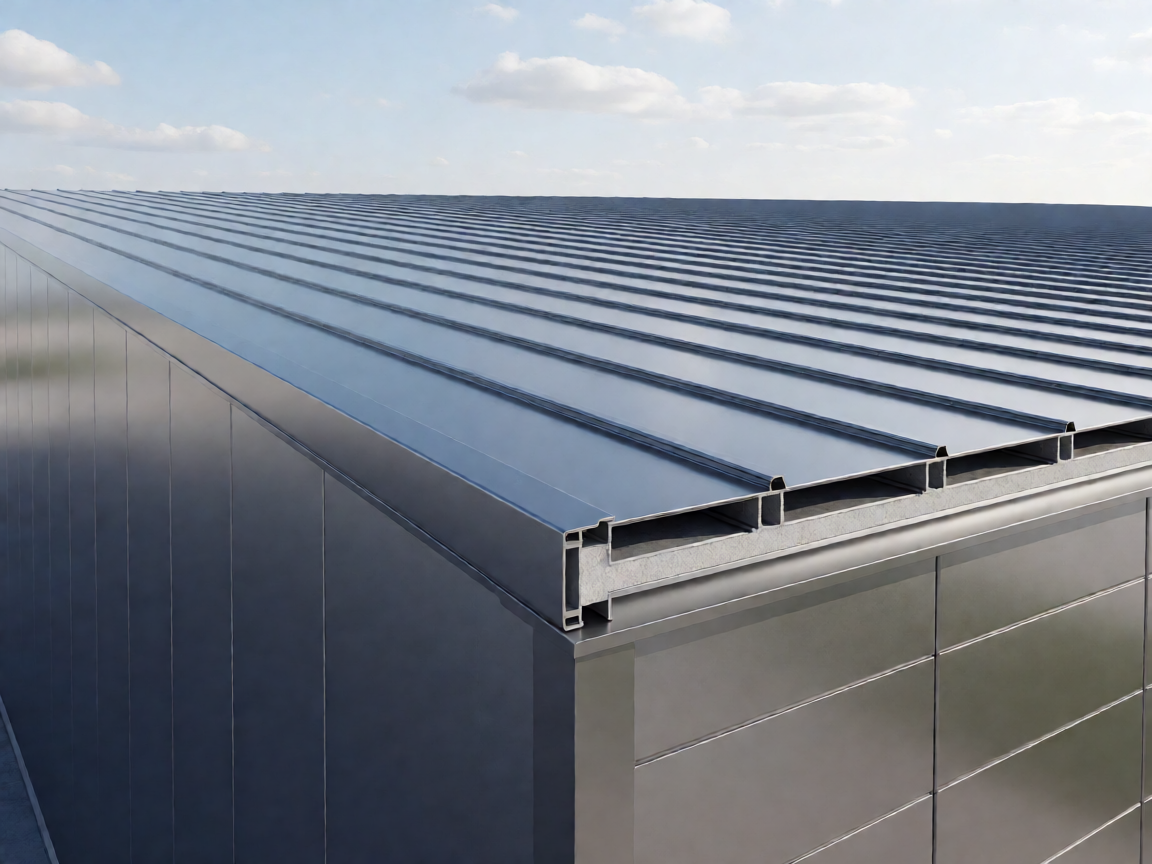
Thermal performance in metal roofing depends on the structural bond between the outer skins and the insulating core. In large-scale industrial projects, the primary failure mode is not the material itself, but the thermal expansion mismatch between different material layers. We manufacture sandwich panels with engineered thermal breaks to ensure that the structural integrity remains consistent across a 50-degree temperature gradient, preventing localized buckling and seam failure.
Design Constraints Behind the Specification
Selecting the correct core density is a trade-off between span-bearing capacity and total dead load. A higher density PIR or PUR foam increases stiffness, allowing for greater distance between purlins, but increases the weight per square meter of the roof system. We adjust the steel skin gauge—typically from 0.40mm to 0.70mm—to match the specific load requirements of the project without introducing unnecessary material costs.
| Parameter | Range / Specification |
|---|---|
| Total Panel Thickness | 50mm - 300mm |
| Steel Skin Gauge | 0.40mm - 0.80mm |
| Core Material Options | PIR, PUR, Mineral Wool, PET Foam |
| Thermal Conductivity (λ) | 0.022 - 0.040 W/mK |
Materials and Construction Trade-offs
The bonding process determines the long-term resistance to delamination. We utilize high-pressure continuous adhesive lines to ensure the chemical bond between the metal skin and the core remains stable under shear stress. For projects requiring high fire resistance ratings, mineral wool cores are utilized, though they necessitate a thicker profile to achieve equivalent thermal resistance to foam cores.
Poly Foam Cores
Best for R-value-to-weight ratios. Ideal for long-span roofs where reducing structural steel load is the primary cost constraint.
Mineral Cores
Non-combustible properties for high-risk industrial zones. Requires more robust structural support due to significantly higher density.
What Can Be Customised and What
Customization extends to the profile geometry and the surface finish. We can engineer specific rib heights to manage water drainage rates or to accommodate internal mechanical-cladding systems. However, the inherent thermal properties of the core material remain fixed by its chemical composition to ensure consistent performance across the entire production batch.
- Custom rib profiles (trapezoidal, flat, standing seam).
- Surface coating options including PVDF, Polyester, or Plastisol for varying UV resistance.
- Integrated thermal break strips at joints to eliminate thermal bridging.
- Variable length manufacturing to minimize on-site cutting and material waste.
Usage Scenarios and Buyer Segments
Procurement officers for cold storage facilities prioritize the U-value consistency to prevent energy-loss penalties. In contrast, commercial developers often focus on the aesthetic finish and the installation speed of the sandwich panel interlocking system. Our production line adapts the technical parameters to meet both rigorous thermal requirements and aesthetic architectural standards.
Working as Production Partner, Not Catalogue Supplier
Reliability in the supply chain is measured by batch-to-batch dimensional variance. We provide detailed material reports for every run, ensuring that the skin thickness and core density match the approved engineering samples exactly. This prevents the common issue of structural misalignment during the assembly phase of large-scale builds.
How Consistency Is Held
Consistency is maintained through real-time ultrasonic thickness monitoring during coil coating. If the skin thickness deviates by more than ±3%, the process parameters are flagged for adjustment. This level of control ensures that every panel in a shipment will perform under the specified structural load calculations.
What Gets Checked
Before shipment, samples undergo pull-testing to verify the bond strength between the metal and core. We also perform salt spray testing on custom coatings to ensure the corrosion resistance meets the expected environmental exposure of the project site.
Keeping Repeat Supplied
| Service | Standard Terms |
|---|---|
| Minimum Order Quantity | 500 linear meters for custom profiles |
| Production Lead Time | 4-6 weeks depending on core material |
Request technical data sheets or a quote for your specific project specifications.
Contact our engineering department for custom panel review


