Custom XPS Sandwich Panels for Cold Storage Floors Factory: What Buyers Should Check Before Ordering
Thermal insulation stability depends on the structural integrity of the floor assembly under cyclic loading. While the extruded polystyrene (XPS) provides the necessary R value, the performance of the floor system is dictated by the bond strength between the core and the protective skins. If the adhesive bond is inconsistent, the panel undergoes delamination under thermal shock, leading to localized buckling and eventual failure of the sub-floor membrane.
Scope of Supply and Physical Form
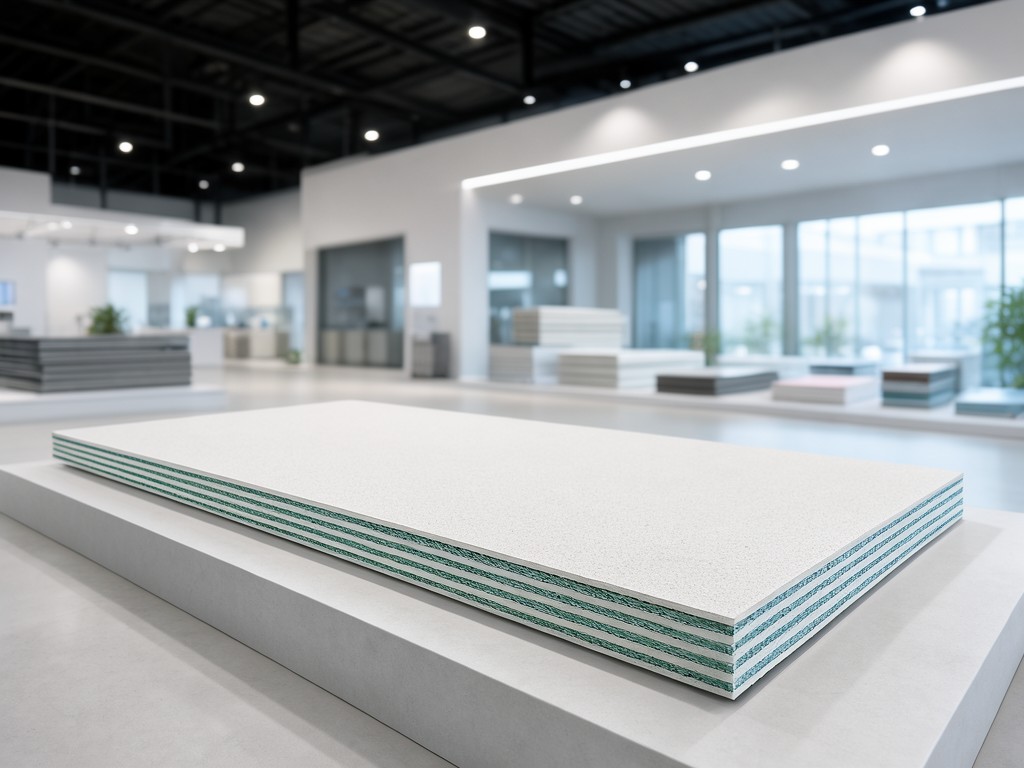
Manufacturing industrial-grade panels requires a continuous extrusion process to ensure a closed cell structure within the XPS. This uniformity prevents moisture absorption, which is the primary cause of frost formation within cold storage floors. We provide panels with varying face materials, including reinforced cement or galvanized steel depending on the required shear strength.
| Parameter | Standard Specification Range |
|---|---|
| XPS Compressive Strength | 300 kPa to 700 kPa (custom density) |
| Panel Thickness | 50mm to 300mm |
| Thermal Conductivity λ | 0.028-0.035 W/m·K |
| Face Skin Thickness | 0.5mm to 2.0mm (variable gauge) |
Specification Range and Customisation Limits
Dimensional stability is critical during the site-installation phase. If the panel width varies by even ±1.5mm, the joints will open, creating thermal bridges where cold air can penetrate. We control this through precision cutting technology that ensures a tight fit across the entire floor area.
Core Density Selection
High-density XPS (700 kg/m³) is specified for heavy-duty industrial zones where deformation resistance is paramount. Lower density cores are sufficient for standard chill rooms where thermal efficiency is prioritized over mechanical load capacity.
Surface Treatment
Galvanized skins offer corrosion resistance against de-icing salts. For permanent floor installations, cement-bonded panels provide a superior mechanical bond for the final screed layer.
Assumptions Buyers Stop Making
Many buyers incorrectly assume that any XPS panel is suitable for floor applications. In reality, the coefficient of thermal expansion between the panel skin and the XPS core must be matched. If the expansion rates differ significantly, the skin will pull away from the core during rapid temperature drops from +25°C to -25°C.
- Ignoring the creep behavior of the foam core under static pallet loads.
- Underestimating the vapor barrier requirements at the floor sub-grade interface.
- Assuming standard construction-grade adhesives can withstand the impact of high-speed forklift operations.
Usage Scenarios and Segments
In frozen logistics hubs, the floor must withstand high-frequency vibrations from automated systems. This requires a panel with high shear modulus to prevent internal fatigue cracking. Conversely, in food processing facilities, the focus shifts to the chemical resistance of the skins against aggressive high-pressure cleaning agents.
Requirements by Segment
OEM buyers for modular cold rooms require specific interlocking profiles to reduce assembly time. Our custom edges are designed to integrate with standard structural framing. Distributors focusing on large-scale infrastructure projects require batch-traceable dimensional reports to prevent warping during long-term transit.
Inspection Items and Test Methods
To ensure lot consistency, every batch undergoes rigorous mechanical testing. We measure the tensile strength of the core-to-skin bond to ensure it will not fail under stress. Dimensional checks are performed using laser measurement to guarantee tolerances within the ±0.5mm range for critical spans.
Request technical data sheets and custom specifications for your project requirements.
Contact our engineering team for a technical quote


