Durable 50mm Rock Wool Insulated Sandwich Wall Panel Exporter
Industrial-scale construction projects demand a thermal envelope that maintains dimensional integrity under high moisture exposure and repeated thermal cycling. The 50mm rock wool insulated sandwich panel addresses this by utilizing a dense mineral wool core bonded between two pre-finished galvanized steel sheets. This configuration is engineered for procurement officers who must balance fire-rating requirements with acoustic attenuation performance, particularly where foam-based alternatives fail to meet stability standards over long-term service life.
What This Product Is and Where It Fits
Contract manufacturers typically specify these panels for cold storage facilities and industrial warehouses where fire compartmentalization is non-negotiable. Unlike polystyrene cores, the mineral wool core is non-combustible, providing a structural barrier that does not melt during high-temperature events. The 50mm thickness provides a specific profile for internal partitioning or external cladding where space efficiency is prioritized but thermal R-values remain required.
- Internal fire-rated partitions for heavy manufacturing plants.
- Cold-chain logistics hubs requiring high vapor barrier resistance.
- Acoustic isolation barriers in mechanical rooms where machinery noise is prevalent.
Material Options and Trade-offs
The choice of surface coating and steel gauge determines the panel's maintenance cycle in corrosive environments. A 0.5mm tensile steel skin offers sufficient rigidity for indoor use, whereas 0.7mm skins are often required for coastal industrial zones to prevent premature oxidation and mechanical deformation from impact loads.
Standard Polyester Coated
Best for climate-controlled interior environments. High scratch resistance during installation but susceptible to UV degradation if exposed to direct sunlight for years without protection.
PVDF / Plast Coating
Required for external facades or high chemical exposure. Enhanced UV stability and chemical resistance prevent chalking and color fading over decadal timelines.
Where This Product Beats Alternatives
Standard PIR or EPS foam panels often experience delamination when the adhesive bond fails under extreme temperature gradients or humidity. The rock wool core remains dimensionally stable, ensuring the sandwich structure stays flat even after years of exposure to fluctuating temperatures. This stability eliminates the risk of air bridging caused by warped panels in large-scale installations.
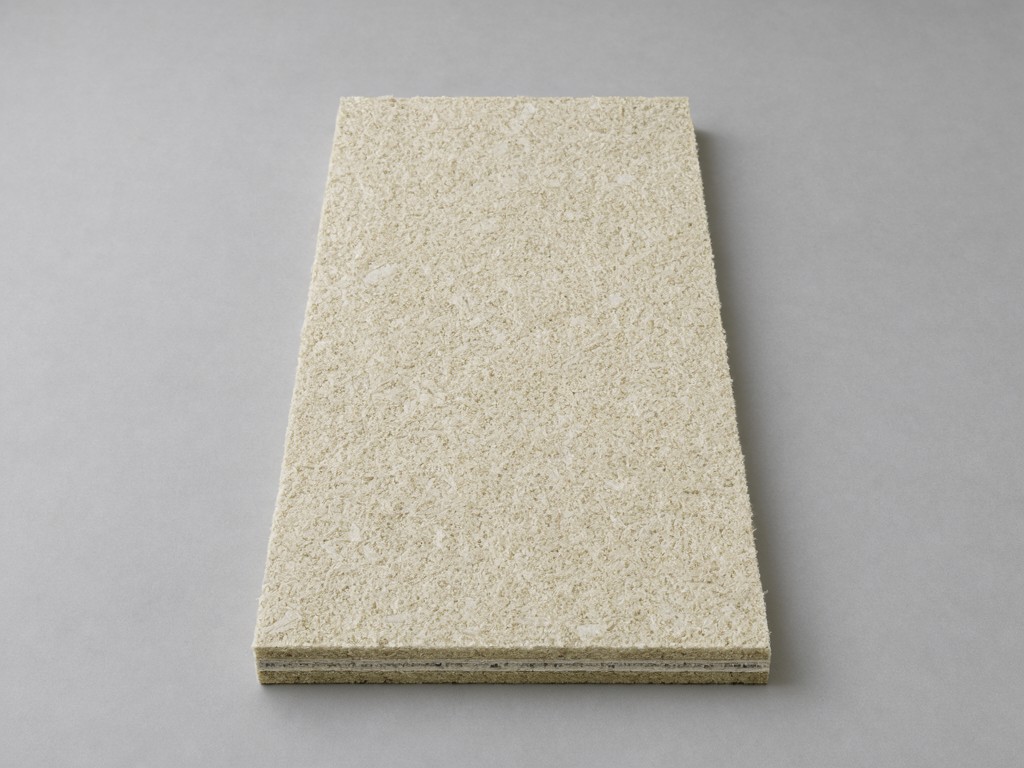
| Parameter | Specification / Range |
|---|---|
| Core Thickness | 50mm ± 2mm |
| Core Density | 80 - 100 kg/m³ |
| Steel Skin Thickness | 0.4mm - 0.7mm |
| Thermal Conductivity | 0.035 - 0.045 W/m·K |
Matching the Product to the Need
Procurement teams must evaluate the joint system type to determine installation speed. Tongue-and-groove joints reduce labor time but require precise alignment on-site to maintain the air-tightness seal. For 50mm panels, the load-bearing capacity is calculated based on the span between supporting steel purlins.
Segment-Specific Requirements
Large-scale distributors require batch traceability to ensure consistent thermal performance across a project. We provide material-specific documentation for every shipment, detailing the density consistency of the mineral wool and the tensile strength of the steel face sheets.
OEM and ODM Structure
Customization for private-label buyers involves specific profile configurations for the joints to match existing architectural systems. Tooling costs for bespoke joint profiles are amortized over the order volume, favoring high-volume production runs.
Interested in technical specifications or bulk pricing for your specific project requirements?
Contact our export department


