Durable 75mm eps insulated wall panels china supplier: Specification and Quality Notes
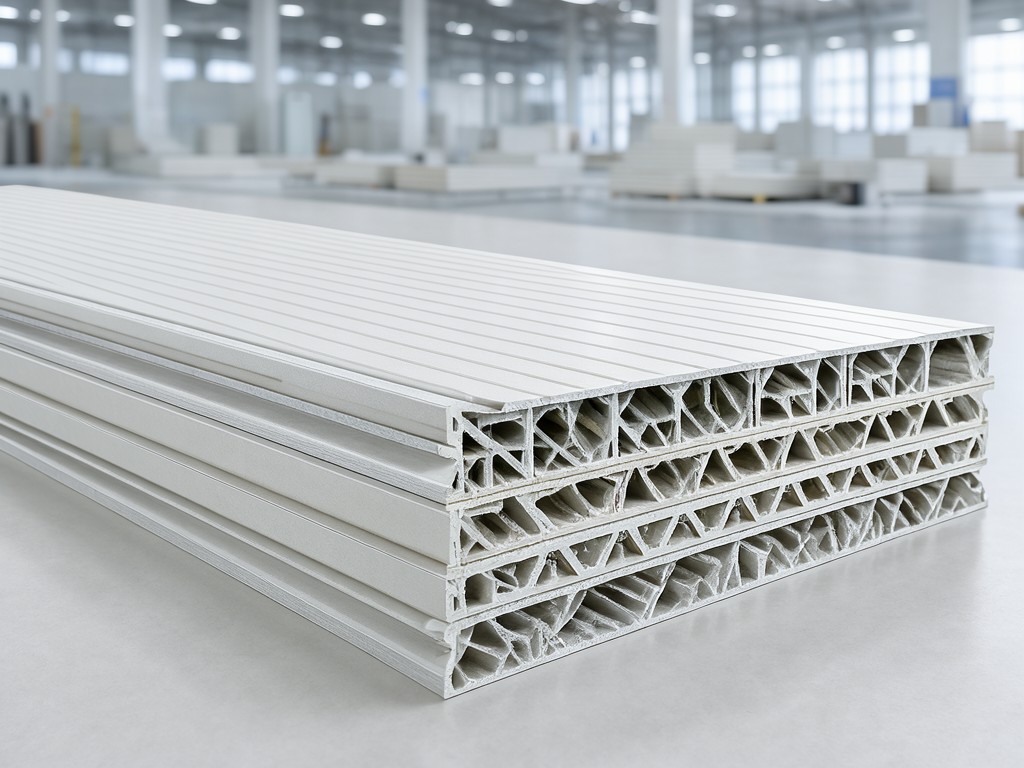
Thermal resistance in rapid construction depends on the mechanical bond between the EPS core and the vapor-stabilized steel skins. For a 75mm configuration, the primary failure mode in low-grade imports is delamination of the skin under rapid thermal expansion-contraction cycles. If the EPS density falls below 15kg/m³, the core lacks the structural rigidity to prevent the panel from buckling under wind load, leading to compromised joint integrity.
What This Is and Where It Fits
Cold storage facilities and cleanroom enclosures require specific R-values that do not degrade due to internal moisture absorption. These 75mm panels are engineered for environments where thermal bridging at the seams is the primary energy loss. Unlike standard foam boards, the expanded polystyrene-bonded structure provides a high compressive strength-to-weight ratio that allows for wide-span installations without intermediate structural framing.
- Industrial cold-chain logistics where temperature gradients exceed 30°C.
- Pre-fabricated modular housing requiring rapid assembly and non-porous interior surfaces.
- Temporary site offices requiring high-performance thermal barriers with low impact resistance.
- Commercial kitchen insulation where fire-rated coatings are a regulatory requirement.
Option Comparison by Usage
| Usage Condition | Typical Failure Mode | Specification Guard |
|---|---|---|
| High Humidity Cold Storage | Edge corrosion at joint edges | Zinc-aluminum coating (100g/m²) |
| High Wind Load Exposure | Panel bowing/flexing | EPS density ≥ 20kg/m³ |
| High Impact Traffic Zones | Skin tearing/delamination | High-strength adhesive bonding |
Customisation Options and Their Limits
Surface treatment dictates the final finish and chemical resistance levels. A standard plastisol coating is sufficient for internal partitions, but exterior-facing panels require a PVDF coating to prevent UV-induced chalking. The 75mm thickness limits the maximum load-bearing capacity; exceeding recommended spans increases the risk of core-skin cracking under shear stress during transport.
Skin Thickness
Available from 0.4mm to 0.7mm steel. Thicker skins increase the puncture resistance but add significant weight per square meter, affecting shipping costs significantly.
Profile Type
Standard tongue-and-groove or interlocking cam profiles. Interlocking profiles offer better thermal seals but require more precise CNC cutting at the factory line.
What Gets Checked
Batch consistency is verified through dimensional tolerance testing. If the 75mm width varies by more than ±1.5mm, the joint-locking system will fail to seal tightly, creating thermal bridges that invalidate the insulation. We also perform shear strength tests on the adhesive to ensure the EPS does not pull away from the steel skin under extreme thermal shock.
Capacity and Tooling
Lead times for standard 75mm panels are typically 14-21 days depending on current resin availability. Custom lengths or specialized profile extr require a tooling surcharge and an additional 7 days for line-setting. High-volume orders benefit from continuous production runs which reduce the unit-cost per square meter.
Packing and Logistics
Panels are bundled with protective foam wrapping and edge guards to prevent impact-damage during sea transit. For 75mm panels, vertical stacking is limited to 50 units per pallet to prevent the bottom-layer EPS from crushing under the weight of the load above.
Setup and Replacement
What is the typical R-value for 75mm EPS panels?
The R-value typically ranges between 1.4 to 1.8 m²K/W depending on the specific EPS density and ambient temperature conditions.
Can these panels be used for outdoor facade applications?
Yes, provided the skin is treated with a UV-resistant and fire-retardant coating, and the joints meet local fire safety standards.
Request technical data sheets and bulk pricing for 75mm production.
Contact our Engineering Team for a Quote


