Durable Basalt Rock Wool Insulated Wall Panels China Supplier: What Buyers Should Check Before
| Technical Parameter | Standard Specification Range |
|---|---|
| Core Wool Density | 60kg/m³ – 120kg/m³ |
| Thermal Conductivity (λ) | 0.035 – 0.042 W/m·K |
| Face Sheet Thickness | 0.4mm – 0.7mm (Galvanized Steel) |
| Fire Resistance Rating | Class A (Non-combustible) |
| Mechanical Load Capacity | 1.5kN+ (depending on profile) |
Construction Method and Its Effect on Consistency
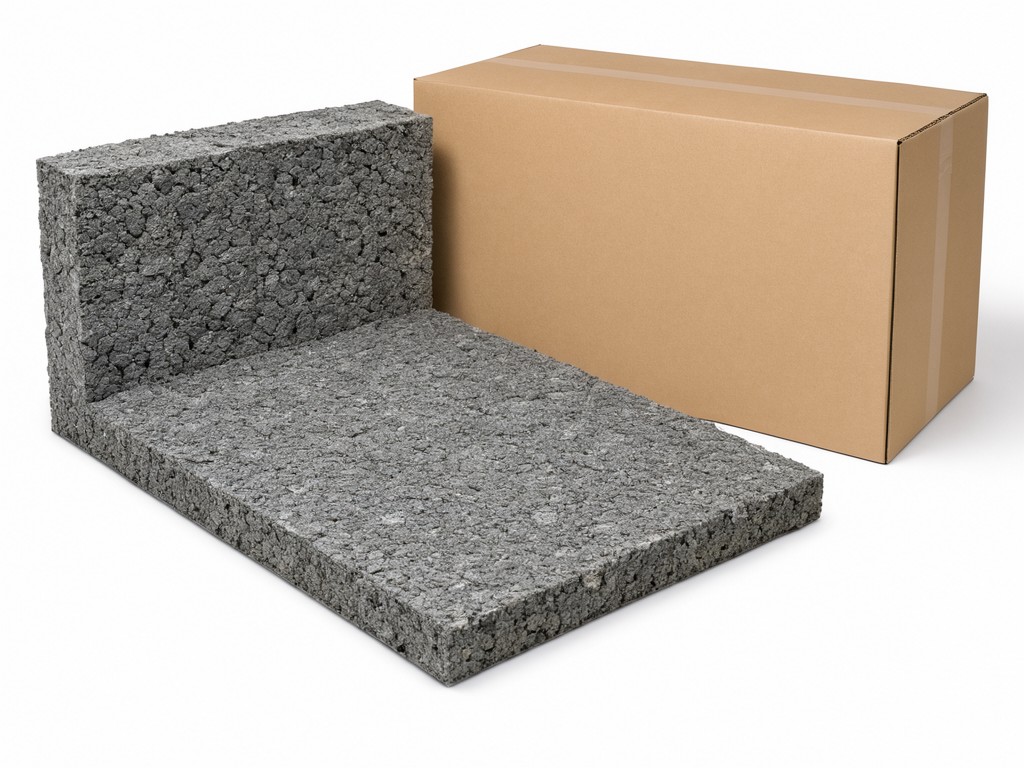
The structural integrity of the panel depends on the mechanical bond between the basalt fibers and the metal face sheets. If the fiber spinning process is inconsistent, the internal core loses its tensile strength, leading to thermal bridging or sagging under its own weight. We utilize a high-pressure continuous pressing line to ensure the rock wool remains uniformly distributed, preventing the voids that often occur in lower-grade batches.
Failure in cold storage environments usually starts with delamination at the edges where shear stress peaks. When the adhesive application is not temperature-controlled, the thermal expansion coefficients between the steel and the basalt core pull the layers apart. We mitigate this by using chemical-bonded resins that maintain a bond from -40°C to +80°C.
Critical Material Stability Note
Basalt wool is inherently resistant to moisture and UV exposure, but the binder type determines the long-term lifespan. High-phenolic binders are required for high-temperature applications to prevent outgassing and structural softening under thermal load.
Matching the Product to the Buyer's Need
Procurement officers often balance cost-per-meter against the required thermal R-value. A lower density core (60kg/m³) reduces freight costs significantly but decreases the panel's resistance to impact-damage during installation. For cold storage or food-grade facilities, higher density cores are mandatory to maintain dimensional dimensional stability under repeated pressure cycles.
Industrial Warehouse Grade
Focuses on fire safety and rapid assembly. This grade utilizes thinner-gauge galvanized steel to minimize weight in high-traffic environments where impact is common.
Cold Chain Grade
Prioritizes airtightness and vapor barrier integrity. Features high-density basalt wool and reinforced joints to prevent ice formation within the panel core.
Customisation Options and Their Limits
Surface finishes range from standard polyester coatings to PVDF for high-corrosion coastal environments. While we offer custom profile widths, the structural span is limited by the thickness of the steel face sheet; exceeding a 6-meter span usually requires internal rib reinforcement to prevent oil deflection.
- Custom core thicknesses from 50mm up to 300mm.
- Color-matching based on RAL or Pantone systems.
- Perforated face sheets for acoustic de-amplification applications.
- Vapor-barrier laminate systems for extreme temperature gradients.
Segment-Specific Requirements
In pharmaceutical processing, the panel surface must meet non-porous standards. Basalt wool panels are ideal here as they do not off-gas like polyurethane foams. However, the joints must be sealed with food-grade silicone to ensure no microbial accumulation occurs at the seam lines.
How Consistency Is Held Across Batches
Batch variance is managed through automated monitoring of the basalt fiber spinning process. If the fiber diameter varies, the air pocket density within the wool changes, altering the R-value. We test every 5,000 square meters of production to ensure the thermal conductivity remains within a ±5% tolerance of the technical sheet.
Capacity, Tooling and Scheduling
Production capacity is dictated by the availability of raw-grade steel coils. For large-scale infrastructure projects, we require a 6-week lead time to secure material allocation and calibrate the profile tooling. Small-batch OEM orders are typically fulfilled within 21 days if standard profiles are in stock.
Request Technical Data and Bulk Pricing
Contact our engineering team for specific basalt-wool insulated panel specifications.
Inquire About Project Requirements


