Specifying durable cold storage roof insulation panels suppliers for Wholesale and OEM Orders
The Problem Buyers Keep Paying For
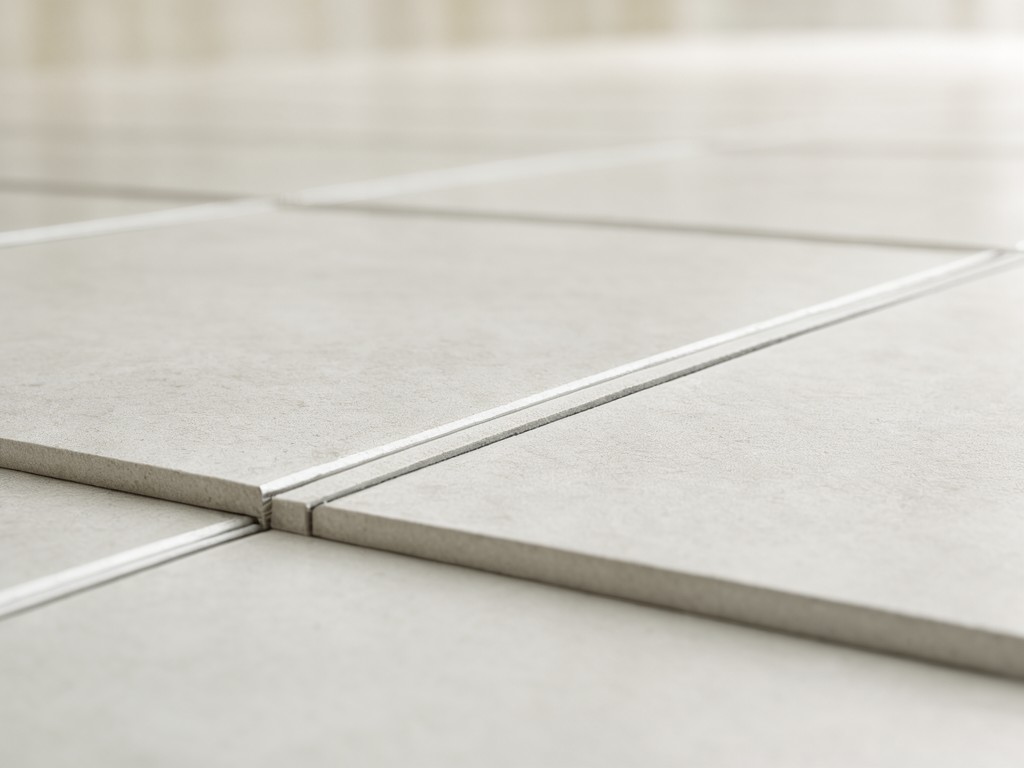
Wear shows up at the same point every season: the longitudinal joint where two panels meet. Thermal bridging at that lap drives up refrigeration load by 3–5 % per year, and the foam core behind the metal skin starts to delaminate after the third freeze–thaw cycle. Buyers who specify only a minimum R-value find themselves replacing sections of roof before the warranty expires because the declared value was measured on a pristine lab sample, not on a panel that has been walked on, snow-loaded, and baked by summer sun.
Corrosion at cut edges is the second recurring cost. Standard polyester coil coatings last 10–12 years in a coastal cold store; a PVDF system pushes that to 20 years but adds $4–6/m². Most tenders ignore the difference until the first rust streak appears on the interior liner, triggering a full-panel replacement that costs five times the coating premium.
Specification rule: require a minimum 25 µm PVDF topcoat on the exterior face and a 15 µm polyester backer on the interior face for any facility within 50 km of salt water or where roof access for maintenance is limited.
Measured Performance in Real Use
Most quality disputes start with a consistency gap between the data sheet and the installed roof. A 100 mm PIR panel rated at R‑5.8 per inch delivers that value only when the core density is held to 40 ± 2 kg/m³. In practice, density drifts to 36 kg/m³ on the edges of a 12 m panel, dropping the effective R-value to 5.4. Compressive strength follows the same curve: 150 kPa at the centre, 110 kPa at the ends — enough to crush under a 120 kg service technician with a tool bag.
Fire performance is the third metric that surprises buyers. A panel that passes FM 4880 Class 1 in a 3 m test frame can fail when installed in 15 m continuous runs because the joint adhesive becomes the flame spread path. Specifying a mineral‑wool strip (50 mm × 100 mm) at every third joint restores the rating without changing the core material.
| Parameter | Typical Range | Test Method | Field Tolerance |
|---|---|---|---|
| Core density (PIR) | 38–42 kg/m³ | EN 1602 | ±2 kg/m³ across panel length |
| Compressive strength | 120–160 kPa | EN 826 | ≥130 kPa at panel ends |
| Water vapour permeance | ≤1.5 ng/(Pa·s·m²) | EN 12086 | Measured on sealed joint assembly |
| Dimensional stability (70 °C, 48 h) | ≤1 % length change | EN 1604 | Critical for 12 m+ panels |
Assumptions Buyers Should Stop Making
The complaint that repeats across reorders is that a thicker core automatically solves thermal drift. In reality, a 150 mm panel with 36 kg/m³ density performs worse than a 100 mm panel at 42 kg/m³. The decision tree below forces the specifier to lock density before thickness.
- Define the design heat‑load (W/m²) for the coldest month — this sets the minimum R-value target.
- If load > 25 W/m² → start at R‑30 (≈150 mm PIR @ 40 kg/m³).
- If load ≤ 25 W/m² → R‑20 (≈100 mm PIR @ 40 kg/m³) is usually sufficient.
- Lock core density tolerance in the purchase order: 40 ± 2 kg/m³ for PIR, 100 ± 5 kg/m³ for mineral wool. Reject any mill certificate that reports only an average.
- Request density profiles from both centre and 500 mm from each end.
- Select joint profile based on roof slope and foot traffic.
- Slope ≤ 3° & regular maintenance traffic → deep‑lock (35 mm) with factory‑applied butyl tape.
- Slope > 3° & no traffic → standard lock (25 mm) with field‑applied sealant.
- Choose coating system by environment, not by price.
- Coastal / high UV / aggressive wash-down → PVDF 25 µm exterior / polyester 15 µm interior.
- Inland / shaded / low maintenance → polyester 25 µm both faces acceptable.
Capacity, Tooling and Scheduling
Continuous lamination lines run 24/7 at 8–10 m/min, yielding 12 m panels in a single pass. Discontinuous presses (for mineral wool or custom lengths >13.5 m) add 3–5 days per 1,000 m² because each panel is cured individually. Tooling for a non‑standard lock profile requires a 4‑week lead time and a one‑off die cost of $8,000–$12,000; amortise that over the project volume before committing.
Colour matching against a RAL or custom swatch adds 7–10 days for coil coating approval. Schedule the colour sign‑off at least three weeks before the planned production slot, otherwise the line will run a standard white and the project waits for a re‑run. Most suppliers hold 2,000–3,000 m² of standard white and light grey in stock for immediate shipment; anything else is made‑to‑order.
Care, Storage and Service Life
Panels delivered on site must be stored on timber bearers at 600 mm centres, covered with a breathable membrane — never plastic sheeting — to prevent condensation between the metal skins. Stack height should not exceed 1.2 m to avoid core creep. Cut edges exposed during installation require a brush‑applied zinc‑rich primer within 24 hours; skipping this step voids the corrosion warranty on 90 % of supplier contracts.
Annual inspection checklist: verify joint sealant integrity (look for chalking or gaps >2 mm), check for fastener back‑out on through‑fixed systems, and infrared‑scan the roof on a clear night to spot thermal anomalies >2 °C above adjacent areas. Recoat cut edges and minor scratches every 5 years in coastal zones; inland zones can stretch to 8–10 years.
Packaging and Freight Configuration
| Item | Detail | Notes |
|---|---|---|
| Pack type | Timber crates, 2–3 panels per crate | Crates banded, corner protectors on all edges |
| Max crate weight | 2,500 kg | Suits standard 40 ft container payload |
| Panel length per crate | Up to 13.5 m (continuous line) | Longer panels ship on flat‑rack, surcharge applies |
| Weather protection | PE film wrap + desiccant packs | Film removed before site storage |
| Labeling | Batch number, production date, core density, R-value | Scannable QR code links to mill certificate PDF |
Ready to lock in a specification that survives the first winter without callbacks? Share your project heat-load, roof geometry, and delivery window — we’ll return a panel schedule, density certificate, and a freight plan that fits your container count.



