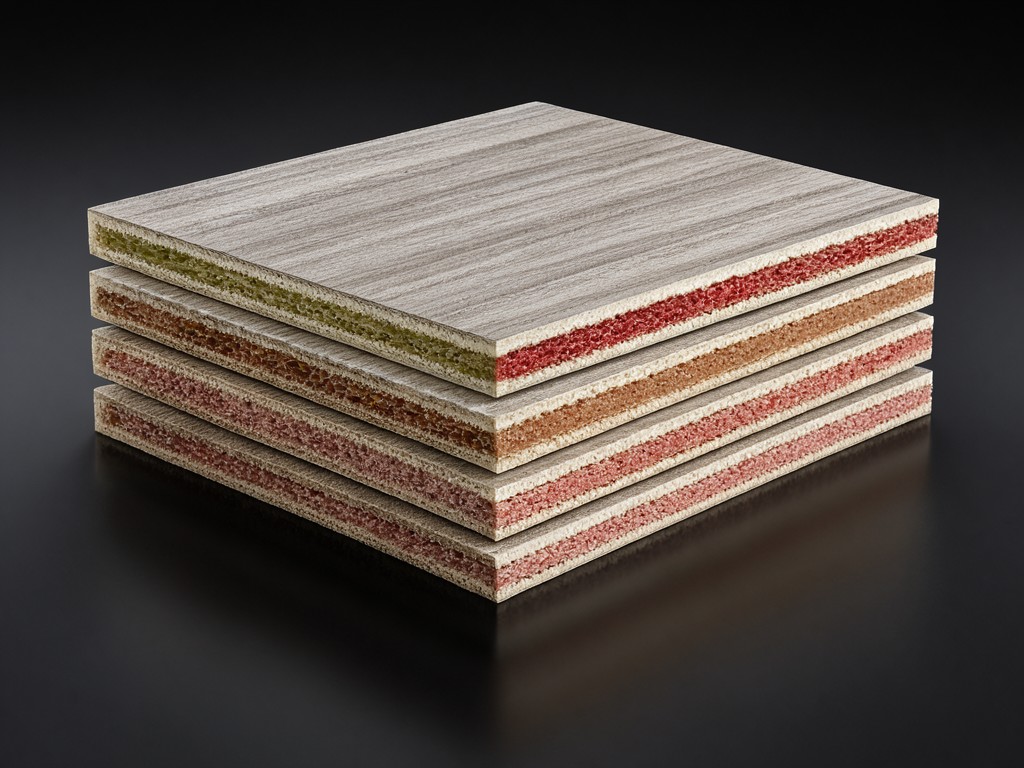
Specifying durable double skin sandwich panels factory for Wholesale and OEM Orders
Where Cheaper Alternatives Fall Short
Cheaper panels often use a single‑skin bond that delaminates after the first thermal cycle.
When the core is low‑density EPS, repeated heating and cooling drives moisture into the adhesive line, causing the bond to lose shear strength. Edge corrosion appears where the protective coating is thinnest, especially after high‑pressure wash cycles with alkaline detergents. UV exposure on un‑pigmented polyester finishes leads to chalking within 12 months, and the resulting surface roughness accelerates dirt retention, which in turn increases cleaning frequency and mechanical abrasion. The combined effect is a measurable rise in warranty claims — typically 3‑5 % of shipped area within the first two years.
Peel strength must exceed 1.2 N/mm at 23 °C to survive repeated cleaning with alkaline agents; specify a minimum 0.5 mm skin thickness when the panel will face daily wash‑down.
How It Performs in Use
Working Principle
Continuous double‑skin lamination bonds two metal faces to a rigid foam or mineral core in a single press cycle, creating a composite that shares load across both skins. The adhesive layer is formulated for high temperature resistance, so the panel retains its stiffness after exposure to 80 °C service temperatures. Core shear modulus governs the panel’s span capability, while skin thickness controls local dent resistance and corrosion margin.
Core Material
PIR, Mineral Wool, EPS, PU
Skin Thickness
0.4 mm – 0.7 mm (steel), 0.5 mm – 1.0 mm (aluminium)
U‑value (W/m²K)
0.18 – 0.35 depending on core and thickness
Fire Rating
EI30 – EI120 (mineral wool), B‑s1,d0 (PIR)
Specification Range and Customisation Limits
| Core Type | Density (kg/m³) | Thermal Conductivity (W/mK) | Fire Class | Typical Span (m) |
|---|---|---|---|---|
| PIR | 32‑40 | 0.022‑0.025 | B‑s1,d0 | 4‑6 |
| Mineral Wool | 100‑150 | 0.035‑0.040 | EI30‑EI120 | 3‑5 |
| EPS | 15‑20 | 0.032‑0.038 | E | 5‑7 |
| PU | 35‑45 | 0.020‑0.023 | B‑s2,d0 | 4‑6 |
The table shows the trade‑off between weight and fire performance.
Skin gauge can be specified from 0.4 mm to 0.7 mm for steel and 0.5 mm to 1.0 mm for aluminium; core thickness runs 50 mm to 200 mm in 25 mm increments. Maximum panel length is 12 m for standard coil widths, with custom lengths up to 15 m available on a per‑order basis. Colour coating options include polyester (15 µm), PVDF (25 µm) and PVC (200 µm) — each adds a distinct UV‑stability and chemical‑resistance profile that must be matched to the cleaning regime.
How to Choose Before Requesting a Quote
Selection Guide
Start with the required fire rating — mineral wool is the only core that reaches EI120 without additional intumescent layers. If the project demands the lowest possible U‑value for a given wall thickness, PIR or PU cores deliver the best thermal conductivity per kilogram. For roof applications where foot traffic and hail impact are concerns, increase skin thickness to 0.7 mm steel and specify a PVDF finish to resist chalking. When weight limits are strict (e.g., retrofit over existing structure), EPS at 150 mm thickness keeps the panel under 12 kg/m² while still meeting a 0.30 W/m²K target.
| Configuration | MOQ (m²) | Lead Time (weeks) | Tooling Charge |
|---|---|---|---|
| Standard 100 mm PIR, 0.5 mm steel, polyester | 500 | 3‑4 | None |
| Custom 150 mm Mineral Wool, 0.6 mm steel, PVDF | 800 | 5‑6 | €1,200 |
| Pre‑painted 0.5 mm aluminium, 80 mm PU, PVC | 600 | 4‑5 | €900 |
Questions Buyers Ask Before Ordering
FAQ
- What core density delivers the required U‑value for a 150 mm panel?
- How does the adhesive system behave after 200 cycles of 80 °C / 20 °C thermal shock?
- Can the panel be supplied with pre‑drilled fixing holes to match our purlin spacing?
- What is the minimum order quantity for a non‑standard colour in PVDF?
- How are panels packaged to prevent edge damage during sea freight?
Ready to finalize artwork and branding? Submit your design files for review and we’ll confirm lead‑time and MOQ.



