Durable Extruded Polystyrene Insulated Sandwich Panels China Supplier: What Buyers Should Check
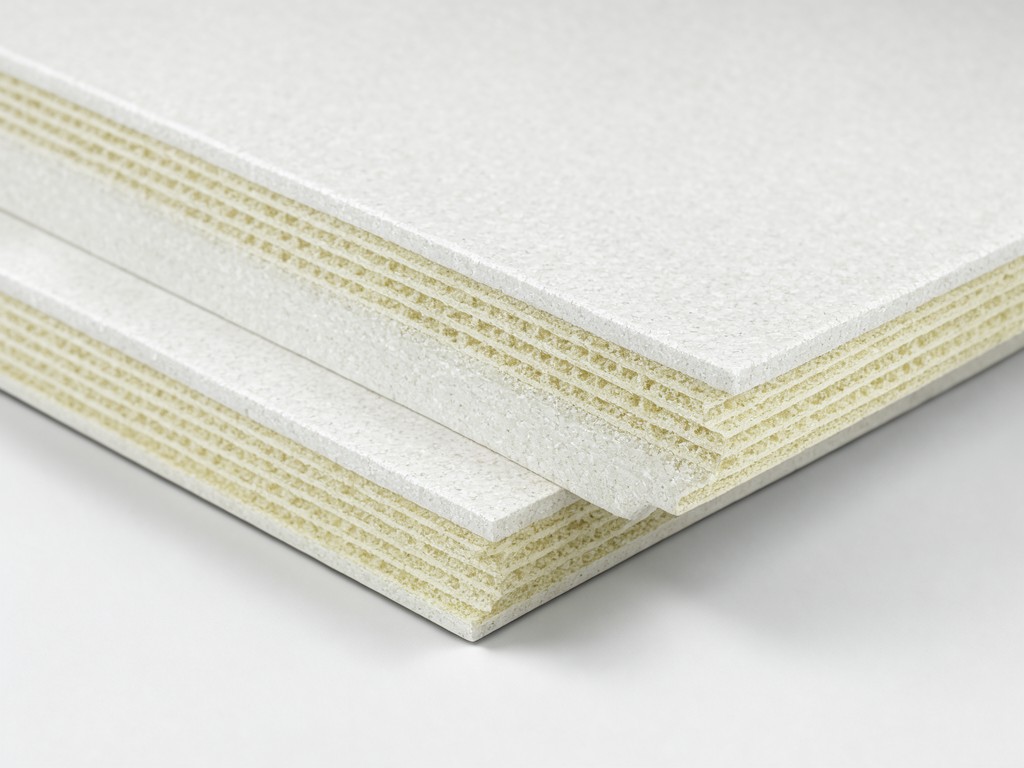
Structural integrity in cold storage depends on the bond between the skin and the extruded polystyrene (XPS) core. Unlike foam alternatives, the extrusion process provides a closed-cell structure that resists moisture ingress and maintains dimensional stability under thermal cycling. For procurement officers, the trade-off lies between the density of the XPS core and the compressive strength; higher-density cores reduce the risk of panel deformation under heavy floor loads or long-term racking pressure.
Scope of Supply and Physical Form
Surface material determines the panel's resistance to environmental degradation. We provide galvanized steel skins with high-density coatings for high-corrosion environments, or fiber-reinforced panels for applications where impact resistance and fire ratings are critical. The thickness of the skin—usually 0.4mm to 0.7mm—directly impacts the span capability of the panel before mechanical deflection occurs.
- Core thickness from 50mm to 300mm based on thermal R requirements.
- Skin options: Pre-painted galvanized steel, PVDF, or stainless steel.
- Joint profiles: Tongue-and-groove with interlocking gaskets for thermal-bridge prevention.
- Custom load-bearing capacities for industrial-grade floor panels.
Materials and Construction Trade-offs
The failure mode in many sandwich panels is delamination at the interface. This occurs when the adhesive application process is not calibrated to the ambient humidity during production, causing the skin to pull away during rapid temperature fluctuations. We utilize continuous-foam bonding to ensure the chemical bond remains intact across the full operating range of -30°C to +70°C.
| Parameter | Standard Grade | High-Performance |
|---|---|---|
| XPS Density | 28-30 kg/m³ | 35-45 kg/m³ |
| Compressive Strength | 150 kPa | 400 kPa+ |
| Thermal Conductivity | 0.032 W/m·K | 0.028 W/m·K |
Construction Method and Its Effect on Consistency
Consistency is managed through the extrusion line temperature and the cooling rate. If the cooling rate is too rapid, the XPS core can develop internal stresses, leading to warping once the panel is cut. Our process utilizes automated line-speed sensors to ensure the core width remains within a ±1.5mm tolerance across a 100-meter production run.
Adhesive Precision
Automated glue spread ensures a uniform layer thickness across the XPS surface, preventing air pockets that cause structural failure under vacuum-loading.
Skin Tension
Pre-tensioned steel sheets prevent the "oil canning" effect often seen in panels during high-temperature exposure.
Buying Mistakes That Lead to Returns
Distributors often overlook the importance of the edge profile. A poorly molded joint creates a thermal bridge that allows moisture to condense inside the wall, leading to ice formation and mold growth. Furthermore, failing to specify the coating grade for the steel skin can result in premature oxidation within just two seasons of coastal-air exposure.
Customisation Options and Their Limits
We adapt panel dimensions to fit specific architectural requirements, but core widths are limited by the structural stability of the XPS foam. For spans exceeding 3000mm, we recommend internal structural ribbing to prevent the panel from sagging under its own weight during transport or wind loads during installation.
Working as Production Partner, Not a Catalogue Supplier
Large-scale projects require batch traceability. We provide test reports for every shipment, documenting the core density and bond strength. Request our technical data sheets for your specific project load-bearing calculations.
Care, Storage and Service Life
XPS panels are inherently stable but UV sensitive if the core is exposed. Panels must be stored flat on elevated dunnage to prevent permanent bowing. Once properly installed, the service life of the XPS sandwich panel typically exceeds 25 years, provided the steel skin remains free from deep mechanical punctures.
Questions Buyers Ask Before Ordering
Can these panels handle sub-zero temperatures without cracking?
Yes, the XPS core maintains its physical properties down to -40°C, though the adhesive must be rated for low-temperature flexibility.
What is the tolerance on panel width?
Our standard tolerance is ±1.5mm for widths up to 1200mm, ensuring tight joints on-site assembly.
For bulk quotations and specific XPS insulated panel requirements, contact our engineering team today.



