Durable Interlocking EPS Foam Sandwich Panels Supplier: What Buyers Should Check Before Ordering
Total project cost in cold chain logistics and modular housing is often dictated by the failure rate of the panel skins at the interface. While the expanded polystyrene (EPS) core provides the thermal resistance, the bond between the foam and the face material determines whether the panel survives repeated mechanical stress. If the adhesive fails to account for differing thermal expansion coefficients, the interlocking edges lose their geometric precision, leading to thermal bridging and increased labor during assembly.
Scope of Supply
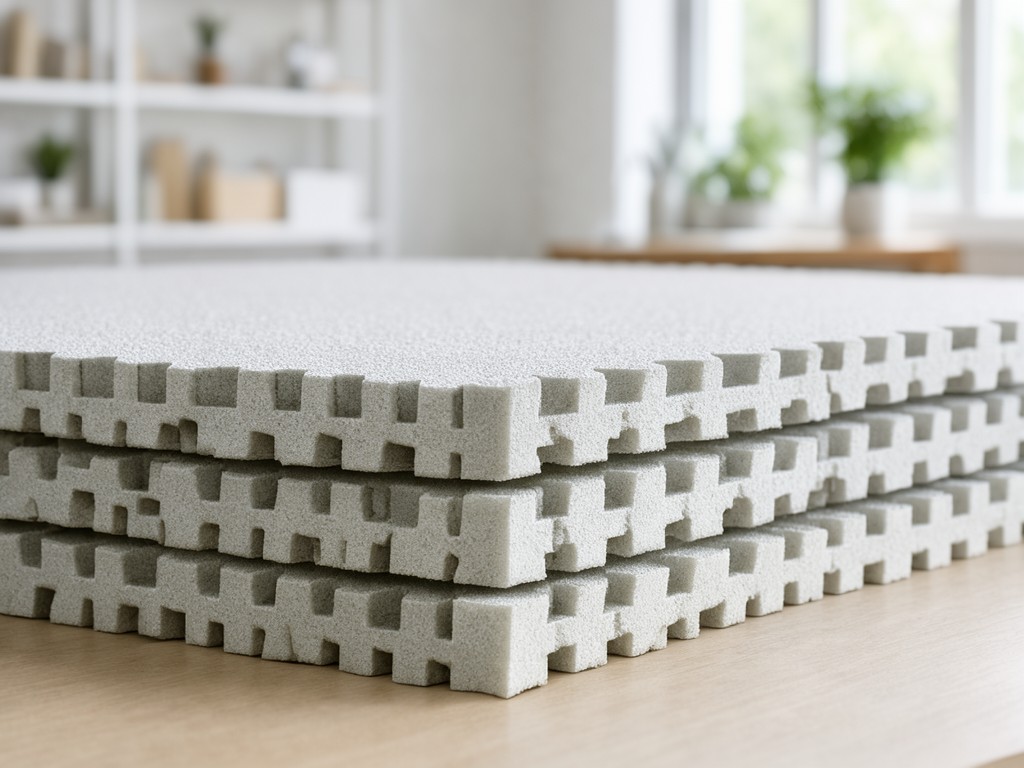
The manufacturing process focuses on the precision of the tongue-and-groove geometry. Standard hot-cut methods often result in slight burr on the edges, causing tabs that degrade after three or four assemblies. We utilize CNC-routed extruded profiles to ensure the interlocking mechanism remains within a ±0.5mm tolerance across the entire batch. This precision ensures that panels maintain a tight seal without the need for excessive onsite sealants, reducing installation time per square meter.
- Galvanized steel skins for high-impact industrial environments.
- Fiber-reinforced polymer (FRP) faces for chemical resistance in processing.
- Variable-thickness EPS cores ranging from 30mm to 200mm.
- Custom-profile interlocking joints for specific structural load-bearing requirements.
The Problem Buyers Keep Paying For
Procurement officers frequently report return rates due to delamination where the panel skin pulls away from the core. This usually occurs because the surface of the foam was not properly degassed before the bonding process. When a panel delaminates, the thermal R-value drops significantly, and the unit fails site inspection. By selecting a supplier that utilizes a chemically-treated foam surface, you mitigate the risk of skin-bond failure during transport vibrations or rapid temperature fluctuations.
| Parameter | Industrial Standard |
|---|---|
| Core Shear Strength | 0.15 - 0.25 MPa |
| Interfacial Bond Strength | ≥ 120 N/cm |
| Thermal Conductivity (λ) | 0.031 - 0.038 W/mK |
| Dimensional Stability | ≤ 0.2% over 20°C Δ |
Design Constraints Behind the Specification
Choice of skin thickness is a trade-off between weight and structural rigidity. A 0.5mm steel skin reduces the overall weight of the shipment, lowering freight costs, but it is prone to denting during handling. For exterior-mounted panels, a 0.7mm or 1.0mm gauge is necessary to prevent buckling when the panel is fastened to a frame under wind load conditions.
Thermal Efficiency
Higher-density EPS cores prevent moisture ingress into the panel center, which is critical for maintaining insulation-values in humid climates.
Mechanical Integrity
Interlocking joints are designed to resist tensile forces, preventing the panels from pulling apart under uneven thermal expansion.
Materials and Trade-offs
The coating finish on the panel affects the maintenance cycle. PVDF-coated skins offer high UV resistance but increase the initial cost per square meter. Conversely, standard polyester-based coatings are suitable for interior modular units but will chalk if exposed to direct sunlight for more than twelve months. We match the material grade to the specific exposure environment of the end user.
Segment-Specific Requirements
Cold storage facilities require panels with antimicrobial interior liners to prevent mold growth. In temporary housing projects, the focus shifts to the fire-rating of the EPS core. Our production line accommodates various flame-retardant additives in the foam matrix to meet local safety codes without compromising the adhesive bond.
Inspection Items and Test Methods
To ensure batch consistency, every shipment undergoes standardized testing. We do not rely on visual inspection alone.
- Pull-off tests to verify skin-core bond strength.
- Impact testing to measure the deformation resistance of the face material.
- Dimensional checks of the interlocking profile to ensure fit-up.
- Water absorption tests to ensure the core remains dry at the edge joints.
Keeping Orders Supplied
Reliability in supply chain is maintained through batch traceability. By documenting the specific foam formulation and adhesive batch for every production run, we ensure that a reorder placed six months later will fit perfectly with the original installation. This eliminates the nightmare of mismatched dimensions in large-scale rollouts.
Request technical data sheets or volume pricing for your project requirements.
Contact our engineering team for a custom quote


