Durable Lightweight PIR Acoustic Insulation Panels Supplier: Supply and Specification Guide
Polyisocyanurate (PIR) cores provide a specific balance between thermal resistance and acoustic damping that standard foams cannot match. While lightweight solutions often degrade under high humidity, the closed-cell structure of PIR maintains its dimensional stability over long service lives. For procurement officers, the trade-off involves the density versus the resistance to mechanical deformation during installation. Higher-density PIR panels reduce the risk of panel cracking when fastened to irregular substrates, ensuring the acoustic NRC rating remains consistent.
Where Cheap Alternatives Fall Short
Low-cost acoustic solutions often suffer from delamination of the face skin from the foam core. When the bond fails, moisture enters the internal voids of the panel, leading to mold growth and a total loss of sound absorption properties. Our PIR manufacturing process utilizes a thermal-set bonding agent that ensures the skin remains integrated even when subjected to fluctuating thermal cycles.
Standard low-density foams lack the structural rigidity required for large-scale ceiling applications. Over time, these panels sag under their own weight, creating gaps in the acoustic barrier that allow sound leakage. We maintain a consistent flexural modulus, preventing this deformation and maintaining the integrity of the entire installation assembly.
How It Performs in Use
The performance of PIR panels is measured by their resistance to impact and their environmental stability. In high-traffic industrial or commercial environments, the surface finish of the panel determines how long it stays clean and resists abrasion.
| Parameter | Typical Range |
|---|---|
| Core Density | 30 - 45 kg/m³ |
| Thermal Conductivity (λ) | 0.022 - 0.028 W/m·K |
| Sound Absorption Coefficient | 0.70 - 0.90 (NRC) |
| Flame Spread Rating | Class B / Class A |
Specification Range and Customisation
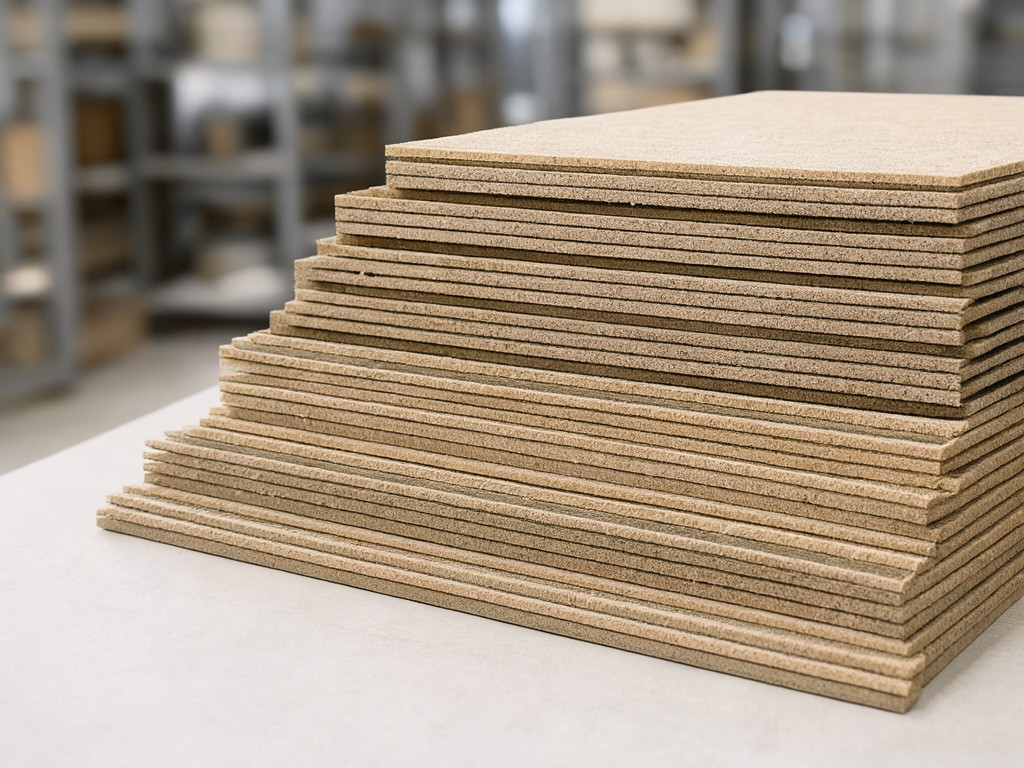
OEM buyers require specific dimensions to match the acoustic frequency requirements of their projects. We provide various thicknesses from 20mm to 200mm, depending on the target decibel reduction. The face skin can be specified as aluminum foil for thermal barrier properties, glass fiber for fire rating, or perforated surfaces for direct acoustic absorption.
Request technical data sheets for specific thickness profiles.
Customisation Options and Their Limits
Perforation Patterns
Precision CNC perforation allows sound waves to enter the core for dissipation. Note that higher perforation percentages reduce the structural stiffness of the panel, requiring thicker cores.
Surface Finishes
Custom fabric wraps can be applied for retail-ready products. This increases the lead time and affects the moisture vapor resistance of the finished assembly.
Volume Planning and Lead Time
Production cycles are dictated by the chemical curing time of the PIR foam. Standard stock sizes are typically available for 2-week dispatch, whereas custom-milled geometries or specialized skin applications require a 6 to 8 week lead window. Batch traceability ensures that every panel in a single shipment shares the same density and acoustic profile.
- Minimum Order Quantity (MOQ) starts at 500m² for custom skins.
- Standard palletization includes moisture-barrier shrink wrap to prevent edge damage during transit.
- Tolerance levels are maintained at ±0.5mm on all cut dimensions.
Packing and Freight Configuration
Shipping lightweight panels requires specific protection to prevent corner-crushing. We utilize reinforced cardboard edge protectors and internal spacers to maintain the flat geometry during transit. This ensures that the panels arrive at the site ready for immediate installation without requiring surface repairs.
Ready to discuss the specific acoustic requirements for your project?
Contact our technical sales team for a bulk quote


