Durable Rockwool Acoustic Sandwich Panels for Industrial Plants - Bulk Supply and Specification Guide
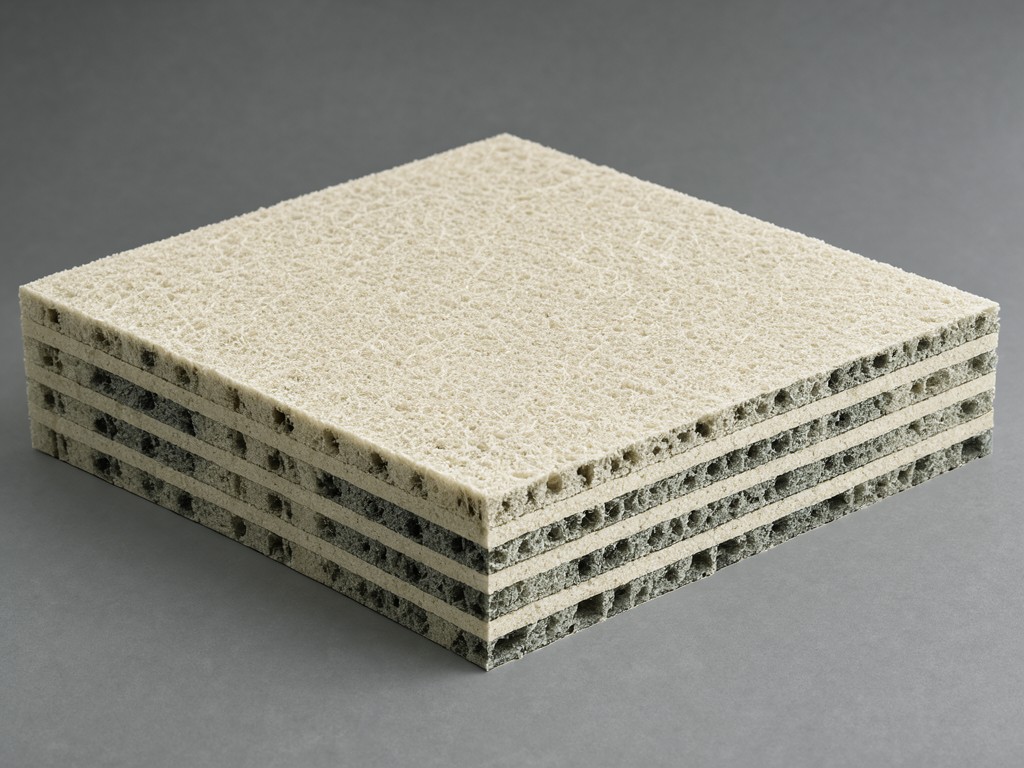
Density of the mineral wool core determines the structural stability of the panel in high-humidity manufacturing environments. Unlike foam alternatives that degrade under thermal stress, the rockwool core maintains dimensional integrity at temperatures exceeding 200°C. The mechanical bond between the galvanized steel skins and the mineral fiber prevents the delamination often seen in lower-grade panels subjected to constant vibration.
Technical Specification Overview
Standard configurations range from 50mm to 200mm thickness, with core densities varying between 40kg/m³ and 120kg/m³ to meet specific acoustic absorption requirements.
The Problem Buyers Keep Paying For
Procurement officers frequently report failure at the joints of acoustic panels installed in heavy-industry zones. When the steel skin lacks sufficient tensile strength, thermal expansion causes the panels to buckle, creating air gaps that compromise the acoustic transmission rating. Furthermore, poor moisture resistance in the core allows for vapor ingress, leading to weight gain and a loss of thermal resistance over time.
- Sagging in long-span ceiling due to insufficient core shear modulus.
- Corrosion of the vapor-barrier layer in acidic chemical-plant environments.
- Inconsistent NRC (Noise Reduction Coefficient) values caused by uneven fiber distribution.
Measured Performance in Real Use
The acoustic performance of these panels is judged by the sound transmission class (STC) across industrial frequencies. A 100mm panel with an 80kg/m³ rockwool core provides a significant reduction in low-frequency rumble, which is essential for isolating heavy machinery noise from administrative control zones.
| Usage Condition | Typical Complaint | Specification Mitigation |
|---|---|---|
| High vibration floor zones | Panel rattling and joint fatigue | 0.5mm Z275 galvanized steel with interlocking profile |
| Steam-wash environments | Core mold and mold growth | Hydrophobic-treated mineral wool core |
| Exterior facade exposure | Surface chalking and fading | PVDF or polyester coating with UV-stabilizers |
OEM and ODM Structure
Customization requires a detailed review of the panel profile to ensure compatibility with existing structural framing systems. We provide various profiles including tongue-and-groove, hidden stud, and specialized perimeter joints designed to minimize thermal bridging. The manufacturing process begins with a sample batch to verify the coating thickness and core bond strength before the full production run commences.
Surface Finishes
Available options include standard polyester for interior use, PVDF for high-chemical resistance, and antimicrobial coatings for food-grade processing facilities.
Core Density
Adjustable densities allow for meeting specific R-value insulation requirements or acoustic absorption targets without increasing overall panel thickness.
Capacity and Tooling
Lead times for bulk orders depend on the volume of steel coil required and the specific mineral wool density requested. Standard profiles are typically available within 3 to 4 weeks, while custom die profiles require an initial tooling period of 21 days. We utilize batch traceability to ensure that every panel in a shipment meets the approved thermal and acoustic benchmarks.
Ordering, Tooling and Lead-Time
For large-scale industrial projects, we require technical drawings and load-bearing calculations prior to final quote. This ensures the panel interlocking mechanism will withstand the primary structural loads.
Contact our engineering team to discuss your specific project requirements and obtain a formal technical proposal.
FAQ Questions
Can these panels meet specific fire safety standards for industrial plants?
Yes, the rockwool core is non-combustible, typically meeting Class A or Euroclass A fire ratings depending on the steel skin thickness.
What is the minimum order quantity for custom colors?
The minimum order is typically 1,000 square meters to ensure color consistency across the entire batch.
How are the panels handled during transport to prevent damage?
Panels are bundled on reinforced timber pallets with protective edge wrapping to prevent abrasion of the steel skins during transit.



