factory direct 30mm 40mm insulated sandwich panels china supplier - Bulk Supply and Specification Guide
Returns usually trace back to the same weak point: inconsistent foam adhesion at the metal-to-core interface, which shows up as delamination after a few thermal cycles. The 30 mm and 40 mm profiles amplify this risk because the thinner core leaves less margin for gel-time variation on a continuous lamination line.
The complaint that repeats across reorders is dimensional drift in the 40 mm profile when the line speed pushes past the foam's gel window, leaving a density gradient that compromises both R‑value and screw holding. A 0.5 mm shift in panel width or a 2 kg/m³ density drop across the length is enough to trigger warranty claims on a cold‑room project.
Scope of Supply and Physical Form
Panels ship as finished composite units: two metal skins (0.4–0.6 mm PPGI, 0.5 mm stainless 304, or 0.7 mm aluminum) bonded to a rigid polyisocyanurate (PIR) or polyurethane (PU) core. Standard widths are 1000 mm and 1150 mm; lengths run from 2 m to 13.5 m in 100 mm increments. Core density is held at 38–42 kg/m³ for PIR, 40–45 kg/m³ for PU. Dimensional tolerances: thickness ±1 mm, width ±2 mm, length ±5 mm, squareness ≤1 mm/m. Every batch carries a heat‑number traceable to the foam pour and coil lot.
| Thickness | Core Option | Standard Width | Length Range | MOQ (m²) | Lead Time |
|---|---|---|---|---|---|
| 30 mm | PIR / PU | 1000 / 1150 mm | 2–13.5 m | 500 | 3–4 weeks |
| 40 mm | PIR / PU | 1000 / 1150 mm | 2–13.5 m | 500 | 3–4 weeks |
Critical spec rule: if the project requires a declared λ ≤ 0.022 W/m·K, specify PIR core at 40 kg/m³ minimum. PU at the same thickness typically yields 0.024–0.026 W/m·K and will not pass the same energy‑code calculation.
Where This Product Beats Standard Alternatives
Compared to site‑assembled mineral wool + vapor barrier, the factory‑laminated panel eliminates the thermal bridge at every fastener and reduces installation labor by 60–70 %. The continuous metal skin also provides a cleanable surface that withstands high‑pressure washdown (up to 80 bar, 60 °C) in food‑processing zones without water ingress at joints.
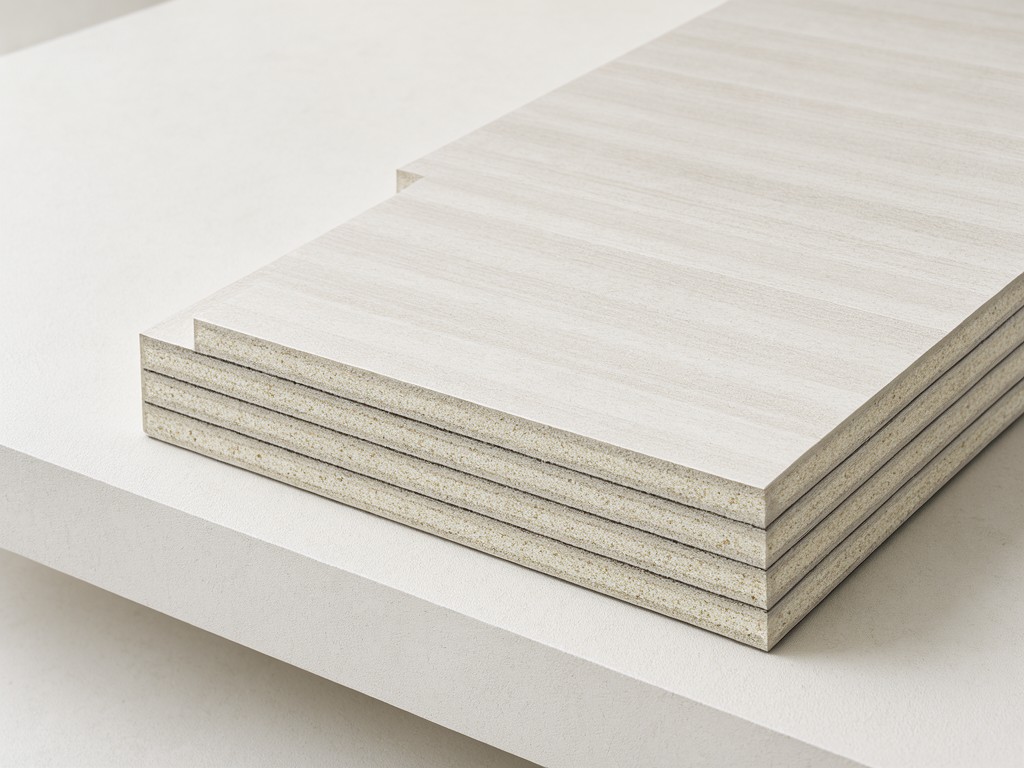
Against EPS‑core panels, PIR delivers a 30 % higher R‑value per inch and achieves B‑s1,d0 fire classification without added flame retardants that can migrate. The trade‑off is a 15–20 % higher material cost, but the thinner wall profile often recovers that in reduced structural steel and foundation loads.
Option Comparison by Usage Level
Cold Storage / Food Processing
- Core: PIR 40 kg/m³, λ ≤ 0.022 W/m·K
- Facing: 0.5 mm stainless 304 with 2B finish, PE protective film
- Joint: tongue‑and‑groove with integrated PVC gasket, sealed on site with food‑grade silicone
- Max service temp: –40 °C to +80 °C continuous
Industrial Roof / Wall Cladding
- Core: PU 42 kg/m³, λ ≈ 0.024 W/m·K
- Facing: 0.5 mm PPGI, polyester 25 µm topcoat, 7 µm backer
- Joint: overlap with butyl tape, self‑drilling screws with EPDM washers
- UV exposure: 15‑year colour warranty (ΔE ≤ 3) per QUV‑B 4000 h test
How to Choose Before Requesting a Quote
Start with the required U‑value and fire rating; those two drive core chemistry and thickness. If the building code demands a 60‑minute fire barrier, the 40 mm PIR at 40 kg/m³ is the minimum — 30 mm will not pass. Next, define the interior environment: constant –25 °C with daily washdown calls for stainless facing and a gasketed joint; a temperate warehouse can use PPGI with a standard overlap.
Check the structural span tables. A 40 mm panel on 1.2 m purlin spacing carries 1.2 kN/m² wind suction; pushing to 1.5 m requires either a thicker skin (0.6 mm) or a higher‑density core. Finally, confirm the container loading plan: 13.5 m panels need a 40‑ft high‑cube; shorter lengths can be double‑stacked in a 20‑ft to cut freight cost per square meter.
Decision rule: when the project spec lists "PIR core" without density, insist on 40 kg/m³ in the purchase order. Lower density (35 kg/m³) is sometimes offered to hit a price target but drops λ by 0.002 W/m·K and reduces screw pull‑out by 15 %.
Customisation Options and Their Limits
Lengths are cut to order in 100 mm steps; no tooling charge. Custom colours on PPGI require a minimum 5 t coil order (≈2 500 m²) and add 10 days to lead time. Stainless facing can be supplied in 316L for coastal environments, but the 0.5 mm gauge is the thinnest available — thicker gauges need a separate roll‑forming run.
Core density can be raised to 45 kg/m³ for higher screw holding, but foam rise time increases, slowing line speed and adding 5–7 % to unit cost. Fire‑retardant additives for FM‑approved ratings are only available on PIR and add a 2‑week certification wait. Embossed or micro‑ribbed profiles for stiffness are feasible on 0.6 mm skins; they add 0.3 mm to overall thickness and must be specified before coil slitting.
Ready for a Specification Review?
Send us the project U‑value, fire rating, and environmental conditions. We'll return a marked‑up data sheet with the exact core, facing, and joint configuration that meets code without over‑specifying.
Request a specification review


