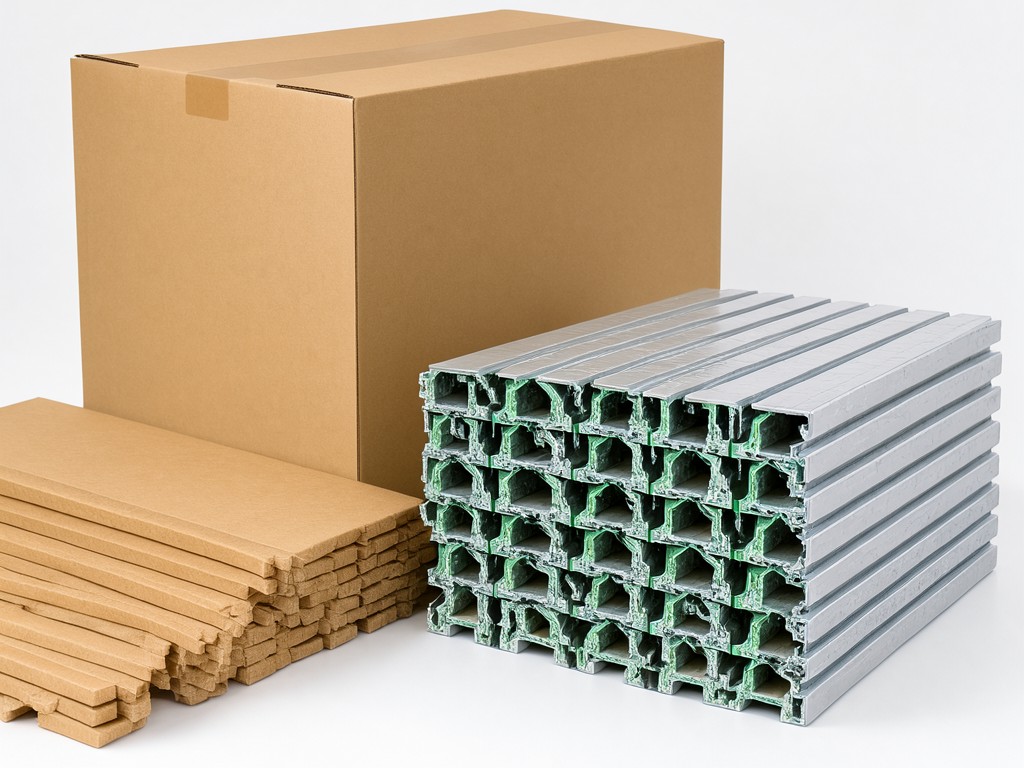
Factory Direct B1 Class PIR Sandwich Wall Panels Manufacturer: What Buyers Should Check Before Ordering
Procurement often focuses on the price per square meter, but the total cost of ownership shifts once replacement rates and site-specific thermal stability are calculated. Low-grade PIR (polyisocyanurate) cores often lack sufficient tensile strength under high humidity, leading to delamination between the metal skin and the foam core. When the structural bond fails, the B1 class fire rating is compromised, and the thermal resistance of the entire assembly drops significantly.
What This Is and Where It Fits
These panels are engineered for industrial-scale construction where fire safety and thermal dimensional stability are non-negotiable. The construction consists of a high-density PIR core sandwiched between two layers of pre-painted galvanized steel or aluminum. This specific configuration is utilized primarily in cold storage facilities, pharmaceutical cleanrooms, and high-specification industrial warehouses where rapid flame spread must be prevented.
The PIR core is selected over EPS or mineral wool because of its superior thermal performance and inherent fire resistance. Unlike standard foams, PIR forms a char layer when exposed to heat, which creates a barrier that slows heat transfer and maintains the structural integrity of the panel longer during a thermal event.
What the Design Has to Balance
Selecting the right panel configuration requires a trade-off between insulation thickness and load-bearing capacity. A thicker core increases the R-value but also increases the risk of "oilcanning" if the skin tension is not properly calibrated.
- Skin Gauge: 0.50mm to 0.70mm steel is standard; thinner gauges reduce weight but increase the risk of buckling under wind loads.
- Core Thickness: Ranges from 50mm to 200mm+ depending on the required U-value and structural span between purlins.
- Profile Geometry: Cam-and-tongue joints provide the best thermal break and water resistance at the panel joints.
- Surface Finish: PVDF coatings are used for high-corrosion environments, while polyester is sufficient for standard internal industrial use.
How It Performs in Use
In the field, the panel is judged by its ability to remain flat across seasonal temperature fluctuations. If the adhesive bonding during manufacturing is not uniform, the metal skin will pull away from the core, creating visible defects and air gaps. We utilize a high-pressure continuous line to ensure the bond strength is consistent across the entire surface area of the panel.Thermal performance is also dependent on the quality of the PIR cells. Poor-quality foam can have open cells that absorb moisture, which degrades the insulation value over time. Our process monitors the closed-cell structure to ensure the thermal conductivity remains within the specified range.
What Gets Checked Before Shipment
| Test Parameter | Testing Method | Tolerance Criteria |
|---|---|---|
| Bond Strength | Pull Shear Test | Min 1.5 N/mm |
| Dimensional Stability | Laser Width Check | ± 1.0mm |
| Thermal Conductivity | Heat Flow Meter | λ ≤ 0.023 W/m·K |
| Fire Resistance | Vertical Flame Test | B1 Class Compliance |
Capacity, Tooling and Scheduling
Production timelines are dictated by the extrusion line speed and the curing time of the PIR core. Large orders for custom profiles require a lead time for die fabrication to ensure the joint geometry matches the architectural requirements exactly.
- Technical Approval: Review of CAD drawings and U-value calculations.
- Sample Verification: Delivery of physical mock-ups for color matching and joint testing.
- Production Run: Batch-tracked production to ensure traceability of foam chemical batches.
- Logistics Planning: Customized crate packaging to prevent edge damage during transit.
Keeping Repeat Orders
Reliability in supply is built on the consistency of material properties across different production lots. We maintain strict control over raw material sourcing to ensure that panels ordered a year from now will fit perfectly with those installed today, preventing costly on-site adjustments.
For specific project requirements, request a technical specification sheet or a quote for B1 class PIR panels.



