Specifying Factory Direct Fruit and Vegetable Cold Room Panels Exporter for Wholesale and OEM Orders
Thermal stability in cold storage depends entirely on the consistency of the insulation core. When the foam density fluctuates during production, the thermal conductivity value shifts, leading to uneven compressor cycles and premature spoilage of produce. We manufacture polyisocyanurate (PUR) panels using high-pressure injection to ensure a uniform density of 40-42 kg/m³, which prevents the cold spots often found in lower-grade extruded alternatives.
Materials and Construction Trade-offs
Choosing between skin gauges and core thicknesses involves a direct trade-off between structural rigidity and thermal resistance. A 0.5mm pre-painted steel skin is sufficient for temporary storage but remains prone to denting under heavy crate impact. For high-turnover distribution centers, 0.6mm or 0.7mm skins provide the necessary impact resistance to maintain joint integrity over five years of operational use.
- PUR/PIR cores offer higher R-values per inch compared to EPS, allowing for thinner walls and increased internal floor space.
- Stainless steel skins (grade 304) increase material costs but eliminate the corrosion risks in high-wash-down processing zones.
- Cam-and-groove joints with hidden-profile gaskets ensure an airtight seal, reducing the risk of air infiltration at the panel seams.
Buying Mistakes That Lead to Returns
Most quality disputes stem from ignoring the dimensional tolerances of the panels. If the panel width varies by even ±1.5mm, the interlocking system will not align across a long run, creating gaps that allow moisture ingress. This moisture then freezes, causing the joints to expand and destroying the thermal barrier over time.
Another common error is the specification of standard coatings for acidic produce environments. Fruits release ethylene gas and moisture; standard organic coatings may chalk or peel within 24 months. We recommend PVDF-finished surfaces for any cold room handling high-moisture produce to ensure the surface remains inert and chemically inert.
Inspection Items and Methods
| Test Parameter | Target Specification | Verification Method |
|---|---|---|
| Thermal Conductivity (λ) | < 0.022 W/m·K | Heat Flow Meter test |
| Bond Strength | > 1.5 N/mm | Pull-off test |
| Dimensional Tolerance | ± 0.5mm per length | Digital caliper measurement |
| Core Density | 38-42 kg/m³ | Mass volumetric analysis |
Packing, Marking and Configuration
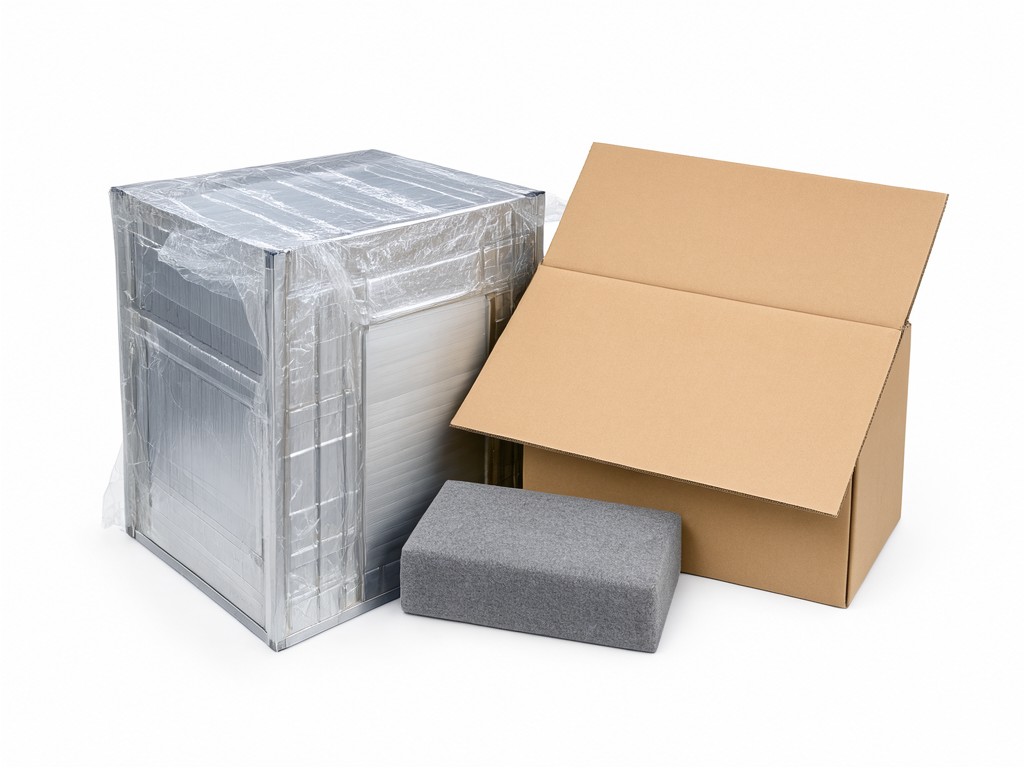
Exporting long-format panels requires packaging that prevents mechanical edge damage during maritime transit. We use steel-reinforced crates with internal foam spacers to prevent the panels from shifting under their own weight. Each bundle is marked with a batch number and production date to ensure full traceability from the factory line to the installation site.
- Standard lengths range from 2000mm to 12000mm depending on shipping container constraints.
- Widths are typically fixed at 1000mm or 1200mm to match standard palletizing logic.
- Panel thickness varies from 50mm for chill rooms to 150mm+ for deep-freeze vegetable storage.
Setup, Use and Replacement
Installation speed for large-scale projects depends on the precision of the joint profile. Our hidden-profile system allows for rapid assembly without visible thermal bridges, which reduces labor costs and minimizes points for condensation. For replacements, the modular design allows a single panel section to be swapped if damaged by heavy forklift traffic without compromising the structural integrity of the entire enclosure.
Request technical data sheets and bulk pricing for your project specifications.
Contact our engineering team for a custom quotation


