Factory Direct Polystyrene Sandwich Panels for Temporary House: What Buyers Should Check Before Ordering
Procurement officers often focus on the initial cost per square meter, yet the long-term viability of an EPS-sandwich panel is dictated by the thermal expansion coefficient between the metal faces and the foam core. In environments with rapid temperature fluctuations, the steel expands faster than the polystyrene, causing delamination. If the adhesive process is not calibrated for the specific surface tension of the galvanized steel, the panels will eventually pull away at the edges, leading to moisture ingress and rapid failure of the thermal envelope in temporary units.
Material Options and Trade-offs
| Specification | Standard EPS Grade | High-Density EPS |
|---|---|---|
| Core Density | 12 - 15 kg/m³ | 20 - 24 kg/m³ |
| Thermal Conductivity | 0.038 - 0.042 W/m·K | 0.034 - 0.036 W/m·K |
| Compressive Strength | 70 - 100 kPa | 150 - 200 kPa |
| Primary Application | Short-term partitions | Structural load-span walls |
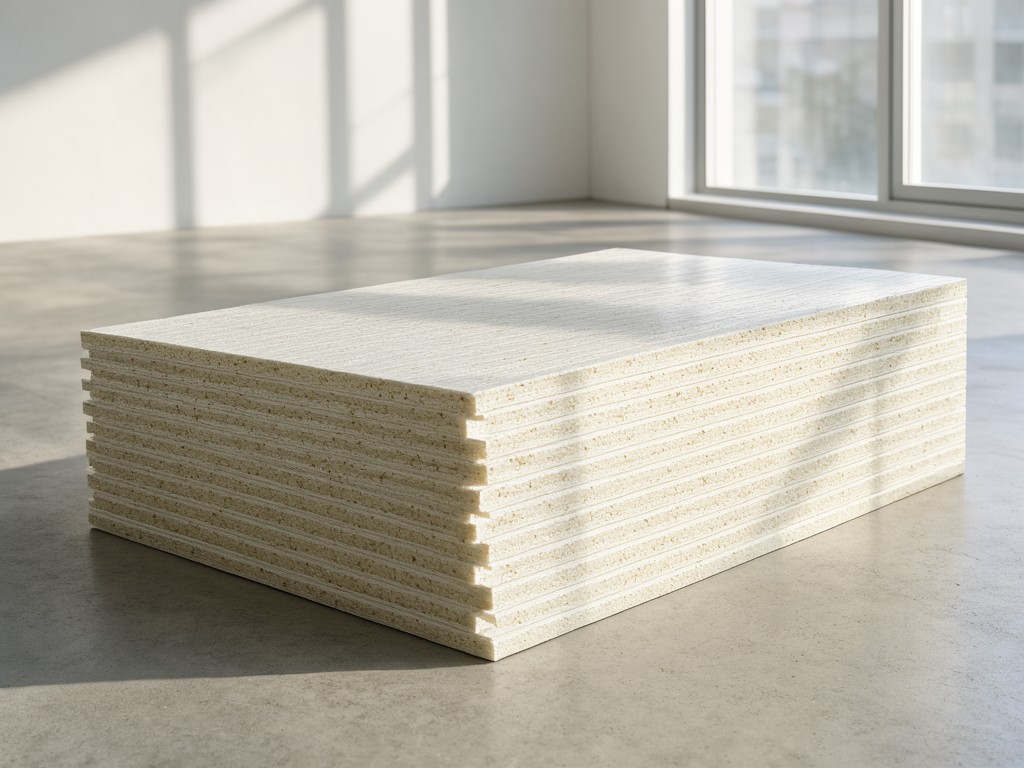
Matching the Product to the Buyer's Need
For temporary housing used in disaster relief or site offices, the panel thickness is the primary variable affecting assembly speed and thermal performance. A 50mm panel provides sufficient insulation for internal room division but lacks the span capacity required for exterior walls without heavy steel framing. If the project requires wide-span open floor plans, 100mm to 150mm panels with a reinforced EPS core are necessary to prevent "bowing" under the weight of the roof structure.
The surface finish also dictates the maintenance cycle in high-exposure environments. Standard polyester coatings are cost-effective for indoor use but prone to chalking and UV-fading within 24 months of direct exposure. For distributors targeting markets with high solar indices, a PVDF or mineral-coated finish is a mandatory requirement to prevent the steel skin from becoming brittle and cracking at the cut joints.
Buying Mistakes That Lead to Returns
- Ignoring the tongue-and-groove tolerance precision leads to cumulative gaps during assembly that compromise the entire thermal seal.
- Specifying a thin steel gauge below 0.4mm often results in panel deformation during the mechanical fastening process on-site.
- Failing to verify the fire retardant rating of the EPS core can lead to batch rejection by local building safety inspectors.
- Using low-grade adhesives in high-humidity zones causes internal moisture mold growth and delamination within the first seasonal cycle.
Customisation Options and Limits
Customization typically focuses on the profile geometry of the steel skin—ranging from flat to deep-rib trapezoidal profiles. While deeper rib profiles increase the moment of inertia of the panel, they also increase the total weight per square meter, impacting shipping logistics and container optimization. We can adjust panel lengths up to 12 meters to fit specific site constraints, but lengths beyond this require specialized flat-rack transport to prevent permanent bowing during transit.
Core material can be modified to include foil facing for enhanced vapor barrier performance, though this significantly increases the material cost and requires specialized sealing techniques during installation. The buyer must weigh the increased R-value against the risk of foil tearing during the on-site cutting and drilling required for the rapid assembly of the temporary unit.
Working as a Partner, Not a Supplier
Consistency across batches is maintained through automated core-thickness monitoring which regulates the EPS density within a ±0.5mm tolerance. This ensures that every panel ordered for a 1,000-unit project fits together without, eliminating the need for on-site modifications that inflate labor costs and waste material.
Discuss specific project requirements or request a technical data sheet and bulk quote for your temporary housing project.
Quality Control and Batch Consistency
Every production run undergoes pull-off testing to verify the bond strength between the EPS and the steel. We also measure the dimensional stability of the finished panels to ensure they do not warp after the cooling phase of the manufacturing. This data is provided in batch review to ensure the delivered materials meet the structural calculations of the temporary housing design.



