Specifying factory direct polyurethane pu insulated sandwich panels wholesale for Wholesale and OEM Orders
Scope of Supply and Physical Form
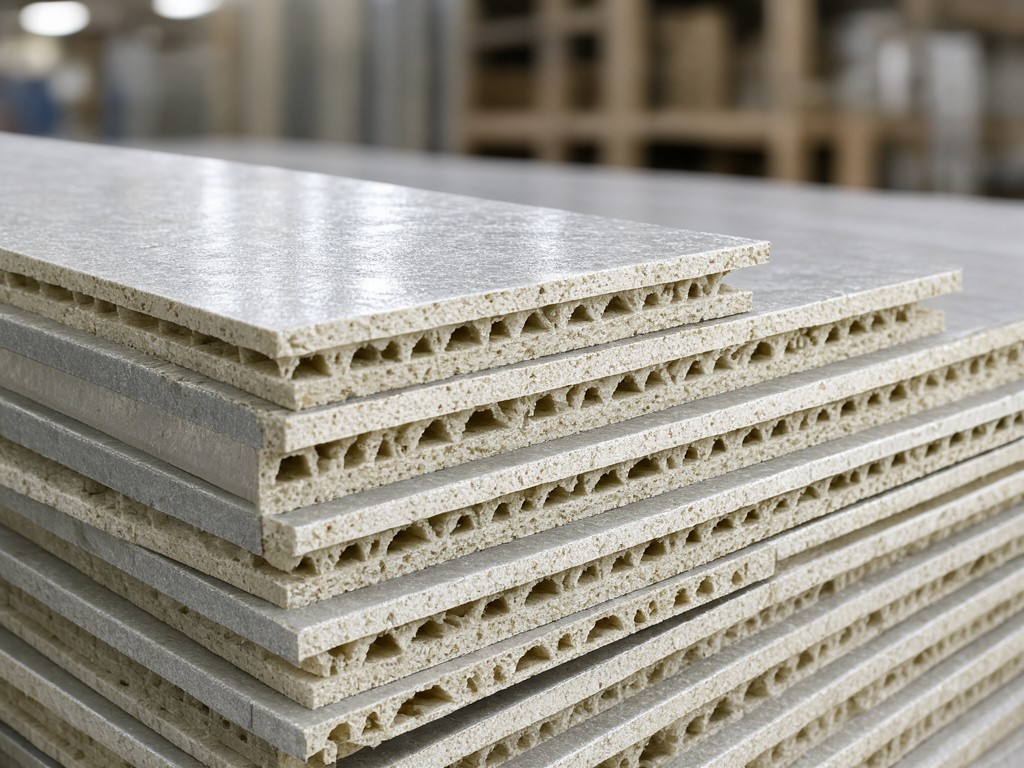
Panels ship as flat, ready‑to‑install sheets. Standard width is 1000 mm; lengths run from 2 m to 12 m in 0.5 m increments. The core is rigid polyurethane foam, density 38‑42 kg/m³, faced on both sides with either 0.5 mm galvanized steel or 0.7 mm pre‑painted aluminum. Edge profiles are tongue‑and‑groove with a 5 mm sealant groove.
50‑200 mm
38‑42 kg/m³
Steel 0.5 mm / Al 0.7 mm
0.022‑0.024 W/m·K
9‑14 kg
B‑s1,d0 (EN 13501‑1)
The Problem Buyers Keep Paying For
Delamination at the facing‑core interface appears after the first heating season when the adhesive line is not fully cured. Core shrinkage of 1‑2 % creates gaps that become thermal bridges, raising U‑value by up to 15 %. Inconsistent panel thickness (±3 mm) forces on‑site shimming, adding labour cost and delaying hand‑over. Colour fade on pre‑painted aluminum exceeds 5 ΔE after 18 months UV exposure, triggering warranty claims.
- Adhesive cure window missed during high‑speed lamination
- Foam density drift between batches
- Facing coil thickness tolerance not inspected in‑line
- Sealant groove depth variation causing water ingress
What Actually Determines Performance
Thermal conductivity is locked by foam cell structure and blowing‑agent retention; a 2 % density drop raises lambda by roughly 0.001 W/m·K. Adhesion strength measured by pull‑off test must exceed 0.6 MPa to survive cyclic thermal expansion. Fire rating depends on the intumescent additive load in the foam and the facing’s surface spread‑of‑flame index. Dimensional stability is governed by the foam’s closed‑cell content and the facing’s coefficient of thermal expansion match.
Critical rule: keep core density within ±5 % of nominal; otherwise lambda drifts outside the 0.022‑0.024 W/m·K window and the panel no longer meets the specified U‑value for the climate zone.
Construction Method and Its Effect on Consistency
Continuous double‑belt lamination holds thickness tolerance to ±1 mm across a 12 m run because the foam expands against a moving steel belt that acts as a calibrated gauge. Batch press lines, while cheaper for short runs, typically show ±3 mm spread due to press platen deflection and manual foam pour weighting. The continuous line also yields a uniform adhesive film thickness (≈120 µm) whereas batch press adhesive spread varies 80‑150 µm, directly affecting pull‑off values.
Continuous double‑belt
Thickness tolerance ±1 mm
Adhesive film 120 µm ±10 µm
Best for >2000 m² orders
Batch press
Thickness tolerance ±3 mm
Adhesive film 80‑150 µm
Suited for <500 m² prototypes
Matching the Product to the Buyer's Need
A club‑level indoor arena in a temperate zone typically specifies 100 mm core with 0.5 mm steel facing, delivering U‑value ≈0.22 W/m²·K and a panel weight of 11 kg/m² — easy for roof‑mounted installation. A coastal training centre demands 150 mm core, 0.7 mm marine‑grade aluminum, and a corrosion‑inhibitive primer; weight rises to 14 kg/m² but the system meets C5‑M durability class. Selecting the thinner option for a high‑humidity site saves freight but adds 30 % to heating load over the building life.
Option A — 100 mm core, steel facing
U‑value 0.22 W/m²·K
Weight 11 kg/m²
Fire class B‑s1,d0
Option B — 150 mm core, aluminum facing
U‑value 0.15 W/m²·K
Weight 14 kg/m²
Fire class B‑s1,d0 + C5‑M corrosion
Assumptions Buyers Should Stop Making
Assuming every PU sandwich panel meets the same fire class because the core chemistry is identical ignores the facing’s contribution to flame spread. Assuming colour consistency across coils without a master‑batch reference leads to visible banding on long façades. Assuming the quoted lambda value is guaranteed for the full service life neglects blowing‑agent diffusion, which can increase conductivity 5‑8 % after ten years. Assuming a single MOQ covers all custom lengths forces the factory to run change‑overs that add two weeks to lead time.
- All panels share the same fire rating
- Colour match is automatic across production lots
- Thermal performance is static for 20 years
- One MOQ fits every custom dimension
Customisation Options and Their Limits
Length can be cut to any 0.5 m increment up to 12 m without tooling change. Facing colour requires a minimum 500 m² run for a new coil; custom RAL adds a 10 % surcharge and two extra weeks. Core density can be shifted to 45 kg/m³ for higher compressive strength, but lambda rises to 0.025 W/m·K and fire class drops to C‑s2,d1. Adding a vapor‑barrier foil layer is possible on the interior face; it adds 0.3 mm thickness and 0.5 kg/m² weight.
| Option | Range / Spec | Impact on Lead Time | MOQ Impact |
|---|---|---|---|
| Length cut | 2‑12 m, 0.5 m steps | No change | Standard MOQ |
| Facing colour (new RAL) | Any RAL, 0.5 mm steel / 0.7 mm Al | +2 weeks | 500 m² min |
| Core density 45 kg/m³ | Higher compressive strength | +1 week | Standard MOQ |
| Vapor‑barrier foil | 0.3 mm PE foil, interior face | +3 days | Standard MOQ |
Capacity, Tooling and Scheduling
The continuous lamination line runs 5 000 m² per 24 h shift at 100 mm thickness; heavier 150 mm panels reduce throughput to 3 500 m². Tooling change for a new facing coil takes 4 h, including coil swap, adhesive recalibration, and first‑article inspection. Standard catalogue items (100 mm steel, 150 mm aluminum) ship in 3‑4 weeks from order confirmation. Custom colour or density adds 2‑3 weeks. Peak season (Q1‑Q2) can extend lead time by one week; we allocate buffer slots for repeat OEM programmes.
- Line capacity 5 000 m²/day (100 mm)
- Tooling change 4 h per facing swap
- Standard lead time 3‑4 weeks
- Custom colour/density +2‑3 weeks
- Peak season buffer +1 week
Ready to lock in a specification that matches your project’s thermal, fire and durability targets?
Request a specification review


