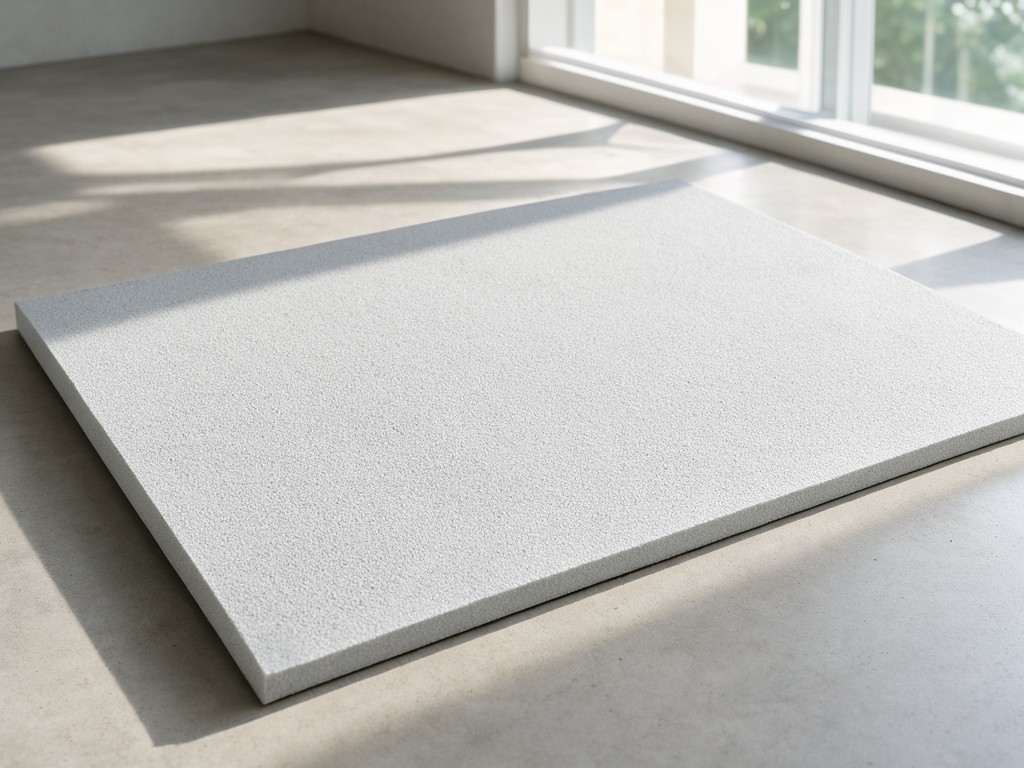
Factory Direct PU Foam Metal Siding Panels for Villa Exporter - Supply and Specification Guide
Scope of Supply
Villa-grade projects require siding that maintains dimensional stability despite extreme thermal cycling between the metal skin and the insulation core. Standard consumer panels often suffer from delamination because the thermal expansion coefficient of the steel is not matched to the foam bond. Our manufacturing process utilizes a continuous bonding line to ensure the PU foam is chemically fused to the galvanized substrate, eliminating the air pockets that lead to buckling in hot climates.
Exporters typically specify the skin thickness ranging from 0.45mm to 0.75mm depending on the wind zone classification requirements. For high-wind coastal regions, thicker gauges provide better impact resistance against wind-borne debris, whereas thinner gauges are sufficient for internal cladding where structural load is secondary to aesthetic finish.
What the Design Has to Balance
The performance of the panel is judged by the cell structure of the PU foam and the coating adhesion strength. If the cell structure is too open, moisture ingress via capillary action leads to internal corrosion of the metal skin. We balance the foam density with the metal profile geometry to ensure the panel remains flat over spans of 4 meters without visible sagging.
Surface treatment also impacts the cost structure. Architectural profiles like wood-grain or stone-textured finishes require specialized embossing rollers which can affect production lead times compared to flat-rib profiles. Buyers must decide if the aesthetic requirement of a deep-embossed profile justifies the increased coating thickness required for high-exposure environments.
| Parameter | Specification Range |
|---|---|
| Substrate Material | Galvanized Steel / AlZn Co |
| Insulation Core | Rigid Polyurethane (PU) |
| Core Density | 35kg - 45kg/m³ |
| Total Thickness | 30mm - 100mm |
| Thermal Conductivity | 0 022 - 0.028 W/m·K |
Construction Method and Its Effect
Continuous injection molding process is the primary method for ensuring panel uniformity. By injecting the liquid foam components between two pre-formed metal sheets, the foam expands to fill every contour of the profile. This creates a mechanical lock that significantly increases the panel's shear strength. Without this lock, the metal skin can slide over the core under thermal stress, leading to waves during installation.
Bonding Integrity
The bond line between the metal and the foam is the most common point of failure. We utilize a primer-based coating on the steel side to enhance chemical affinity with the isocyanate component. This ensures that even after years of exposure to humidity, the foam does not delaminate from the edges of the villa panels.
Measured Performance in Real Use
In villa applications, the panel is judged by its UV-resistant coating and its acoustic damping properties. Standard polyester coatings will chalk within 24 months in high-UV-index regions. We offer PVDF Grade 5 coatings for export projects to maintain a color delta E below 2 units over a 10-year simulated exposure.
Acoustic performance is a function of the core thickness. The PU foam acts as a dampener, reducing the noise of rain impact compared to hollow-metal systems. This is a critical requirement for residential villa projects where interior decibel levels are prioritized.
OEM and ODM Structure
Customization begins with the technical drawing review where the profile depth and interlocking mechanism are defined. We provide custom tooling services for projects that require specific architectural joints. Once the profile is approved, a sample batch is produced to verify the foam bond strength before mass production begins.
- Profile design based on client architectural requirements.
- Custom color matching via RAL/Pantone standards.
- Variable foam density to meet specific thermal R-value targets.
- Length-specific cutting to minimize on-site waste.
Quality Control
Consistency is maintained through dimensional tolerance checks on every batch. Each panel is measured for width consistency within +/- 0.5mm to ensure the interlocking profiles align perfectly over long runs. We also perform pull-off tests on samples to verify that the adhesive bond exceeds the minimum required structural force.
Batch traceability is handled by labeling each bundle with production dates and material lots for the steel and foam chemical mix. This allows for rapid response analysis if a site-specific defect is reported during the installation of the villa.
Need technical drawings or custom quotes for your villa project?
Contact our engineering department for specification-support


