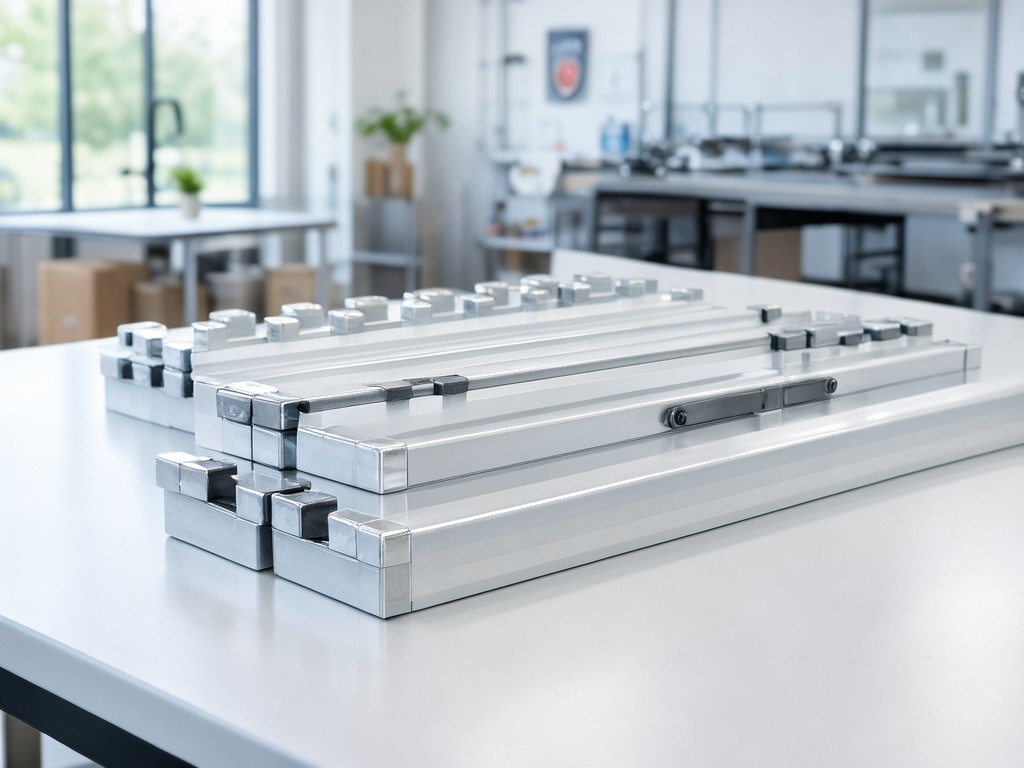
Factory Price Camlock PUF Insulated Cold Room Panels Exporter for Wholesale and OEM Orders
Thermal stability in storage depends on the density of the polyurethane foam (PUF) core and the mechanical bond to the metal skins. When the foaming process lacks consistent pressure, air pockets or voids form, leading to localized thermal bridging and increased compressor cycles. We utilize a high-pressure injection molding process to ensure the PUF core remains structurally integral to the galvanized steel sheets, preventing the delamination that often occurs during rapid temperature fluctuation cycles.
What Actually Determines Performance
R-value ratings are directly tied to panel thickness and the specific thermal conductivity of the foam density used. A 100mm panel offers significantly higher resistance than a 50mm variant, but the freight cost per square meter increases due to volume volume. For wholesale buyers, the trade-off is between the initial material cost and the long-term energy savings of the refrigeration system.
- Skin thickness typically ranges from 0.5mm to 0.7mm depending on the load-bearing requirements.
- PUF density is maintained between 40kg/m³ and 42kg/m³ for structural rigidity.
- Camlock mechanisms are manufactured from extruded aluminum to prevent corrosion in high-humidity environments.
- SurfaceSurface coatings like PVDF or polyester determine the chemical resistance during down-wash cycles.
Option Comparison by Usage Level
Standard Cold Storage
Optimized for chill environments (2°C to 8°C). Uses 60mm-80mm panels to balance insulation with shipping efficiency.
Deep Freeze Units
Required for temperatures below -18°C. Utilizes 120mm-150mm panels to prevent frost formation and maintain thermal integrity.
Buying Mistakes That Lead to Returns
Many procurement officers overlook the tolerance of the camlock profile. If the profile extrusion is not perfectly uniform across the entire batch, the panels will not sit flush, creating air gaps that gaskets cannot fully seal. Furthermore, using low-grade galvanized steel in high-moisture zones leads to rapid oxidation at the screw points within 24 months of installation.
| Parameter | Standard Specification | Industrial Grade |
|---|---|---|
| Core Material | PUF Foam | High-Density PUF |
| Skin Material | Galvanized Steel | Stainless Steel (304) |
| Joint Type | Aluminum Camlock | Heavy-Duty Camlock |
| Thickness Tolerance | +/- 0.5mm | +/- 0.2mm |
What Can Be Customised and What
We offer custom surface finish colors and panel lengths to fit specific site-specific constraints. However, the core density and the thermal conductivity properties of the PUF are fixed by the chemical composition of the foaming agent. You cannot alter the structural load-bearing capacity without affecting the safety rating of the panel itself.
Stock Availability and Reorder Planning
Standard sizes are kept in production cycles to minimize lead times for bulk wholesale orders. Custom dimensions or specialized skin coatings require a lead time of 21 to 30 days to account for tooling adjustments and curing times. For large-scale projects, we recommend a phased delivery schedule to ensure batch consistency across the entire installation.
Questions Ask Before Ordering
Are the camlock joints compatible with disassembly?
Yes, the camlock system is designed for repeated assembly and disassembly, allowing for the cold room to be moved without damaging the panel edges.
What is the fire rating of the foam?
This depends on the flame retardant additives used in the PUF mix. We provide various grades based on the local building codes of the destination market.
Request a technical datasheet or wholesale pricing for your specific volume.
Contact Our Export Department for a Quote


