factory price polyisocyanurate roof insulation sandwich panels exporter: Specification, Ordering and Quality Notes
The integrity of a polyisocyanurate (PIR) sandwich panel depends on the bond strength between the metal skin and the rigid foam core. When the adhesive interface is inconsistent, thermal expansion of the steel sheets leads to delamination, resulting in a loss of thermal resistance and structural buckling. Batch production must prioritize the density consistency of the PIR foam to ensure the R-value remains stable across the entire surface area.
How It Performs in Use
Thermal stability is primarily dictated by the load-bearing capacity of the profile geometry. In high-solar-gain environments environments, the PIR core acts as a structural rib, preventing the metal skins from oiling under heat. If the foam density is below the specified requirement for the panel grade, the span deflection increases, leading to water ingress at the fastener points.
Moisture ingress is the primary failure mode for long-term installations. While PIR is inherently closed-cell, the joints between panels are the vulnerable points. The precision of the interlocking system—whether a tongue and groove or a cap system—determines whether the vapor barrier remains intact after the building undergoes seasonal thermal cycling.
Materials and Construction Trade-offs
Selecting the skin thickness involves a direct trade-off between weight and mechanical impact resistance. Thicker 0.7mm steel skins provide better resistance to denting during installation but increase the shipping cost per square meter significantly. Conversely, 0.45mm skins reduce the dead load but require more frequent purlin spacing to prevent deflection under maintenance loads.
| Feature | Standard Grade | High-Performance Grade |
|---|---|---|
| Foam Density | 32-38 kg/m³ | 40-45 kg/m³ |
| Skin Coating | Polyester / PE Paint | PVDF / Plastisol |
| Fire Resistance | Standard PIR Core | Enhanced Retardant Core |
Specification Range and Customisation Limits
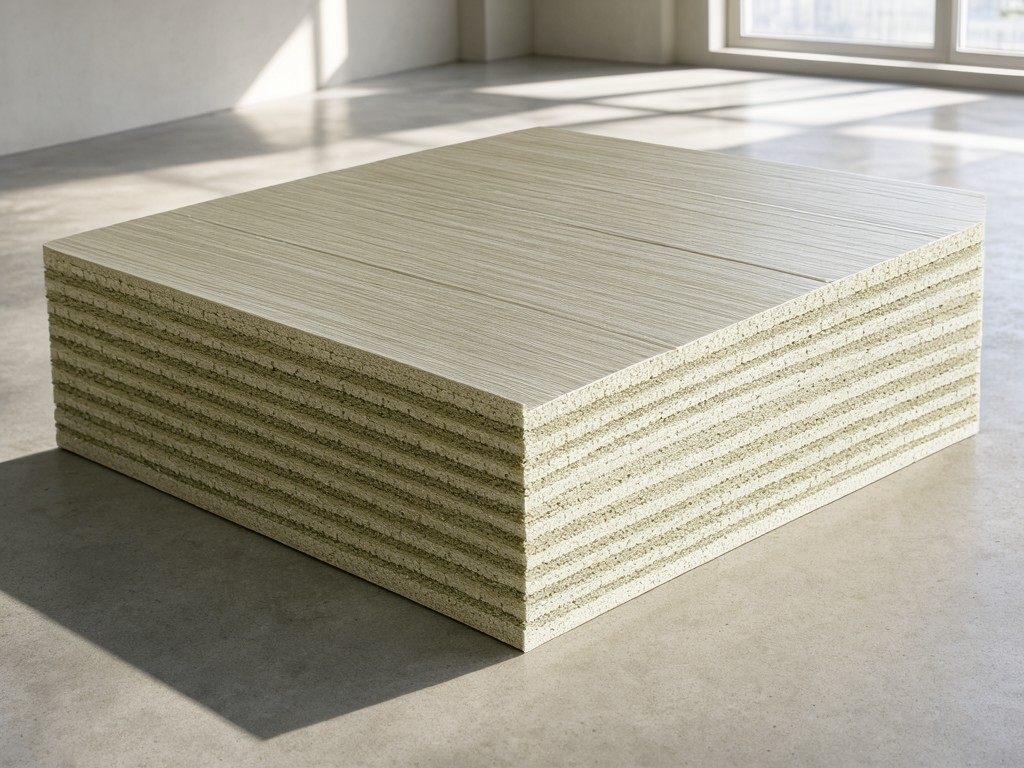
Customization is limited by the extrusion line's forming capacity. While standard production covers thicknesses from 50mm to 200mm, thicknesses exceeding 150mm require specialized cooling zones to prevent the core from warping during the curing process.
Production Constraints
- Profile height is restricted to 30mm-200mm for standard trapezoidal profile dies.
- Color selection is limited to standard RAL shades to avoid paint-batch inconsistencies between orders.
- Panel widths are fixed at 1000mm increments to maintain structural integrity of the click-lock.
How to Choose Before Requesting a Quote
- Identify the primary thermal load requirement to determine the necessary PIR core thickness for the target R-value.
- Determine the wind load and snow load to select the appropriate steel gauge and skin thickness (mm-rating).
- Assess the local atmospheric environment to decide between a standard polyester coating or a high-exposure PVDF finish.
Requirements by Buyer Segment
Wholesale Importers
Focus on cost-per-square-meter and volumetric efficiency. Buyers require standardized palletized packaging to prevent edge damage during long-haul sea transit.
Industrial Contractors
Priority is placed on technical certifications and compatibility with existing fastening systems. Fast lead times for custom profile lengths are critical for project-based procurement.
Setup, Use and Replacement Parts
Installation requires precision thermal-cut tools to prevent the PIR core from melting at edges. Using mechanical saws can tear the foam, which compromises the vapor barrier and leads to internal condensation. Replacement panels must be matched to the original profile geometry to ensure the inter-lock system remains continuous and watertight.
Questions Buyers Ask Before Ordering
Does the PIR core meet specific fire-rating standards?
We provide cores formulated with flame retardant additives, but the final rating depends on the skin thickness and local assembly code compliance.
What is the maximum span for a 50mm PIR panel?
The span is determined by the profile depth and wind load, typically ranging from 2.5m to 4m for industrial applications.
Request a technical data sheet or factory pricing quote.
Contact our Export Department for Bulk Specifications


