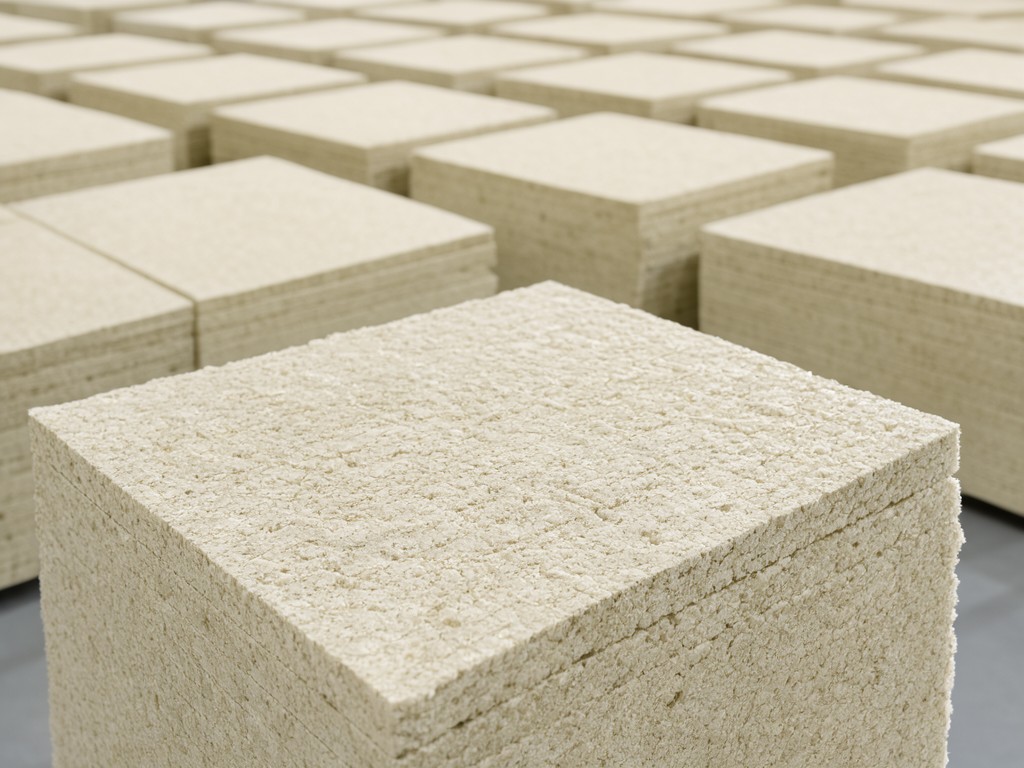
Factory Price Rock Wool Sandwich Panels for Warehouse Exporter: Specification, Ordering and Quality Notes
Long-term warehouse integrity depends on the thermal stability and fire resistance of the core material. While polyurethane foam alternatives offer lower initial entry costs, rock wool cores provide necessary fire ratings and structural rigidity that prevents sagging under extreme thermal stress. For export-scale projects, the primary metric of success is the density of the mineral wool against the tensile strength of the steel skins, which determines how the assembly performs during transit and long-term thermal expansion.
Material Options and Trade-offs
Selection of skin thickness and coating dictates the panel's resistance to corrosion and mechanical impact. A 0.5mm galvanized steel skin is standard for internal partitions, but external warehouse envelopes in high-humidity environments require 0.7mm thickness with a high-PVDF coating to prevent premature oxidation. The bond between the rock wool and the metal skin is achieved through high-pressure adhesive application; poor pressure consistency leads to delamination when the panel undergoes rapid temperature fluctuations during seasonal shifts.
Mineral Wool Core
- Non-combustible properties (A1 rating)
- High thermal stability up to 1000°C
- Superior sound absorption coefficients
Steel Skin Options
- Galvalume or Galvanized steel
- Pre-profiled for increased rigidity
- Custom RAL finishes for UV resistance
Customisation Options and Limits
Standard joint systems utilize tongue-and-groove configurations for thermal break continuity. However, for cold storage applications, specialized interlocking profiles are required to prevent air infiltration at the panel seams. Panel widths are typically limited by the manufacturing width of the forming line; exceeding 1200mm often increases the risk of waviness during the curing process of the adhesive-core bond.
| Parameter | Standard Range | Industrial Grade |
|---|---|---|
| Panel Thickness | 50mm - 200mm | Up to 300mm |
| Core Density | 60-80kg/m³ | 100-120kg/m³ |
| Skin Thickness | 0.4mm - 0.5mm | 0.6mm - 1.0mm |
| Thermal Conductivity | 0.035-0.045 W/mK | Variable based on density |
Who Uses It and Where It Matters
Logistics hubs utilize these panels to meet fire safety codes for high-density storage. In manufacturing environments, the rock wool core acts as a thermal barrier that protects sensitive machinery from external heat fluctuations. Procurement officers must weigh the weight-to-performance ratio, as the heavier nature of rock wool increases shipping costs per square meter compared to lighter synthetic foam cores.
Segment-Specific Requirements
Export-grade orders require specific packaging protocols to prevent mechanical damage to the panel edges during sea freight. Moisture-barrier wrapping and reinforced steel crates are necessary to ensure the rock wool core does not absorb humidity during transit through tropics. Batch traceability is maintained for large-scale projects to ensure consistent fire-rating values across the entire building envelope.
Capacity and Lead Time
Lead times are dictated by the availability of raw basalt fiber and the capacity of the production line. Bulk orders exceeding 5,000m² typically require a 4-to-6-week window to account for sourcing and curing cycles. Small-scale custom orders may be integrated into existing production runs to minimize the cost associated with tooling setup for specific profile shapes.
Request technical data sheets and volume pricing for your project.
Contact our export department for a formal quotation


