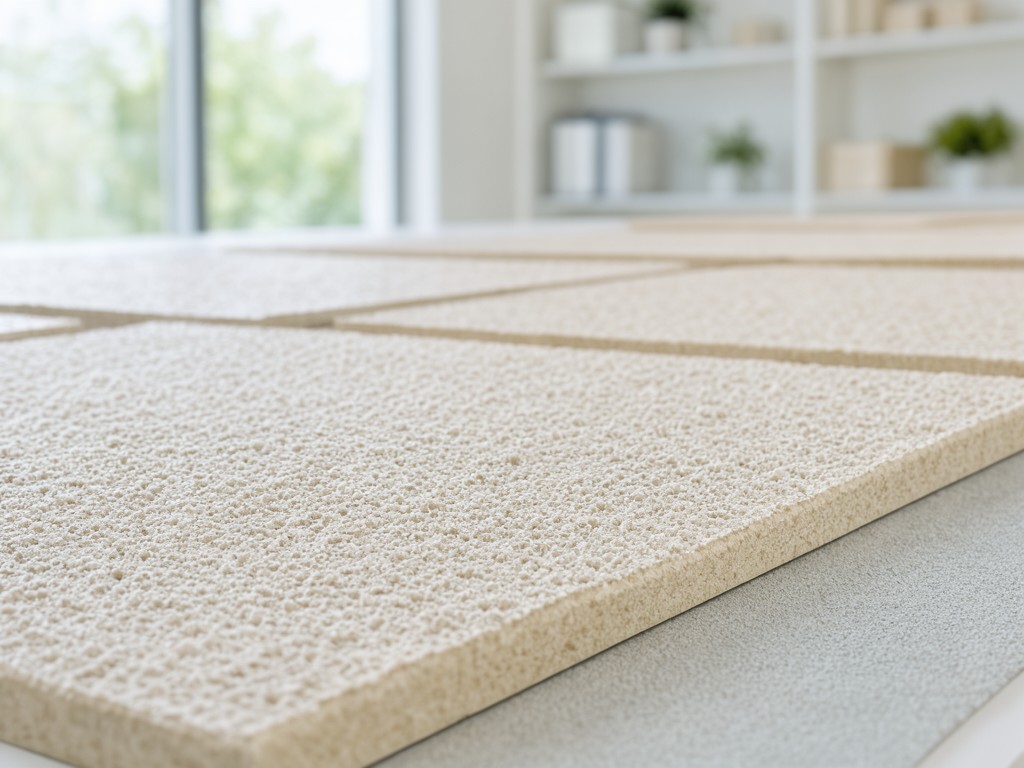
Factory Price Thermal Insulation EPS Ceiling Panels Exporter - Bulk Supply Guide
What Actually Determines Performance
Thermal resistance in ceiling systems depends on the uniformity of the expanded polystyrene (EPS) cell structure. In high-humidity environments, the primary failure mode is the delamination between the EPS core and the decorative facing layer. If the bonding process lacks consistency, temperature fluctuations cause the materials to expand at different rates, leading to moisture ingress and compromise of the R-value across the entire assembly.
Structural integrity is also judged by the tensile strength of the panel edges. High-grade panels utilize a fiberglass mesh or a high-density polymer scrim to distribute the load of mechanical fastening points. Without this reinforcement, panels are prone to cracking during the installation handling phase, resulting in high wastage rates at the construction site.
Buying Mistakes That Lead to Returns
Procurement often focuses solely on the price per square meter without evaluating the dimensional stability coefficient. Low-grade EPS foam can exhibit significant shrinkage when exposed to prolonged heat, creating gaps between panels that require secondary fillers. These gaps create thermal bridges that effectively negate the energy-saving benefits of the insulation de-system.
- Ignoring the bead size distribution, which leads to uneven surface textures and poor paint adhesion.
- Neglecting the fire retardant rating of the facing material, which determines compliance with regional commercial building codes.
- Failing to verify the UV resistance of the outer coating, leading to rapid yellowing and brittleness if the ceiling is exposed to natural light.
What Gets Checked Before Shipment
Quality control at the factory level focuses on dimensional tolerance and core density consistency. We measure the thickness at multiple points across the panel to ensure it meets the ±1mm tolerance required for interlocking systems. Additionally, compressive strength testing is performed on batch samples to ensure the foam will not collapse under the weight of the installation hardware.
| Parameter | Standard Grade | Premium Grade |
|---|---|---|
| EPS Density | 10-12 kg/m³ | 15-20 kg/m³ |
| Surface Reinforcement | Paper-faced | Fiberglass Mesh Scrim |
| Thermal Conductivity | ~0.35 W/m·K | ~0.031 W/m·K |
Capacity and Scheduling
Production cycles are determined by the extrusion speed and the curing time of the EPS foam. For orders exceeding 5,000 sqm, lead times typically range from 21 to 35 days depending on raw material availability for the resin and facing. Custom dimensions require an additional 10-day tooling period for mold adjustment and CNC-cutting calibration.
Stock Availability and Planning
We maintain standard panel sizes of 600x1200mm in stock to facilitate rapid dispatch for urgent maintenance projects. For project-specific specifications, we recommend a rolling delivery schedule to ensure that batch consistency is maintained across installation phases, preventing color variations in the final finish.
Packing and Logistics
EPS panels are sensitive to impact during maritime transit. Our export packaging utilizes reinforced corrugated corner protectors and pallet-wrapped high-density polyethylene to prevent moisture absorption. Each pallet is marked with batch numbers, production dates, and handling instructions to ensure traceability from the factory floor to the site- or air freight.
Questions Buyers Ask Before Ordering
Can these panels be used in wet-areas?
Yes, provided the facing material is a moisture-resistant polymer. The EPS core itself is closed-cell and will not rot when exposed to damp conditions.
What is the maximum load capacity per square meter?
The load capacity depends on the EPS density; typically 15kg/m³ panels can support static loads of 50kg/m² without risk of surface deformation.
Request a technical data sheet and wholesale quote for your project requirements.
Contact Our Export Department for Bulk Pricing


