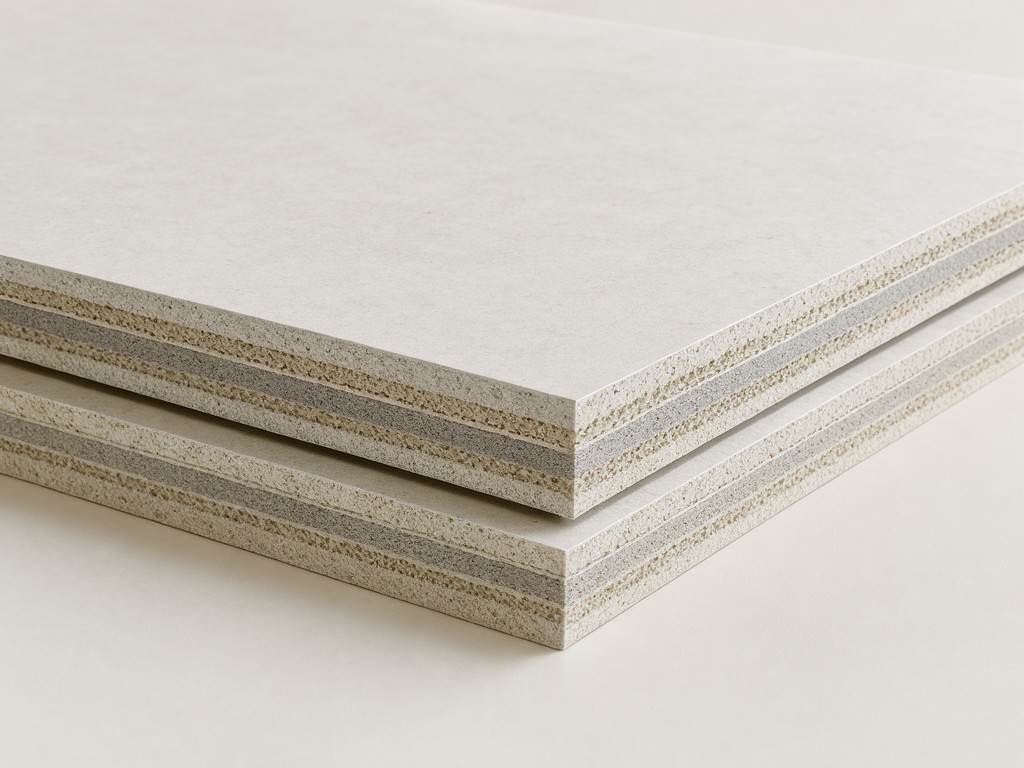
High Quality Fire Retardant EPS Sandwich Panels Supplier - Bulk Supply and Specification Guide
Thermal stability in expanded polystyrene (EPS) cores depends on the chemical formulation during the bead-expansion process. While standard EPS may deform rapidly under heat exposure, fire retardant grades utilize specific additives that promote a protective char layer, delaying the ignition of the polymer core. This mechanism maintains the structural integrity of the panel for a critical duration during a high-temperature thermal event, preventing the total collapse often seen in non-treated insulation layers.
The Problem Buyers Keep Paying For
Distributors often report delamination between the EPS core and the facing skin during extreme thermal cycling. If the adhesive bond does not account for the chemical surface energy of the fire retardant additives, the bond line fails under shear stress as the material contracts. This results in air pockets that compromise the R-value of the entire assembly.
Warping in large-format panels stems from uneven core density. When the fire retardant concentration is not uniform throughout the bead extrusion, different sections of the panel expand at different rates. This internal stress buildup leads to bowing, which makes on-site alignment difficult and increases material wastage for the end-user.
Material Options and Their Trade-offs
- Galvanized Steel Facing: Provides the highest rigidity and impact resistance, but increases the shipping dead weight and requires specialized fastening tools to prevent skin tearing.
- Reinforced Fiber-Cement: Offers superior moisture resistance and fire rating; however, it requires careful handling during transport to prevent cracking at the edges.
- Aluminum Foil Facing: Ideal for thermal bridge breaking and vapor barrier requirements, though susceptible to puncture during mechanical installation if the skin gauge is too thin.
Assumptions Buyers Stop Making
Procurement officers often assume that a fire retardant rating is universal across all panel thicknesses. In reality, the thickness-to-surface ratio significantly alters how heat penetrates the core. A 50mm panel behaves very differently under a thermal load than a 200mm panel using the exact same EPS core grade.
Another misconception is the permanence of the fire retardant properties. While the additives are integrated into the beads, long-term exposure to UV radiation during storage or before installation can degrade the polymer matrix, potentially leaching the additives to the surface if the facing material is compromised.
Usage Scenarios and Buyer Segments
Cold storage facility construction demands panels with high dimensional stability to prevent thermal leaks at the joints. The focus here is on the compressive strength of the EPS core to ensure the racking systems can transfer load without creep deformation over decades.
In industrial cladding projects, the priority shifts to speed of assembly and weight-to-strength ratios. Buyers in this segment prioritize lightweight panels that allow for rapid crane-assisted installation while ensuring the protective outer skin remains undamaged during the lifting process.
Requirements by Segment
| Parameter | Standard Grade | High-Performance Grade |
|---|---|---|
| EPS Core Density | 15-20 kg/m³ | 25-40 kg/m³ |
| Facing Skin Thickness | 0.50mm | 0.70mm - 1.0mm |
| Thermal Conductivity | Standard FR Rating | Enhanced Char Formation |
| Load Bearing Capacity | Standard Span | Heavy-Reinforced Span |
OEM and ODM Structure
Private-label manufacturing requires specific tooling for edge profile customization to ensure interlocking precision. We provide custom die-cutting for tongue-and-groove or shipl joints that maintain tight-fit tolerances throughout the batch-extrusion process. This prevents the "gapping" effect that occurs with poorly-cut panels.
For high-volume distributors, we offer tiered pricing based on the fire retardant concentration levels. This allows you to balance the material cost against the specific safety requirements of your target market without over-specifying every project where not necessary.
Quality Control and Batch Consistency
Batch consistency is verified through ultrasonic testing of the core-to-skin bond. If the bond strength varies beyond +/- 10%, the panel is flagged to prevent field delamination. This rigorous monitoring ensures that every unit in a shipment performs identically under identical thermal loads.
We also perform dimensional checks on every production run to ensure the panel thickness remains within a 0.5mm tolerance. This is critical for buyers using precision-engineered systems in large-scale architectural assemblies.
Export Packaging and Handling
Sandwich panels are vulnerable to corner impact during transit. Our packaging utilizes reinforced corrugated edge protectors and internal timber bracing to prevent the EPS corners from being crushed. This setup ensures that the panels arrive at the construction site ready for immediate installation without requiring costly onsite repairs.
Interested in technical specifications for custom fire retardant EPS panels?
Request a Technical Datasheet and Bulk Quote


