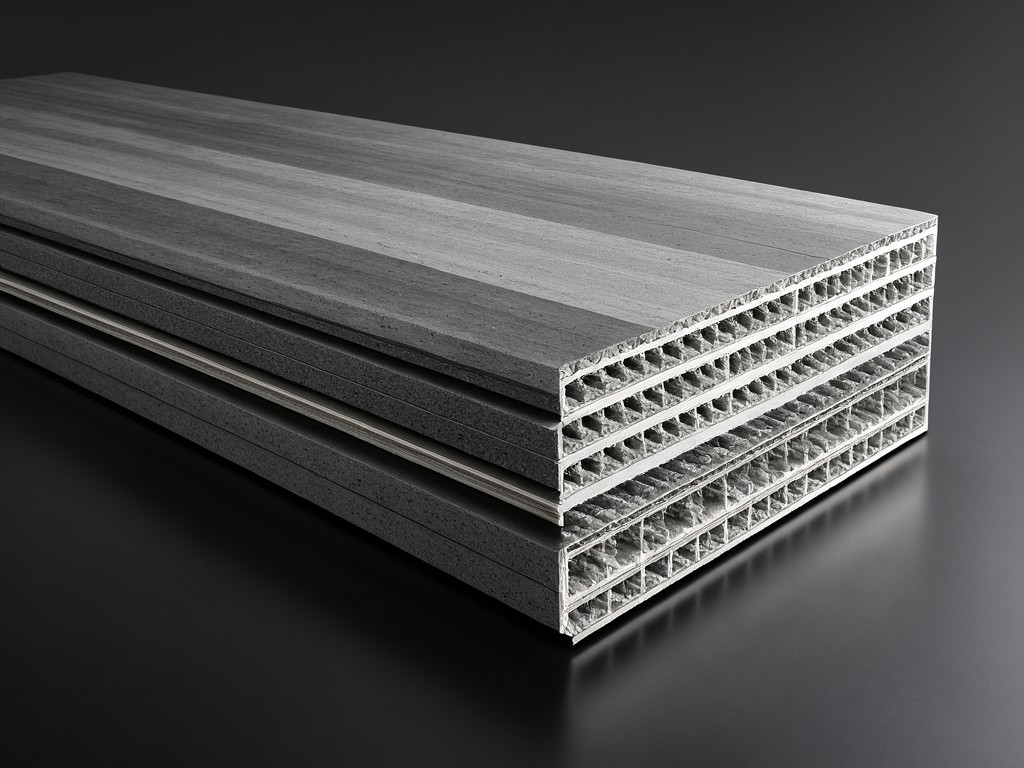
High Quality Fireproof Composite Wall Sandwich Panels China Supplier: Specification and Quality Notes
Technical Trade-off: Selecting high-density mineral wool cores increases thermal resistance ratings but raises the dead load on the steel frame compared to PIR or EPS alternatives. Procurement must balance the required fire-rating duration against the structural load-bearing capacity of the building envelope.
Scope of Supply and Physical Form
Structural integrity in sandwich panels depends on the bond line between the metal skin and the insulating core. In many large-scale industrial projects, failure occurs through edge delamination under rapid thermal cycling if the adhesive application does not account for expansion coefficients. We utilize a continuous-pressure bonding process to ensure the adhesive penetrates the profile of the galvanized steel skin, preventing the air pockets common in lower-pressure manual applications.
The panels supplied vary in thickness from 50mm to 300mm, depending on the specific R-value requirements of the project. Metal skins typically range from 0.4mm to 1.5mm thickness, with PVDF or polyester coatings available to resist surface corrosion and mechanical abrasion. For environments requiring high fire resistance, the mineral wool core is the standard specification, providing dimensional stability at temperatures where polymer foams would offgas.
How It Is Built
The manufacturing sequence begins with the precision-rolling of the steel sheets to create a profile that increases the moment inertia of the panel. The core material is then cut to exact tolerances within a ±1mm variance to ensure flush joints during site installation. The assembly line passes through a curing oven where temperature control dictates the chemical bond-set, which is critical for preventing the warping often seen in cold-pressed composite panels.
| Parameter | Technical Range |
|---|---|
| Core Material | Mineral Wool (60kg-120kg/m³), PIR, EPS |
| Skin Thickness | 0.4mm - 1.5mm (Galvanized Steel) |
| Panel Width | 500mm - 1200mm (Customizable) |
| Thermal Conductivity | 0.035 - 0.045 W/m·K |
Size, Weight and Specification
Weight per square meter is the primary driver for logistics costs and structural support requirements. A mineral wool-core panel is significantly heavier than a foam-core equivalent, necessitating more robust purlins to prevent deflection under wind loads. We provide detailed weight schedules for every core density to ensure your engineers can calculate the total dead load of the building envelope accurately.
Assumptions Buyers Should Stop Making
Many buyers incorrectly assume that a fireproof rating is solely dependent on the core material. In reality, the performance of the entire system relies on the metal skin thickness and the integrity of the joint system. If the skin is too thin, it may fail under thermal stress, allowing fire to bypass the insulation and compromises the structural fire-rating regardless of the core's non-combustible properties.
What Can Beised and What Cannot
Customization is available for the profile geometry, coating color (RAL shades), and specific joint designs like moisture-tight interlocking. However, the fundamental thermal properties of the core material are fixed by the material density and chemistry. You cannot alter the thermal conductivity of a mineral wool core without changing the material entirely, which affects the entire performance profile.
Usage Scenarios and Buyer Segments
Cold storage facility managers require high-density PIR cores to maintain strict temperature gradients and prevent condensation at joints. In contrast, industrial manufacturing plants prioritize mineral wool panels for their high-rated fire-resistance and mechanical toughness of the steel skin to withstand impact from heavy machinery.
Working as Production Partner, Not a Supplier
Reliability in bulk orders is maintained through batch-specific testing. We perform pull tests to verify the shear strength of the bond and dimensional checks to ensure flatness across the production run. By providing data reports for each shipment, we ensure that the panels arriving at the site match the approved technical samples used during the design phase of the project.
Quality Control and Batch Consistency
Consistency is managed by monitoring the moisture content of the core material during the pressing process. Fluctuations in ambient humidity can lead to uneven curing, which is the primary cause of panel bowing. Our QC protocol includes climate-controlled storage for finished goods to ensure they remain dimensionally stable before they are loaded for international export.
Request technical drawings or a formal quote for your current project.
Contact our engineering team for specification review


