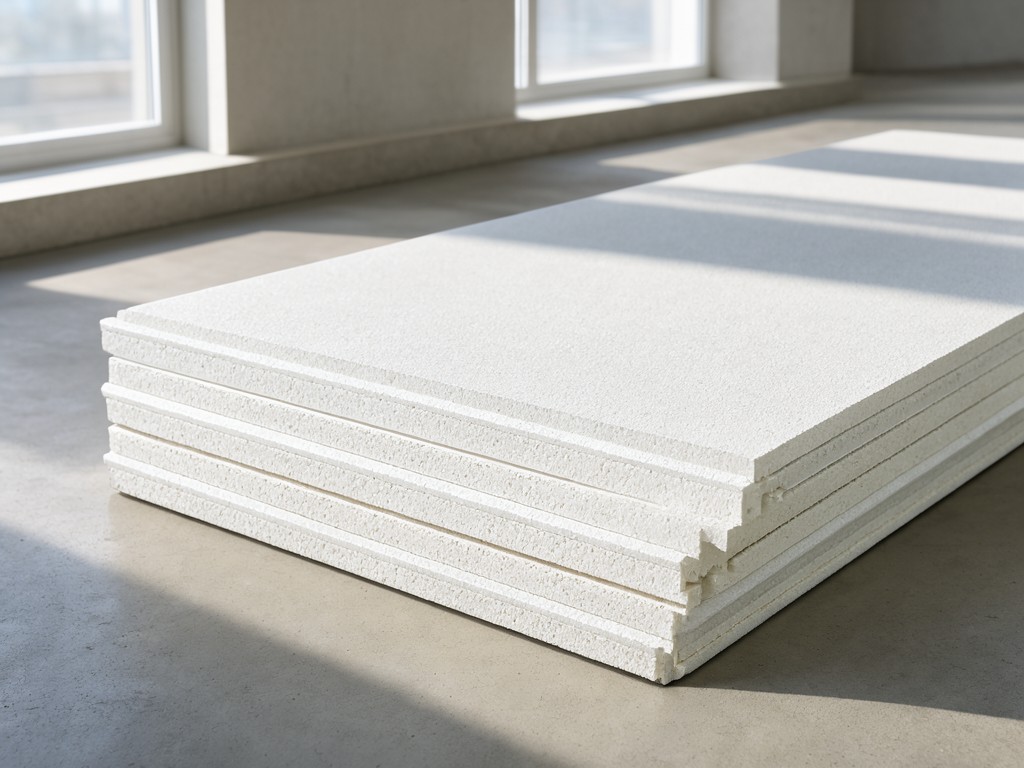
ODM Rigid Extruded Polystyrene Composite Panels Supplier: What Buyers Should Check Before Ordering
The interface between the extruded polystyrene (XPS) core and the surface cladding determines the dimensional stability of panels under thermal stress. In high-volume procurement, the most common failure mode is not the core itself, but the delamination of the face material when coefficients of thermal expansion do not match. Our manufacturing process focuses on a continuous extrusion method to ensure a closed-cell structure, which prevents moisture ingress that typically leads to internal swelling and structural warping over seasonal cycles.
Technical Note: The rigid XPS core density is calibrated between 25kg/m³ and 45kg/m³ to meet specific compressive strength requirements for load-bearing applications.
Where This Product Beats Standard Alternatives
Standard foam-core boards often suffer from "creep," where the material permanently deforms under static loads. By utilizing a rigid XPS composite with a high-density skin layer, we provide a load rating that maintains 95% of its original thickness after 5,000 hours of sustained pressure. This is critical for distributors serving the industrial or construction sectors where panel deflection triggers rejection.
- Closed-cell architecture reduces water absorption to less than 1% by volume.
- UV-stabilized outer layers prevent yellowing and brittleness common in non-industrial-grade polymers.
- Enhanced shear strength ensures panels remain flat within ±0.5mm tolerance during rapid CNC cutting.
Buying Mistakes That Lead to Returns
Procurement officers often overlook the adhesive bond strength between the XPS core and the composite skin. If the adhesive is not chemically compatible with the polystyrene surface, the skin will peel during transport or rapid temperature fluctuations. We utilize a thermal-bonding process that creates a mechanical lock, eliminating the risk of seam separation that in lower-cost alternatives.
Balance analysis shows that thin-skin variants fail under impact-heavy logistics. For retail applications involving high-frequency handling, a minimum skin thickness of 0.8mm is required to prevent the core from puncturing during site-side installation.
Customisation Options and Their Limits
- Core thickness varies from 10mm to 100mm; thicknesses exceeding 50mm may require reinforced structural ribs.
- Surface textures include embossed, smooth, or foil-coated finishes depending on the specific abrasive resistance needs.
- Custom color-matching is limited to pigment-based coatings to ensure consistency across large batch runs.
- Panel dimensions can be cut to specific tolerances, though oversized sheets beyond 2.4m require specialized freight handling.
Working as a Production Partner, Not a Supplier
| Parameter | Standard Grade | Performance Grade |
|---|---|---|
| Compressive Strength | 150 kPa | 400 kPa+ |
| Thermal Conductivity | 0.035 W/m·K | 0.030 W/m·K |
| Surface Material | Standard PVC | Fiber-Reinforced Polymer |
| Lead Time | 14-21 Days | 30-45 Days (Custom) |
Stock Availability and Order Planning
Inventory levels are managed based on core material availability to mitigate supply chain fluctuations. For private-label buyers, we recommend a rolling 3-month forecast to ensure that the extrusion lines are optimized for your specific dimensions. This prevents the technical specifications from being compromised even during peak demand periods.
Request technical data sheets and material test results for your project.
Inquire About ODM Production


