ODM Structural Rock Wool Insulated Wall Panels Supplier: What Buyers Should Check Before Ordering
Structural integrity in panels depends on the bond strength between the outer steel skins and the mineral wool core. When the density of the rock wool is inconsistent, the panel undergoes shear under thermal expansion, leading to thermal bridging and loss of R-value. Procurement officers often overlook the adhesive-to-core-weight ratio, measured in kg/m², which directly determines the panel's resistance to delamination under high-pressure wind loading.
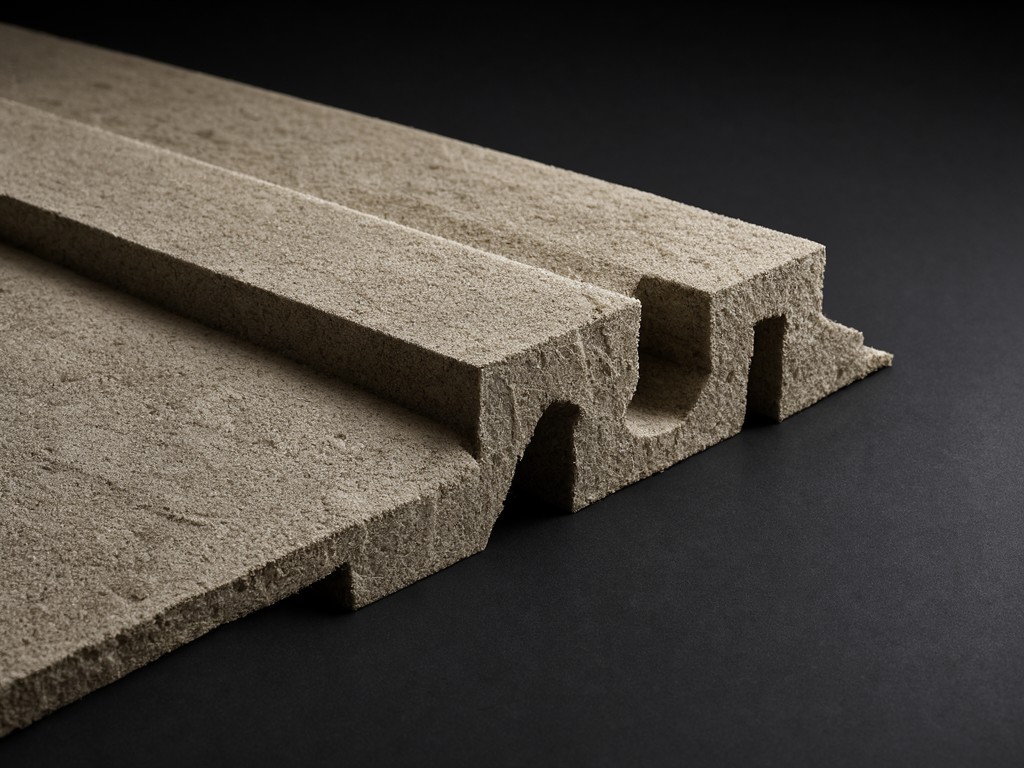
Standard industrial panels often fail at the joint lines because the profile geometry lacks tight tolerances. If the tongue-and-groove overlap exceeds 1.5mm, gasket compression fails, allowing moisture ingress into the mineral core. We focus on the mechanical precision of the interlocking system to ensure a vapor-tight seal across the entire surface area, reducing the need for secondary site sealants.
Critical Specification Constraint: Core Density
For structural applications requiring a high fire-rating and acoustic damp resistance, a rock wool density of 80kg/m³ to 120kg/m³ is required to prevent core sagging during high-temperature exposure.
Where Cheaper Alternatives Fall Short
Low-cost manufacturers utilize thinner-gauge steel skins with insufficient ribbing to save material weight. This results in "oil-canning," a visible deformation of the flat surface where the skin buckles under minor impact or temperature fluctuations. Our ODM process utilizes pre-ribbed profiles that increase the moment of inertia, maintaining a flat plane over 12-meter spans without additional intermediate framing.
Moisture absorption is the primary failure mode for poorly manufactured mineral wool. If the rock wool is not treated with a hydrophobic bitumen coating, the fibers absorb water, increasing the weight of the panel and leading to structural fatigue. We specify a resin-bonded fiber matrix that ensures the core maintains its dimensional stability even if the outer skin is compromised during installation.
Materials and Construction Trade-offs
The choice between panel thickness and thermal performance involves a direct trade-off in logistics costs. A thicker core increases the R-value but raises the weight per square meter, potentially requiring heavier crane equipment and increasing freight costs.
| Parameter | Technical Range |
|---|---|
| Steel Skin Thickness | 0.5mm - 1.5mm G |
| Rock Wool Density | 60kg/m³ - 120kg/m³ |
| Thermal Conductivity (λ) | 0.035 - 0.045 W/m·K |
| Width Tolerance | ± 1.0mm |
Construction Method and Effect on Consistency
Continuous foam line production ensures that the adhesive layer is distributed uniformly across the rock wool. Manual application methods often leave air pockets, which become focal points for delamination during thermal stress. By using automated curing systems, we monitor the volume of the adhesive line to ensure the bond strength remains consistent across the entire batch.
Surface finish selection impacts the long-term aesthetic maintenance of the building envelope. For coastal environments, a PVDF coating is necessary to prevent salt-induced corrosion of the steel skin. Standard polyester coatings may chalk within 5-7 years under high UV exposure, leading to pigment fading and eventual degradation of the metal substrate.
Where This Product Beats Standard Alternatives
Fire Resistance
Unlike PIR cores, rock wool is non-combustible and maintains structural integrity at temperatures exceeding 1000°C without melting spread.
Acoustic Attenuation
The high-density fiber matrix provides superior Sound Transmission Class (STC) ratings compared to closed-cell foam alternatives.
Buying Mistakes That Lead to Returns
Failure to specify the thermal expansion coefficient of the panel often leads to sheared fasteners during installation. If the panels are fixed too rigidly without expansion joints, the steel skins will buckle against the rock wool core, ruining the facade alignment.
Ignoring the wind-load requirements for the specific site can result in panel suction during storm events. We require the structural engineering data to determine the necessary rib depth and fastener spacing, ensuring the ODM design can withstand the calculated pressure differentials without permanent deformation.
Quality Control and Batch Consistency
Every batch undergoes pull-off testing to verify the bond strength between the skin and the core. We measure the force required to separate the layers, ensuring it exceeds the minimum threshold required for long-term exposure to seasonal temperature shifts. Dimensional checks are performed using laser gauges to ensure every panel in a shipment fits within the ±1mm width tolerance.
Setup, Use and Replacement
Installation requires specialized handling equipment to prevent tearing the protective film on the steel skins. Once installed, the panels serve as both the load-bearing envelope and the thermal barrier. Replacement of damaged sections is facilitated by the interlocking system, which allows for individual panel removal without compromising the entire wall assembly.
Request technical drawings and material data sheets for your project.
Contact our engineering team for ODM specification review


