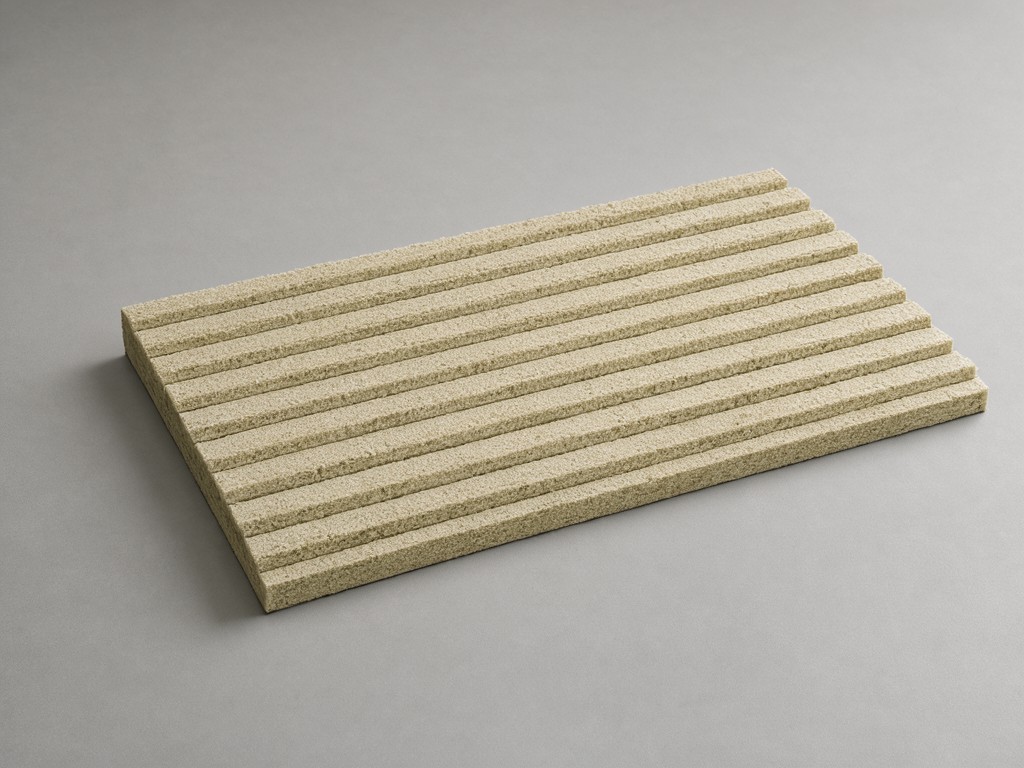
OEM horizontal rock wool exterior sandwich panels factory
Technical Note: Selection of horizontal panels requires balancing mineral wool density against thermal resistance requirements and structural load. While higher densities improve acoustic damping and fire resistance, they increase the dead load on the facade system, necessitating more robust sub-frames.
Configuration and Material Composition
Horizontal orientation of sandwich panels affects the mechanical bond between the pre-coated steel skins and the rock wool core. For OEM applications, the adhesive line is the primary failure point, specifically delamination under repeated thermal expansion and contraction cycles. We utilize high-pressure polyurethane adhesives to ensure the mineral wool remains compressed, preventing internal air pockets that lead to R-value degradation over the life of the building.
Core Specifications
- Rock wool density: 60kg/m³ to 120kg/m³ based on acoustic demand.
- Core thickness: 50mm to 200mm custom increments.
- Fire rating: Class A1 non-combustible material performance.
- Hydrophobic treatment: Surface-treated fibers to prevent moisture ingress.
Surface Protection
- Skin material: 0.4mm to 0.7mm galvanized coated steel.
- Coating options: PVDF, Polyester, or PE finishes.
- Profile types: Micro-ribbed, flat, or trapezoidal profiles.
- UV resistance: High-color stability for long-exposure facades.
Technical Performance Data
Procurement officers must evaluate these panels based on thermal dimensional stability and the integrity of the joint. In horizontal installations, the joint is susceptible to water ingress if the profile overlap is not precisely engineered. Our factory utilizes an interlocking tongue-and-groove system to ensure a continuous seal even when the panel undergoes significant thermal shifts.
| Parameter | Standard Range | Test Method |
|---|---|---|
| Thermal Conductivity | 0.035 - 0.045 W/m·K | ISO 8301 |
| Compressive Strength | 100 - 200 kPa | ISO 8445 |
| Internal Bond Strength | ≥ 150 N/cm | ASTM C374 Modified |
| Load Bearing | Up to 2.5 kN/m² | Point Load Test |
OEM Manufacturing and Logistics
Industrial-scale projects require strict batch traceability to ensure color consistency across large facade areas. Variations in the coating thickness by even 5 microns between different batches of the same production run can result in visible shade differences under direct sunlight. Our OEM process includes customized CNC-cutting services to ensure every panel matches the architectural shop drawings within millimeter tolerances.
During the production phase, the rock wool core is density-controlled to prevent sagging. We monitor the tension rollers on the assembly line to ensure that the flat planes of the steel skins remain perfectly aligned, which prevents the warping that leads to moisture traps during the installation phase.
Segment-Specific Requirements
Commercial cold centers prioritize high-density rock wool for vapor barrier integrity and thermal bridging prevention. In contrast, industrial office buildings focus on the aesthetic finish and acoustic insulation properties of the horizontal profile. The factory adjusts the profile depth and adhesive chemistry based on the specific wind load and seismic zone requirements of the project site.
Frequently Asked Questions
How do you handle thermal expansion over long spans?
The interlocking joint design allows for slight lateral movement, permitting the panels to expand and contract while maintaining a watertight seal.
What is the minimum order quantity for custom profile-branded panels?
Custom tooling typically requires a minimum of 1,000 square meters to offset the cost of the roll-forming die adjustments.



